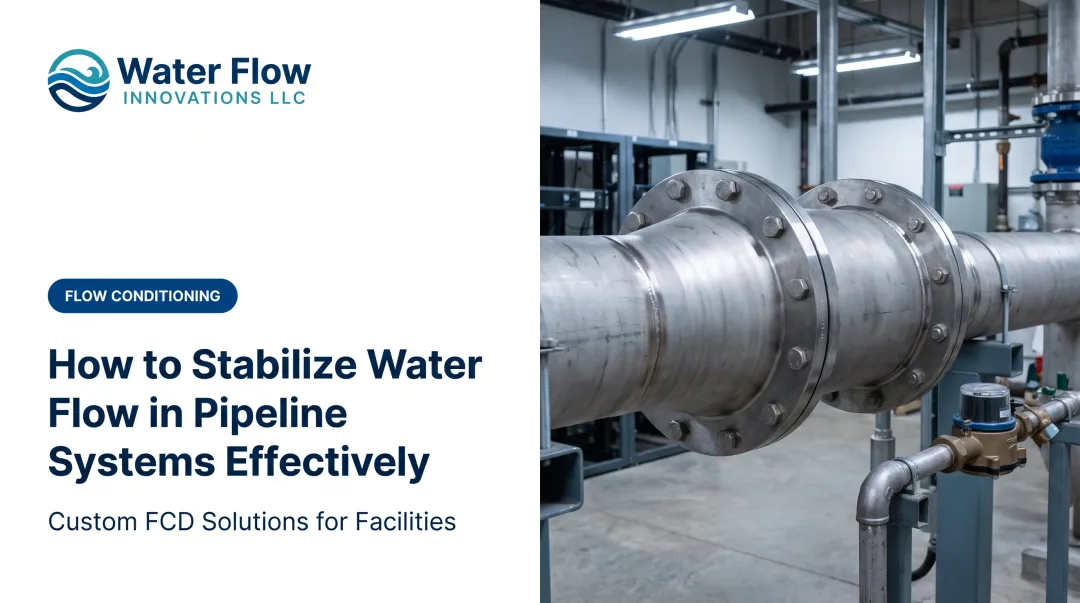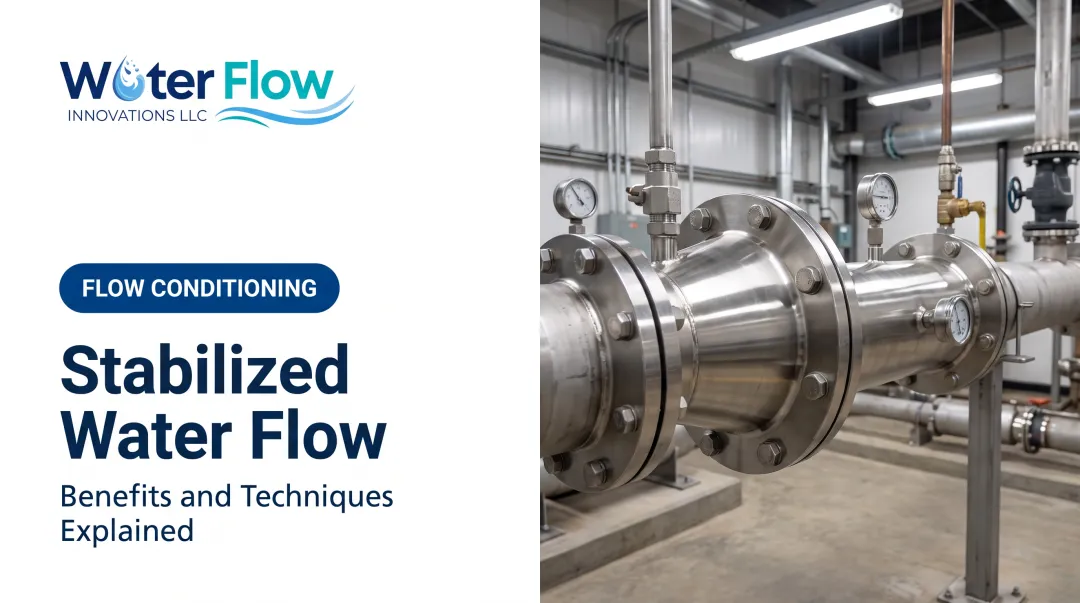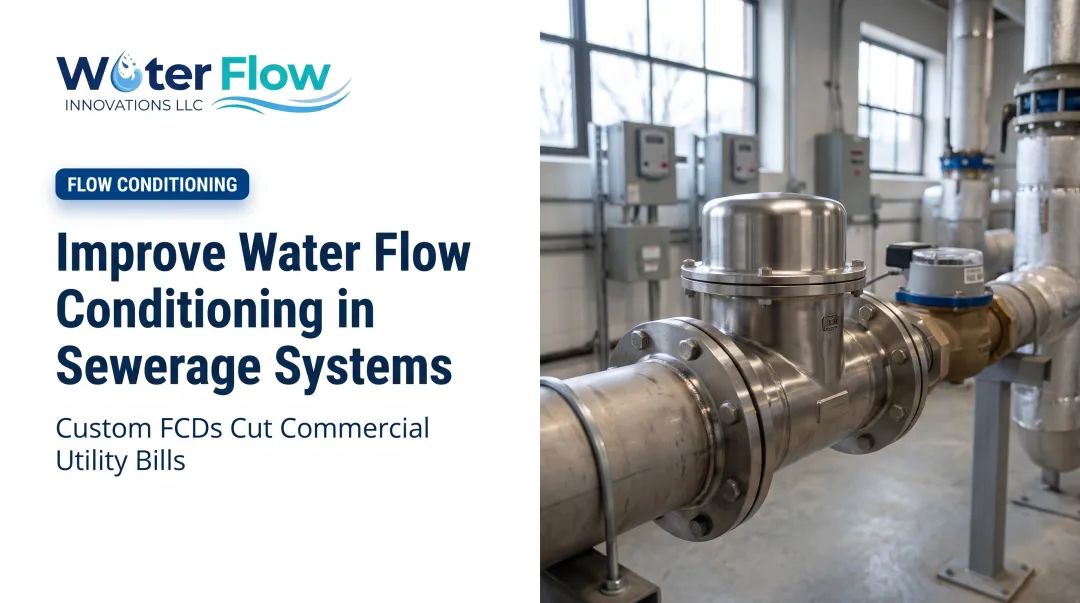

Stabilizing water flow isn't a single fix. Results depend on your pipe size, meter type, current pressure conditions, and which correction method you choose. A pressure-reducing valve solves one problem; a flow conditioner solves another.
This guide walks through when stabilization is needed, the exact steps to get there, the variables that determine success, common mistakes to avoid, and how facilities can cut water bills in the process.
Key Takeaways
- Turbulence, air entrainment, and pressure swings destabilize flow and inflate meter readings
- Diagnosis first, hardware second: pressure testing determines which devices you actually need
- Certified flow conditioning stabilizes flow and corrects meter over-reading with negligible pressure loss
- Corrected metering typically cuts water and sewer bills 5–30%, with savings on the next billing cycle
How to Stabilize Water Flow
Step 1: Diagnose the Flow Problem
Start with data, not guesswork. Measure static and dynamic pressure at multiple points using a gauge to find where instability originates.
Watch for these warning signs:
- Banging or knocking pipes (classic water hammer)
- Fluctuating pressure gauge readings during normal operation
- Inconsistent equipment performance tied to water pressure
- Unexplained spikes in your water bill history
Determine whether the root cause is municipal supply-side (utility pressure swings) or building-side (pump cycling, internal plumbing, or the meter). Compare gauge readings, flow meter data, and past water bills to spot anomaly patterns.

Step 2: Address Pressure Extremes
Once you know where the problem sits, correct the pressure band. The 2015 Uniform Plumbing Code sets 80 psi static as the maximum before an approved regulator is required to bring it back down to 80 psi or less, per IAPMO's code guidance.
- Pressure too high? Install a pressure-reducing valve (PRV) to bring incoming pressure into a safe operating range.
- Pressure too low? Add a booster pump to maintain consistent pressure in risers and branches as water leaves the system.
- Either way: re-test before and after installation to confirm pressure holds steady within the target band.
Step 3: Eliminate Turbulence and Air Entrainment
Sharp elbows, undersized piping, and air pockets near the meter all generate turbulence. A 2014 numerical study found that swirl intensity downstream of a 90-degree elbow depends heavily on bend-radius curvature, not just flow speed. That swirl travels downstream and disrupts the uniform approach flow meters need for accurate readings.
The Department of Energy's PNNL guidance confirms that fittings and valves near a meter reduce accuracy for most meter types, especially turbine and compound meters that need a uniform, swirl-free approach.
Fixes:
- Install a flow conditioning device immediately after the meter, or straightening vanes upstream of sensitive equipment
- Add air/gas removal components to prevent bubbles from registering as false volume on the meter
- Follow utility straight-pipe rules (e.g., Sheboygan Water: 10 diameters upstream, 5 downstream for disc, turbine, and compound meters)

Step 4: Install Check Valves and Surge Protection
Water hammer stems from abrupt flow changes: valve slam, pump starts and stops, or check valves closing suddenly after deceleration. ASPE's plumbing engineering guidance identifies these as the primary triggers.
To control it:
- Install properly oriented check valves to stop backflow and pressure fluctuations from pump cycling
- Add expansion or accumulator tanks to absorb pressure spikes before they turn into hammer
- Use soft-start controls or variable-frequency drives on pumps to avoid abrupt flow changes
Step 5: Monitor and Verify Results
Stabilization isn't finished at installation. Verify the fix and watch for drift:
- Re-test pressure and flow to confirm you are inside the target range
- Track utility bills for one to two cycles to confirm consumption readings normalized
- Schedule periodic gauge checks or data logging so drift gets caught early
When Should You Stabilize Water Flow?
Not every facility needs intervention. Watch for these triggers:
- Noisy or banging pipes
- Inconsistent equipment performance tied to water supply
- Unexplained spikes in water or sewer bills without a matching usage increase
- Aging infrastructure or known municipal supply issues in your area
Larger commercial and industrial facilities carry more financial exposure. High-throughput operations amplify the cost of even slight meter over-reading. That includes aerospace test facilities burning tens of thousands of gallons per run, mining operations, and heavy manufacturing plants with constant rinse and cooling cycles.

Facilities pursuing ESG reporting or sustainability certifications also benefit. Documented usage reduction supports the reporting they already need to do.
What You Need Before Stabilizing Water Flow
Success depends on correct diagnostics and matching the right equipment to your system.
Equipment Requirements
Choose devices that fit your existing setup:
- Pipe size and connection type
- Meter model and type
- Current pressure conditions
- Certified components (IAPMO, NSF, ANSI, CAN 61, KIWA, GMP, and SQF) for potable water compliance
Site and Condition Requirements
Collect baseline data before you install anything:
- Pressure and flow readings at the meter
- Water quality factors that affect flow behavior
- Peak-demand periods for your facility
Skill and Compliance Readiness
Confirm installation and code readiness up front:
- Access to a licensed plumber or engineer for installation
- Local plumbing code requirements reviewed before you commit to a device
Key Parameters That Affect Flow Stabilization Results
Outcomes hinge on correctly matching devices to your actual system conditions — not the conditions you assume you have.
| Parameter | Why It Matters | Impact If Ignored |
|---|---|---|
| Pipe size and material | Undersized or corroded pipes amplify turbulence and pressure loss | Mismatched components create new bottlenecks |
| Pressure range | Devices are rated for specific psi bands | Operating outside the band reduces effectiveness or causes premature wear |
| Meter type and placement | Some meters are more prone to over-reading from turbulence or aeration | Wrong upstream conditioning distance leaves meters exposed |
| Flow rate variability | Facilities with peak-hour swings need wide turndown range devices | Devices sized only for average flow underperform during spikes |
Common Mistakes When Stabilizing Water Flow
Most unstable flow problems come from rushed fixes. Avoid these mistakes before you change hardware or settings:
- Installing corrective equipment before you establish baseline pressure, flow, and meter readings
- Speccing regulators or flow conditioners outside your real pipe size and pressure range
- Treating pressure alone while air entrainment and turbulence keep driving erratic readings
- Skipping post-install re-tests that catch early drift before it shows up on the next utility bill
How Stabilizing Flow Can Also Lower Your Water Bill
Turbulent flow and air entrainment inside pipes don't just cause noise and inconsistent pressure. They can cause your water meter to over-register actual usage, inflating both water charges and, where sewer fees are calculated from metered water, sewer charges too.
Several peer-reviewed studies on intermittent water supply have documented mechanical meters registering 32%–62% of incoming water volume as air during pipe refill conditions.
Water Flow Innovation offers a certified Flow Conditioning Device (FCD) built around a four-component system:
- Air/gas separation — creates static back-pressure and laminar flow, producing a homogeneous water column so the meter measures water, not air
- Pressure regulation — reduces water hammer and pressure surges from on-off cycling
- Check valve — minimizes reverse flow and reduces spikes that could let air back into the line
- Turbulence elimination — slows velocity enough to prevent vortex flow during CIP cycles, tank filling, or irrigation demand

This approach works across pipe sizes from ½-inch to 12-inch as standard, with custom sizes up to 32 inches, and any meter type. It installs in about an hour and typically shows savings on the very next billing cycle without disrupting operations.
Documented results range 5–30%, with a highest documented single result of 46%. Roughly 90% of installed customers reach full ROI within 12 months.
It applies across manufacturing, hospitality, healthcare, multifamily, and other facilities where consistent flow and metering accuracy both matter. Every FCD ships with a 6-month money-back guarantee and a lifetime transferable warranty, so facilities can adopt the change with limited downside risk.
Frequently Asked Questions
What causes water flow to be unstable in commercial buildings?
Aging infrastructure, pressure fluctuations from the municipal supply, turbulence from pipe fittings, and air entrainment are the most common causes. Often more than one is happening at once.
How do I know if my water meter is over-reading due to turbulent flow?
Unexplained bill spikes without a matching usage increase, or a meter that keeps spinning when all fixtures are off, often point to turbulent flow or air skewing the reading.
What is the ideal water pressure range for stable flow?
Most commercial systems run best between 40 and 80 psi. Pressure-reducing valves or booster pumps correct pressure outside that range.
Can I stabilize water flow without changing my existing plumbing?
Yes. Many flow conditioning and pressure regulation devices install inline without a major system redesign, minimizing disruption to operations.
How long does it take to see results after installing flow stabilization equipment?
Pressure stabilization is often immediate. Billing-related improvements typically show up on the next billing cycle.
Is flow stabilization the same as reducing water usage?
No. Stabilization corrects how accurately flow is measured and delivered, which can reduce billed charges even without any change in actual consumption.
What reduction has stabilization been documented to deliver?
An average of 5–30% across combined water and sewer bills, with a highest documented single result of 46%. The figure depends on how much air and turbulence the building's own demand cycling puts into the line.
What protection applies if the bill doesn't move?
A 6-month money-back guarantee covers the device purchase price, with installation cost non-refundable, so it can be returned if metered consumption does not measurably fall. A lifetime transferable warranty against manufacturing defects also applies.