How does flow conditioning reduce hospitality water and sewer bills?
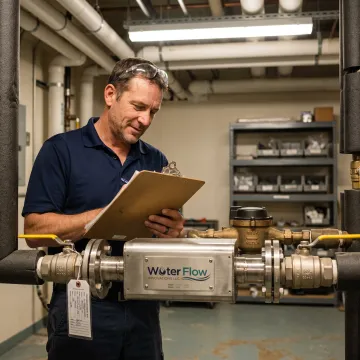
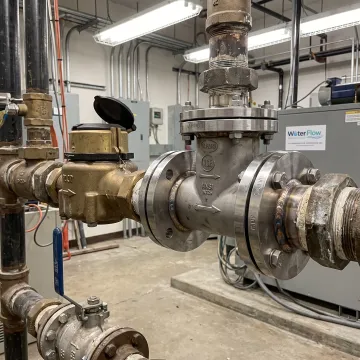
It corrects meter over-reading rather than reducing what the property uses. Air, bubbles, pressure change, and turbulent flow pass through most meters and are counted as billable volume alongside real water, so the property pays for phantom gallons. The FCD is installed on the main line after the meter, upstream of all property systems, to stabilize flow. When over-reading is present, the corrected measurement reduces both the water-use charge and the sewer fee that is calculated as a percentage of it.
Will an FCD affect water pressure or guest operations?
No. Negligible pressure loss is a fundamental design characteristic, and the device does not change downstream water use or system performance. It installs on the main line after the meter, so guestrooms, kitchens, laundry areas, pools, spas, irrigation, and cooling systems continue to receive exactly what they received before. Installation takes approximately one hour, with water off for that one hour only, and is planned around low-occupancy or overnight windows to protect guest service.
What types of hospitality properties can use an FCD?
Any hospitality facility on a metered municipal connection, including hotels, resorts, restaurants and fast food, vacation rentals, multifamily-style lodging, theme parks and attractions, cruise ship terminals, marinas, and large properties with shared amenities. The opportunity is largest where demand cycles frequently, which covers commercial laundry, cooling tower makeup, irrigation zones, pool fills and backwash, tank fills, and kitchen operations. Each property receives a facility-specific review before any recommendation.
How soon can we see savings after installation?
Where meter over-reading is present, savings are expected on the very next water and sewer billing cycle, with no ramp-up period, because the device corrects flow conditions at the meter immediately. Documented installations average a 5-30% reduction in combined water and sewer bills, with the highest documented single result reaching 46%, and actual savings vary with meter and pipe configuration, utility rates, water-use profile, and the extent of air or turbulence affecting measurement. The first post-installation bill gives operators documented before-and-after evidence for ownership and asset management review.
How is potential savings calculated before we purchase?
Water Flow Innovation reviews your water and sewer bills, billing cycles, meter size, pipe size, line pressure, PRV configuration, and property water-use profile, taking account of pressure cycling, irrigation, cooling tower makeup, laundry, pool systems, tank fills, and high-frequency demand. You receive a projected savings range, FCD sizing recommendation, ROI estimate, and installation planning summary. The remote analysis is free and carries no commitment, and an online calculator gives an immediate estimate without contact information.
Does the device work with our existing meter and pipe size?
Yes. The Flow Conditioning Device is custom-built and works with any pipe size and any meter type. The savings analysis and facility review determine the right configuration for the main water line after your meter. That compatibility lets hotels and other hospitality properties evaluate the system without replacing existing water meters, altering downstream plumbing, or touching any guest-facing or back-of-house equipment.
What guarantee and warranty are included with an FCD?
A 6-month money-back guarantee with no questions asked applies to the device purchase price, so it can be returned if metered consumption does not measurably fall within six months; installation cost is non-refundable. The equipment also carries a lifetime transferable warranty against manufacturing defects, which transfers with the property if the asset changes ownership, subject to a transfer fee. Installation planning, configuration, and payment terms are all reviewed before purchase or lease approval.
Can hospitality businesses lease flow conditioning equipment?
Yes. Purchase and lease options are available, including volume arrangements for multi-location operators. Leasing lets hotel groups, restaurant operators, and portfolio managers pursue a utility-saving upgrade while aligning payments with capital planning. Each property with its own metered connection is a separate installation opportunity, so savings compound across a portfolio, and a savings analysis provides projected ROI per site to support the comparison.
Why does a meter register water the property never received?
Because most meters cannot tell water from air. Laundry, kitchens, pools, cooling towers, and irrigation each introduce air, gas, and turbulence as they cycle, and the meter counts that entrained volume as billable water alongside the real flow.
What are the signs our hospitality property has an over-reading meter?
The clearest sign is a water bill that stops tracking with occupancy: if metered consumption does not move in line with room nights, covers served, or seasonal demand, the gap is usually at the meter rather than in the property. Others include a sewer charge disproportionate to actual discharge, bills rising while occupancy holds steady, heavy commercial laundry and cooling tower cycling on the same connection, and no improvement after the utility replaced the meter.