
For renters, this shows up as a bigger monthly bill or a rent increase. For property owners, it's margin pressure and tenant complaints layered on top of rising insurance and maintenance costs.
Apartment water bills typically fall in the $30-$70/month range per unit, though this swings hard depending on your city, your state's rate structure, and how the property bills for water at all. Some of that cost is unavoidable. A lot of it isn't.
This article breaks down how apartment water costs actually build up, what drives them higher, and what renters and property owners can each do to bring them down.
Key Takeaways
- Water/sewer costs swing widely by billing method: submetering, RUBS (ratio billing), or flat-fee rent inclusion
- Older plumbing, inefficient fixtures, and higher occupancy push monthly bills up fast
- Meter and infrastructure issues often add more cost than resident behavior
- Renters influence habits and lease terms; owners control systems and building-wide fixes
- Owners hold the real leverage for lasting, portfolio-wide savings
How Apartment Water and Utility Costs Typically Build Up
Water bills aren't one flat number. They're built from a fixed base charge (a service fee for having a connection) plus variable consumption charges based on usage, plus a separate sewer fee that's often calculated as a multiple of water use.
How this reaches the resident depends on the billing model:
- Submetering — each unit has its own meter; residents pay for actual usage
- RUBS (Ratio Utility Billing System) — no individual meters; the master bill gets allocated across units by formula (square footage, occupancy, or similar)
- Flat fee — a set monthly charge added to rent, regardless of usage
- Included in rent — no separate line item at all
For renters, RUBS and flat-fee arrangements can hide the real cost of water use entirely. You might be conserving diligently and still paying the same amount as a neighbor who runs the tap all day.
For property owners, the math is less forgiving. A small leak or inefficiency in one unit doesn't stay small. Multiply it across 100, 200, or 500 units, and a minor per-unit loss becomes a five- or six-figure annual problem.
Most communities don't catch this until something forces the issue: a spike in the master water bill, water damage from an undetected leak, or a sustainability audit that turns up inconsistencies nobody was tracking.

Key Cost Drivers for Apartment Water Bills
Not every apartment community faces the same cost pressures. The drivers tend to split along a few lines.
Property Age and Infrastructure
Older buildings carry older plumbing, which means more leaks, less efficient fixtures, and degrading pipes over time.
A 2024 industry analysis found that leak detection and smart metering delivered 25% or more in savings for older multifamily construction. Individual leak incidents cost owners $12,000 to $35,000 each, according to Multifamily Executive.
Occupancy and Amenities
More residents per unit means more showers, more laundry, more dishwashing. Beyond the unit level, shared amenities add their own load:
- Laundry facilities
- Pool and spa maintenance
- Landscaping and irrigation
- Common-area restrooms
Billing Structure
Whether a building uses submetering, RUBS, or a flat fee doesn't just affect who pays. It affects whether anyone notices a problem. Submetered buildings catch anomalies unit-by-unit. RUBS and flat-fee buildings often don't catch anything until the master bill spikes.
Meter Over-Reading (The Overlooked Driver)
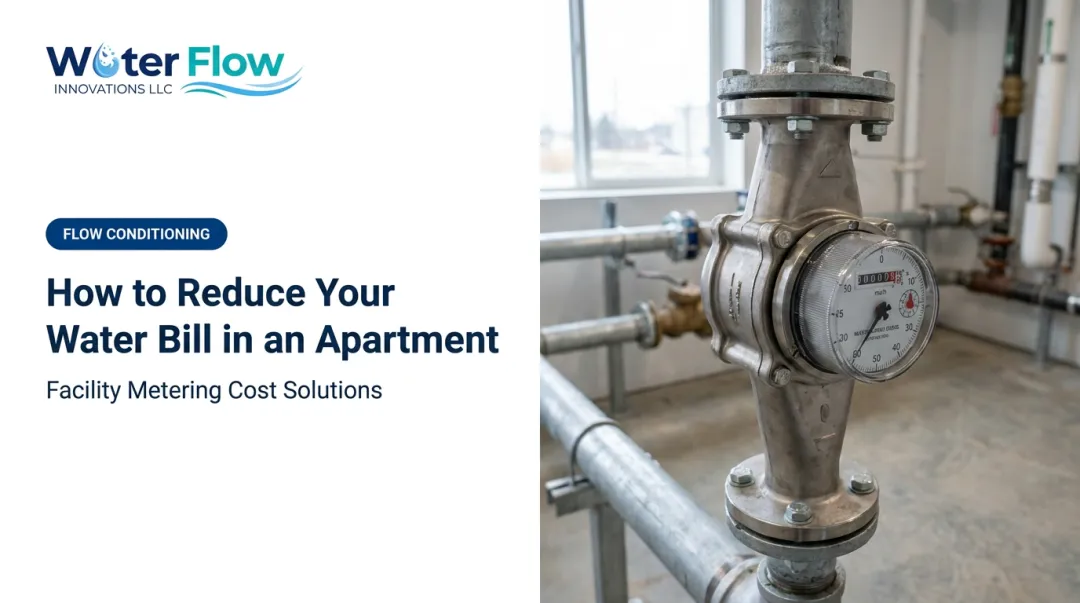
Water meters don't always measure accurately. Turbulent flow and air entrainment in plumbing systems can cause a meter to register more water than what's actually being used, inflating bills without any change in resident behavior.
This matters because it hits differently depending on who you are. Renters mostly deal with behavior and unit-level fixtures. Owners deal with infrastructure, master metering, and sewer fees calculated off inflated water readings.

Cost-Reduction Strategies for Apartment Water and Utility Bills
Effective cuts usually come from three levers: better equipment choices, tighter day-to-day water management, and upgrades to shared building systems.
Strategies That Change Decisions
- Install low-flow showerheads, faucet aerators, and dual-flush toilets during unit turns or renovations
- Choose ENERGY STAR appliances — a certified dishwasher can save roughly 5,800 gallons over its lifetime, per ENERGY STAR
- Review the lease billing method before signing so you know whether costs run through submetering, RUBS, or a flat fee
Strategies That Change Management
- Run regular leak checks on in-unit and building-wide plumbing
- Monitor consumption monthly instead of waiting for an annual spike
- Share move-in guidance on shorter showers, full laundry loads, and reporting drips right away
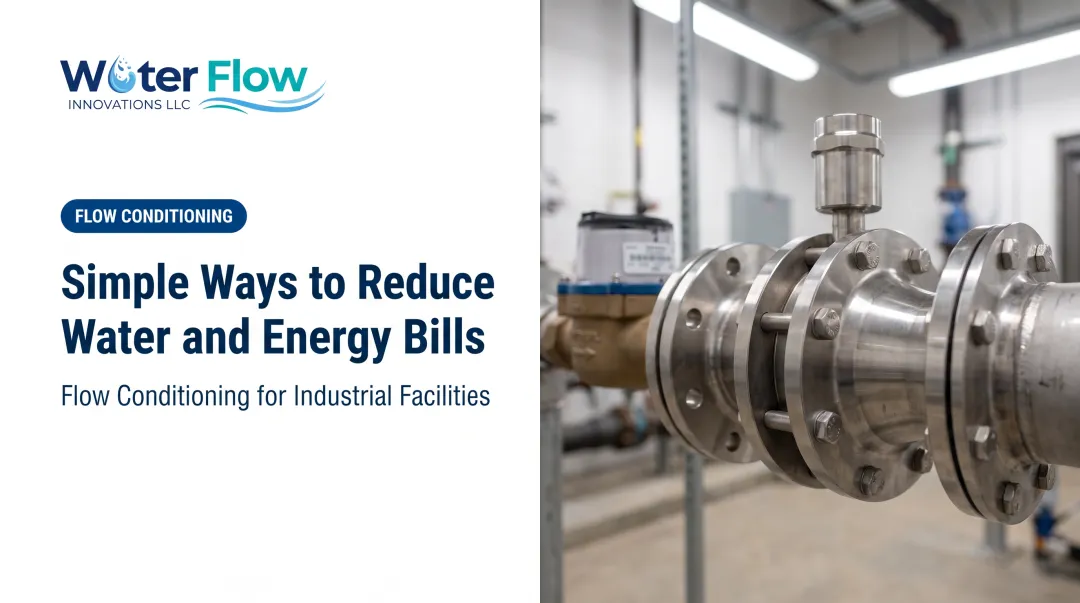
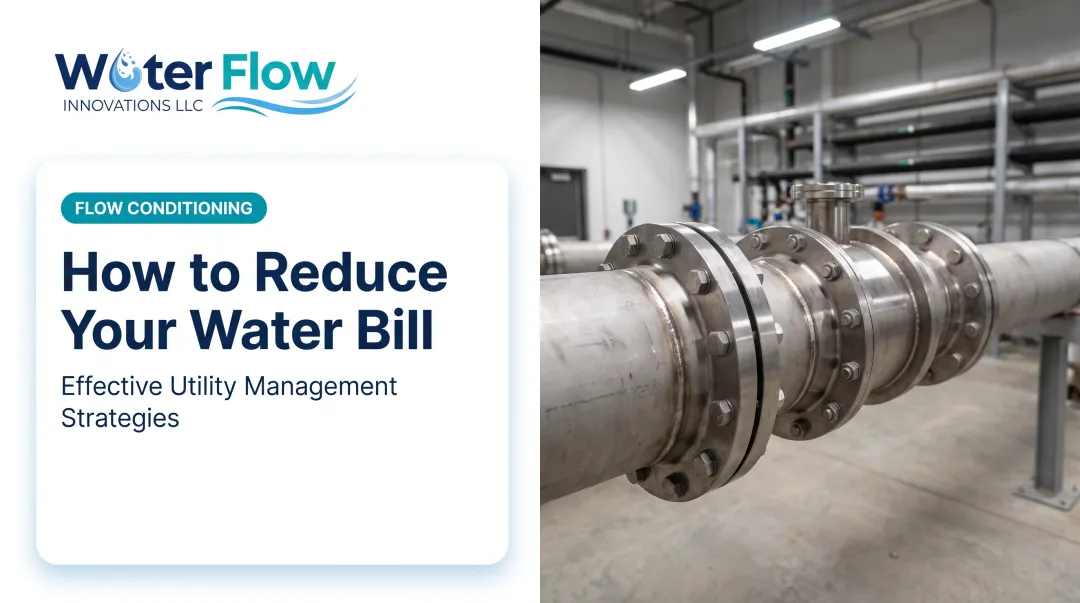
Leak checks and usage tracking only go so far if the master meter is over-registering. For owners, correcting that at the source is often the highest-leverage management move. Water Flow Innovation's Flow Conditioning Device (FCD) reduces the turbulent flow and air entrainment that drive over-reading — without changing resident water use or building pressure.
Documented multifamily results include:
- Typical 5–30% reduction in combined water and sewer bills (highest documented: 46%)
- About 90% of customers reach ROI within 12 months
- Savings start on the next billing cycle
- Master-meter install in about an hour, with no unit access and no resident disruption
Example: a 200-unit tower paying $18,000/month for water and sewer could save roughly $3,600/month ($43,200/year) at a 20% reduction.

Strategies That Change the Context
- Upgrade irrigation with smart controllers or drought-tolerant landscaping
- Retrofit shared amenities — pools, laundry rooms, common restrooms — with efficient fixtures and controls
- Consider submetering to allocate costs fairly and reward conservation
In most multifamily buildings, the master meter and shared infrastructure drive excess cost more than individual resident habits. Fixing the system beats asking people to use less.
Renter vs. Property Owner: Who Should Do What
| Focus Area | Renters | Property Owners/Managers |
|---|---|---|
| Primary lever | Habits and lease terms | Infrastructure and metering |
| Quick win | Report leaks immediately | Leak detection audits |
| Long-term move | Understand billing method before renewing | Flow conditioning, fixture upgrades |
| Reporting benefit | Lower personal bill | ESG/LEED documentation, NOI improvement |
Renters get the most mileage from understanding their billing structure and reporting problems fast — a dripping faucet reported on day one costs a lot less than one ignored for a month.
Property owners get building-wide savings from infrastructure fixes. A single flow conditioning installation benefits every unit at once: no resident coordination, no operational disruption, and documentation that supports ESG, LEED, and lender reporting.

Conclusion
Cutting apartment water costs starts with identifying where the bill is actually coming from: behavior, aging infrastructure, or metering inaccuracies. Match the fix to that source instead of defaulting to blanket conservation campaigns.
For property owners, the fastest wins usually come from system-level fixes—meter accuracy, flow conditions, and targeted infrastructure repairs. Shorter-shower campaigns rarely cut costs the way correcting how water is measured and delivered does.
Frequently Asked Questions
What is the average apartment water bill in Texas?
Texas does not publish a statewide apartment-only water average. RentCafe puts typical U.S. apartment water costs around $49/month plus sewer—use your city’s utility rates for a local estimate.
What is the average apartment water bill in Florida?
Florida also lacks a published statewide apartment average. Irrigation and cooling demand in many communities often push usage and bills above the national norm.
What is the average apartment water bill in Pennsylvania?
Pennsylvania has no official apartment-only average either. Older housing stock matters more here: aging pipes and fixtures often mean higher loss and weaker efficiency.
Do renters pay for apartment water bills in Florida?
It depends entirely on the lease and property. Florida law exempts landlords from utility-commission jurisdiction when they don't charge more than the actual service cost, so confirm your billing method before signing.
How can property managers reduce water costs across an entire apartment complex?
Building-wide flow conditioning is one of the most scalable levers: it corrects meter over-reading from turbulent flow and can show savings on the next billing cycle with little resident disruption. Pair that with leak repair and efficient fixtures when audits find waste at the unit level.
Is submetering worth it for apartment communities?
Submetering improves billing fairness and encourages conservation, but it needs upfront capital and state-specific compliance. In one NAA case, a 450-suite retrofit added $180,000 in NOI and about $5.5 million in valuation.
Does an over-reading master meter also inflate the sewer charge?
Most utilities calculate sewer as a percentage of metered water intake, typically 80–120% of the water charge. Every phantom gallon is therefore billed twice, once as water and once as sewer, even though it never entered a drain. On a master-metered community that inflates the whole building's bill before any allocation to residents even begins.
Which residential property types see the largest correction?
Master-metered properties with constant demand cycling: multifamily and apartment communities, HOAs, luxury high-rise buildings, senior living, university dormitories, and vacation rentals. Documented reductions average 5–30% of combined water and sewer charges, with a highest documented result of 46%.