
Fluctuating water pressure isn't just an annoyance you learn to live with. It wastes water, stresses your pipes and fixtures, and can quietly inflate your utility bills over time.
This guide breaks down what causes unstable pressure, how to diagnose it yourself, and which fixes actually solve the problem instead of masking it.
Key Takeaways
- Fluctuating or excessive pressure gradually damages pipes, fixtures, and appliances
- Pressure tanks, booster pumps, PRVs, and constant pressure systems each solve a different pressure problem
- Stabilizing pressure cuts wasted water and lowers utility and repair costs
- Proper diagnosis prevents paying for the wrong fix
What Causes Unstable Water Pressure at Home
Before you fix anything, you need to know what's actually happening in your pipes.
Elevation and gravity cut pressure more than most homeowners expect. Water loses roughly 0.433 psi for every vertical foot it climbs, according to Grundfos technical data. A fixture 20 feet above your water meter loses close to 8.7 psi from elevation alone, before you even factor in pipe friction.
Aging or undersized pipes restrict flow, especially during peak demand. Corrosion and mineral buildup narrow the interior diameter over decades, so a pipe that delivered plenty of flow when installed may struggle today.
Municipal Supply vs. Well System Differences
- City water pressure shifts with neighborhood demand and time of day
- Well systems cycle pressure by design: a tank rated 40/60 psi swings through that full range as the pump kicks on and off
- Slow, steady cycling on a well system is normal; rapid or erratic cycling usually signals a tank or switch problem
A misadjusted or failing pressure-reducing valve (PRV) is another hidden culprit. If your PRV sticks or degrades, incoming pressure can spike well past safe limits.
Most plumbing codes, including the 2021 International Plumbing Code, require a PRV once static pressure exceeds 80 psi. Editorial sources like Family Handyman put the practical comfort zone closer to 45-55 psi.
Air entrainment and turbulent flow inside pipes are easy to overlook. Trapped air and turbulence reduce comfort, distort flow readings, and cut overall efficiency.

How to Diagnose Your Home's Pressure Problem
Skip the guesswork. Testing takes ten minutes and a $15 gauge.
Step 1: Test static pressure. Screw a hose-bibb pressure gauge onto an outdoor spigot (available at any hardware store). Turn on the water and record the reading with no other fixtures running. Turn on the water and record the reading with no other fixtures running. Ideal static pressure is about 40–60 psi. Below 40 is low; above 80 can damage pipes and fixtures.
Step 2: Test flowing pressure. Open two or three fixtures simultaneously, then check the gauge again. A big drop between static and flowing readings points to supply, restriction, or capacity issues rather than a regulator problem.
Step 3: Identify the pattern. Match what you observe to these clues:
- Pressure is always low, or it only dips at peak-use times
- Flow collapses as soon as a second fixture opens
- Weak flow only on upper floors (elevation and friction loss)
- Banging pipes when a valve closes (water hammer, often from high pressure)
- Slow-filling appliances such as washing machines or water heaters

Each symptom points to a different cause, so the right fix depends on what these tests show.
Proven Solutions for Stabilizing Water Pressure
Once you know your pattern, the right fix becomes obvious.
Pressure Tank Adjustments
For well systems with an uncomfortable pressure band, adjusting the pressure tank's cut-in and cut-out settings can widen or narrow the operating range. Amtrol's tank documentation notes that precharge should sit about 2 psi below the cut-in pressure. Get this wrong, and you'll see rapid cycling or weak flow.
Constant Pressure Systems
Traditional well pumps cycle on and off, creating pressure swings of 20 psi or more within a single 40/60 psi band. Variable-speed pump technology changes this entirely.
- A variable-frequency drive (VFD) adjusts motor speed in real time as demand changes
- Instead of swinging between cut-in and cut-out, the pump holds close to one setpoint
- Franklin's SubDrive Utility system, for example, allows adjustment across a 25-80 psi range
The result: no more pressure dips when someone flushes a toilet while you're showering.
Booster Pumps
Booster pumps use an impeller to add speed and head when incoming water is too weak. They help most in multi-story homes or on long pipe runs from the street to the house.
Sizing one correctly requires three numbers:
- Target psi at the farthest or highest fixture
- Elevation add-on: roughly 0.43 psi per vertical foot
- Friction loss across your specific pipe length, diameter, and material
Skip any of these and you risk installing a pump that's either underpowered or unnecessarily oversized.

Pressure-Reducing Valves (PRVs)
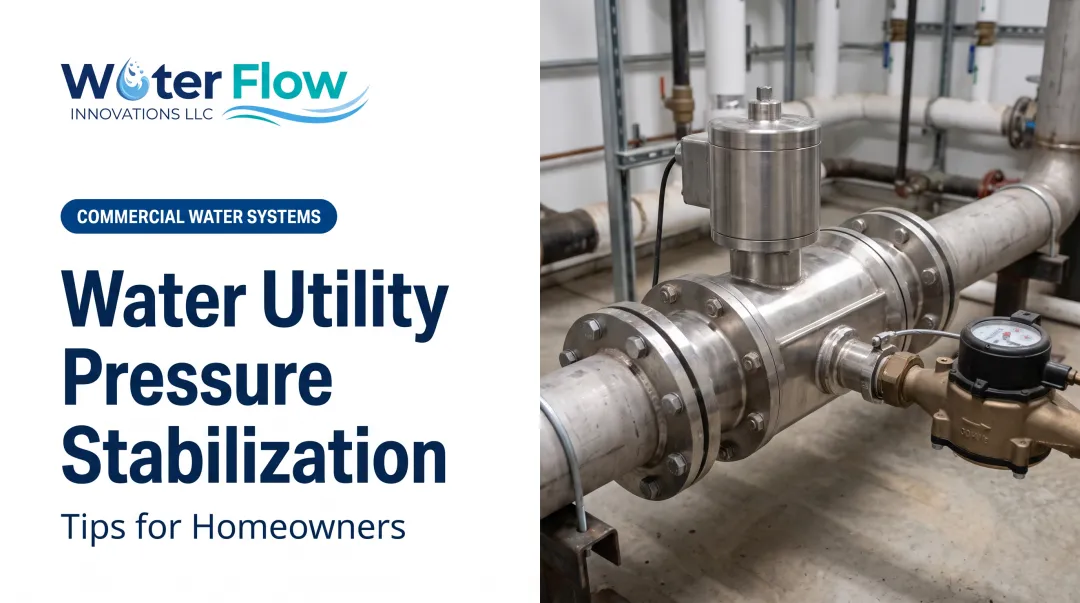
PRVs solve the opposite problem: too much incoming pressure. Once static pressure exceeds 80 psi, code requires a PRV to protect pipes, fittings, and appliance seals from premature failure. Watts notes that residential PRVs typically hold pressure near 50 psi downstream.
Flow Conditioning
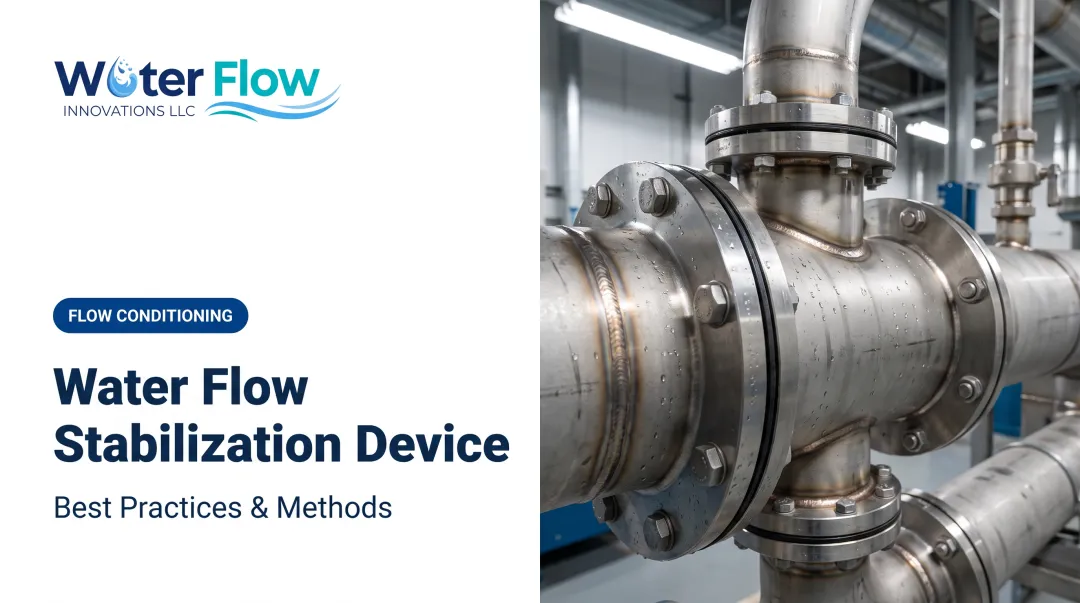
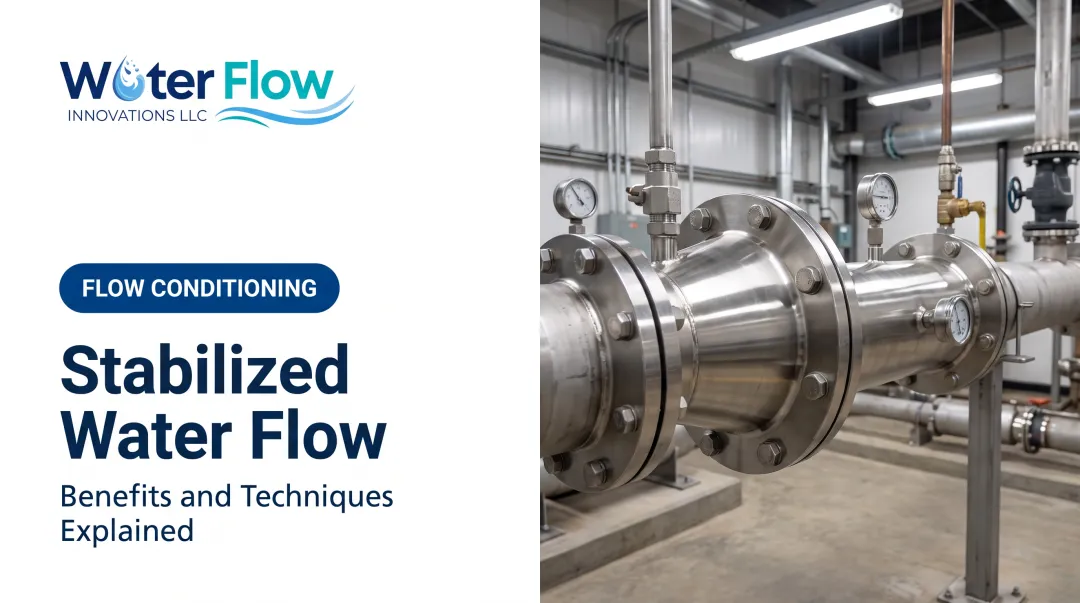
Flow conditioning takes a different path from throttling. It stabilizes flow and reduces the turbulence that drives erratic readings and uneven performance at the meter and fixtures.
Water Flow Innovation's certified Flow Conditioning Device is built for commercial and industrial facilities. It corrects meter over-reading from turbulent flow without cutting system performance—useful where bill accuracy and stable delivery both matter.
Pressure issues also feed a larger waste problem. The EPA estimates U.S. homes waste nearly 1 trillion gallons annually through leaks and inefficiencies, or close to 10,000 gallons per average household per year. Fixing pressure won't stop every leak, but it removes one driver of inefficiency.
Choosing the Right Stabilization Solution for Your Home
No single fix fits every home—the right solution depends on your layout, water source, and demand.
| Scenario | Likely Solution |
|---|---|
| Single-story, city water, occasional pressure drops | PRV adjustment or replacement |
| Multi-story home, weak upper floors | Booster pump |
| Well system with noticeable pump cycling | Pressure tank adjustment or constant pressure system |
| High-demand household (multiple bathrooms, irrigation) | Pressure tank + booster pump combination |
Combining a pressure tank with a booster pump makes sense when several fixtures run at once. Large families, homes with irrigation, and properties with hot tubs often need this setup.

Before buying anything, consult a licensed plumber. They'll verify local code requirements (including minimum suction-side psi for certain pump installations) and confirm proper sizing. A pump or valve sized for the wrong pressure range can create new problems instead of solving old ones.
Maintaining Consistent Water Pressure Long-Term
Stabilizing pressure once doesn't mean you're done.
- Inspect pressure tanks, PRVs, and pump components annually for bladder failure, corrosion, or seal wear.
- Re-check static and flowing pressure every few months to catch drift before it turns into a failure.
- Keep system pressure in the 40-60 psi band to extend the life of pipes, valves, and appliances.
PRV manufacturer Watts notes that valve seats can collect dirt over time, and a service kit often fixes the issue without a full replacement. Catching that early costs far less than a burst pipe or a failed water heater fitting.
Frequently Asked Questions
What is the best water pressure controller for home use?
PRVs and constant pressure systems are the two most common controllers. Choose a PRV to limit excess incoming pressure, or a constant pressure system to hold steady flow during high demand.
What is considered normal water pressure for a house?
Ideal home water pressure is 40–60 psi. Many households find 45–55 psi the most comfortable range for daily use.
Can too much water pressure damage my plumbing?
Yes. Pressure above 80 psi stresses pipe joints, accelerates fitting wear, and shortens the lifespan of appliances like water heaters and dishwashers.
How do I know if I need a booster pump or a new pressure tank?
Booster pumps increase pressure that's genuinely too low. Pressure tanks regulate and stabilize pressure that already exists but cycles unevenly, especially in well systems.
Does water pressure affect my utility bill?
Yes. Inefficient flow, turbulence, and meter inaccuracies can inflate readings even when actual usage hasn't changed—raising your bill without using more water.
How much does it cost to fix inconsistent water pressure?
Costs vary by fix: pressure tank service is often under $200, PRV replacement typically runs $200–$600, and booster pump installation can range from about $500 to several thousand dollars depending on system complexity.
Where does pressure instability cost the most money?
On shared, high-throughput connections: multifamily and apartment communities, HOAs, luxury high-rise buildings, senior living, hotels, and university dormitories, where booster pumps and constant demand cycling drive air into the line.
How is that confirmed before spending on equipment?
A free review of the water and sewer bills, meter size, pipe size, line pressure, and PRV configuration establishes whether the connection is over-registering and what correction it needs. It runs remotely, with no obligation.