
Introduction
Dairy operations run on water. It cleans equipment, cools milk, generates steam for pasteurisation, and keeps livestock healthy. Few utilities touch every stage of production the way water does.
That makes it one of the largest controllable costs in a dairy facility. Many plant managers struggle with a cost they can't see: turbulent or air-entrained flow near the meter that causes over-registration. Facilities end up paying for water they never used, despite unchanged consumption.
A 2024 peer-reviewed study of nine milk-processing plants found direct water withdrawal averaging 3.31 litres per kilogram of milk processed, ranging from 1.79 to 7.02 L/kg depending on the facility. At that volume, small inefficiencies add up fast.
This guide covers water's role in dairy operations, the flow meters plants rely on, and practical conditioning tips that cut waste, protect equipment, and lower utility bills.
Key Takeaways
- Flow efficiency drives dairy operating costs across CIP, boiler feed, and process water
- Turbulence and air entrainment near meters cause over-registration, inflating water and sewer bills
- Coriolis, electromagnetic, and 3-A certified turbine meters are the industry standards for dairy-grade accuracy
- Certified flow conditioning plus routine maintenance delivers fast, measurable water and sewer bill cuts
The Role of Water in Dairy Operations
Water shows up at nearly every step of dairy production. It's used for:
- CIP (clean-in-place) sanitation — the hot caustic, acid rinse, and final flush cycles that keep processing lines food-safe
- Ingredient recombining and standardisation — adjusting fat and solids content in milk and dairy blends
- Product cooling and refrigeration — bringing raw milk and finished product down to safe holding temperatures
- Boiler feed for steam generation — powering HTST and UHT pasteurisation systems
- Livestock drinking and washing — for farms handling their own herds
A 2024 nine-plant study put average dairy water use at 3.31 L per kg of milk processed. At that rate, a mid-size plant running hundreds of thousands of litres of milk per day moves a matching volume of water through its systems every shift.
Regulatory and Cost Pressure Are Both Rising
The Pasteurized Milk Ordinance (PMO) requires plant water supplies to be adequate, safe, and delivered under consistent pressure, with bacteriological testing at least every six months for individual supplies. Meeting those standards depends on stable, well-conditioned flow, not just clean water.
Meanwhile, water usage drives two combined cost lines: consumption charges and sewer discharge fees. Because most municipalities calculate sewer as a percentage or multiple of metered water use, every over-registered gallon is billed twice, once coming in and once going out. That means metering inaccuracies, leaks, and waste are billed on the way in and again on the way out.
Household water and sewer bills rose 5.1% in 2025 and 24% over the past five years. Industrial tariffs vary by municipality, but the trend is the same. Facilities with high daily water throughput, like dairy plants, have the most to gain from correcting flow inefficiencies at the meter.

Common Water Flow Challenges in Dairy Facilities
Three problems show up again and again in dairy plants, and they're often connected.
Turbulence and air entrainment. Pumps, valves, elbows, and pressure-reducing fittings all disturb the smooth flow of water. When that disturbed flow reaches a meter, it can register a mix of air and water as if it were all liquid, inflating readings without any real increase in usage.
Scale buildup from hard water. Calcium and magnesium deposits narrow pipe diameter over time and coat heat exchanger surfaces.
The US Department of Energy found that just 1/32 inch of scale in a boiler can cause fuel losses of 2.0% for normal scale and up to 7.0% when iron and silica are both present. That's lost energy on top of reduced flow capacity.
Pressure fluctuations from simultaneous demand. CIP cycles, cooling systems, and filling lines often run at overlapping times. When several high-demand systems pull water at once, pressure swings strain equipment and distort flow readings right when accuracy matters most.
Types of Flow Meters Commonly Used in Dairy Operations
Dairy plants generally rely on three meter technologies, each suited to a different application.
| Meter Type | Best For | Key Characteristics |
|---|---|---|
| Coriolis | Viscous products like cream, yogurt, and cultured dairy | Direct mass flow measurement; compact, self-draining, high-grade stainless steel construction |
| Electromagnetic | Water, cleaning agents, and liquid ingredients in CIP and utility systems | No moving parts; strong performance across varying conductivity levels |
| 3-A certified sanitary turbine | Raw milk reception, pasteurisation control, filling and packaging | High accuracy across a wide flow range; built to 3-A sanitary standards |
Regardless of type, dairy-grade meters generally need to meet the same baseline requirements:
- 316 stainless steel or sanitary-grade materials
- CIP and SIP compatibility for cleaning without disassembly
- Accuracy across a wide flow range, not just at peak volume
- Tolerance for the temperature and pressure swings typical of dairy processing
The meter itself, though, is only half the equation. Even the most accurate meter will over-read if the flow reaching it is turbulent or air-laden. That's where flow conditioning comes in.
Water Flow Conditioning Tips for Efficient Dairy Operations
These six practices address the flow problems described above, starting with the highest-impact fix.
Tip 1: Install a Certified Flow Conditioning Device at the Water Meter Connection
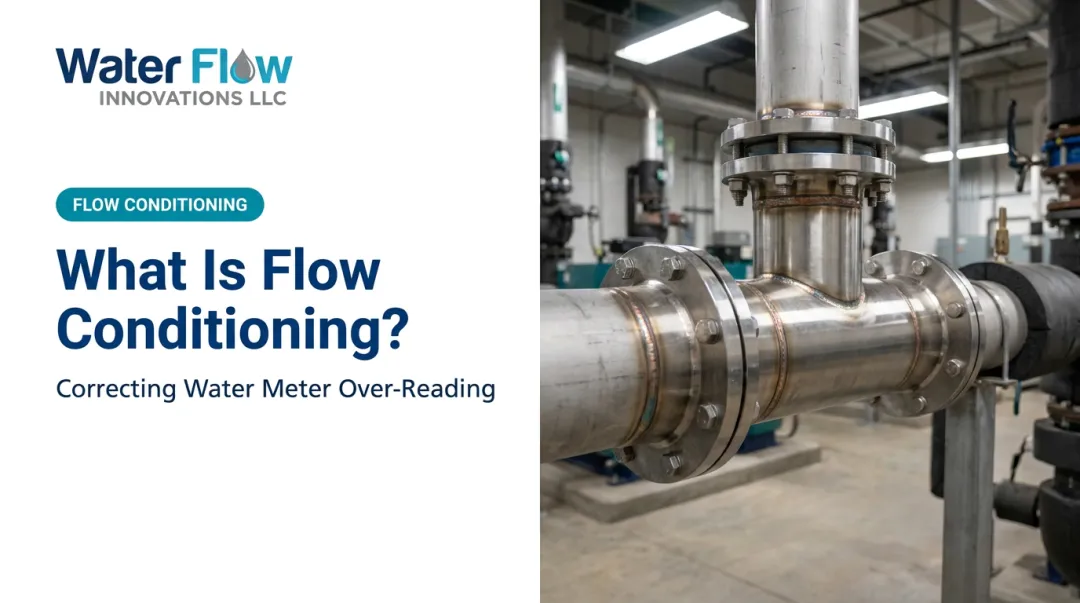
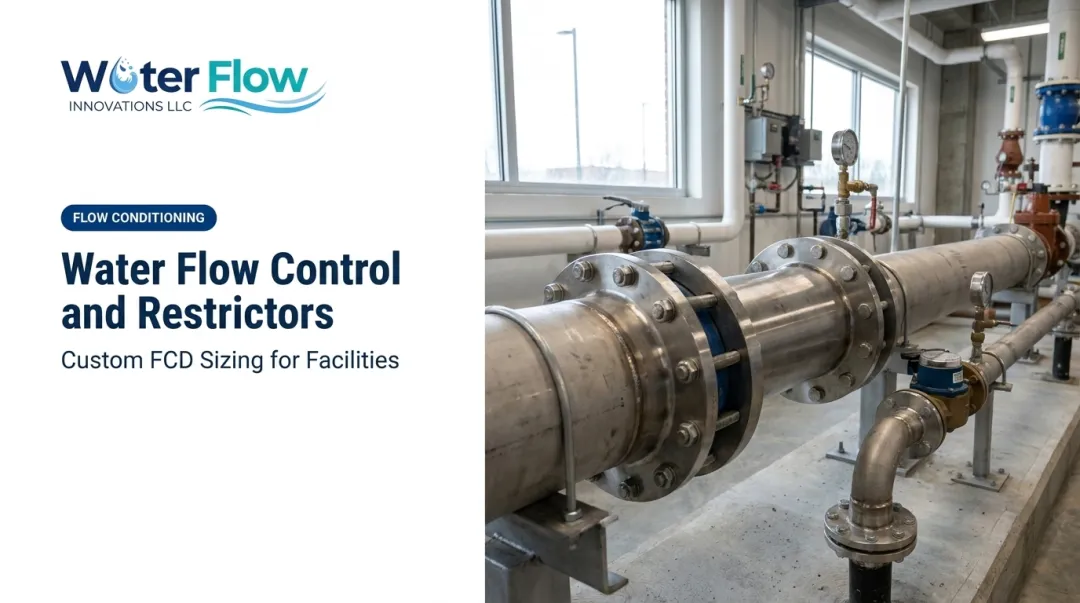
Turbulent, air-entrained flow reaching a meter is a primary cause of over-registration. A certified Conditioning Device, installed immediately after the meter on the consumer side of the connection, creates the static back pressure needed for a smooth, homogeneous water column at the measurement point, removing entrained air and gas, regulating pressure, and reducing turbulence in one pass. Where a pressure-reducing valve is present, the preferred order is Water Meter → FCD → PRV → Building. Installing after the PRV is a fallback only, and runs roughly 20–40% less effective.
Water Flow Innovation's Flow Conditioning Device (FCD) is one example built for this exact problem. Key specs for dairy use:
- IAPMO, NSF, ANSI, CAN 61, KIWA, GMP, and SQF certified — GMP and SQF support dairy QA documentation and PMO review without process changes
- Negligible pressure loss, so CIP pressure, pasteurisation flow, and cooling stay unchanged
- Custom 316L stainless steel, made in the USA for ½″ to 12″ pipe as standard, with larger custom sizes available up to 32″, aligned with 3-A Sanitary Standards
- About one-hour installation, with a brief water shutoff at the meter connection and no access to internal facility systems, process equipment, or operational areas required
- Documented bill reductions of 5–30%, with 46% the highest recorded result, and no change to usage or operations
Because the device installs at the meter connection, before the facility's internal distribution piping, it doesn't touch pasteurisation parameters, CIP chemistry, or HACCP-critical systems. It just corrects what the meter is reading. It is not a general fix for turbulence elsewhere in the plant, and it has no effect on regulated discharge lines.

Tip 2: Stabilize Water Pressure With Pressure Tanks or Booster Pumps
CIP cycles, cooling systems, and filling operations often draw water at the same time, which can cause pressure to drop across the whole system. Pressure tanks and frequency-controlled booster pumps smooth out those drops, keeping supply consistent during peak demand.
This protects two things at once: equipment performance and metering accuracy. A meter reading flow during a pressure dip is far more likely to register inconsistent or inflated volumes than one reading a stable supply.
Tip 3: Schedule Regular Calibration and Maintenance of Meters and Valves
There's no single universal calibration interval that applies to every meter. What matters is matching the interval to the meter's role: food-safety-critical points and temperature-sensitive equipment generally warrant more frequent checks than utility-side meters with a stable history.
A practical starting point most dairy plants use:
- Calibrate primary billing meters at least annually, adjusting frequency based on drift observed in prior checks
- Inspect valves for wear or leakage during routine maintenance windows, not just when a problem surfaces
- Document every calibration result to build the history needed to justify longer or shorter intervals over time
Tip 4: Treat Water to Reduce Scale and Corrosion in Piping Systems
Softening and filtration reduce the calcium and magnesium deposits that narrow effective pipe diameter. That matters more than it sounds like it should: pumping cost is tied to pipe diameter raised to the fifth power in standard friction-loss calculations, meaning even modest scale buildup can meaningfully increase pump energy demand.
Left untreated, scale also shortens the working life of heat exchangers, boilers, and valves, pushing up both energy costs and equipment replacement schedules.
Tip 5: Use Smart Sensors and IoT Monitoring for Real-Time Flow Insights
IoT-enabled sensors track flow, totalised volume, and temperature in real time. That gives dairy operators visibility into patterns that usually stay hidden until a bill arrives or a system fails.
Practical uses include:
- Flagging abnormal flow spikes that suggest a leak or valve failure
- Tracking usage trends across shifts to spot inefficient scheduling
- Supporting maintenance planning before a component fails outright
Tip 6: Optimize Pipe Sizing and Layout to Reduce Turbulence and Water Hammer
Undersized piping forces water to move faster than it should, and industry design guidance generally recommends keeping velocity at or below 5 feet per second to limit water hammer risk. Correctly sized pipe, fewer sharp elbows, and thoughtful valve placement all reduce the turbulence that distorts meter readings.
Meter installation location matters too. Standard guidance calls for roughly 5 pipe diameters of straight run upstream and 2 downstream of a meter to limit distortion from nearby fittings, pumps, or valves.
Benefits of Optimized Water Flow for Dairy Facilities
Getting flow right pays off in ways beyond the utility bill, though that's usually where operators notice it first.
- Bill reductions of 5–30% often show up on the next billing cycle, and about 90% of facilities reach full ROI in under 12 months
- Verified metered data supports ESG reporting, LEED water credits, and dairy sustainability programmes without separate measurement infrastructure
- Consistent pressure and lower turbulence ease strain on pumps, valves, and meters, cutting unplanned downtime and maintenance costs
For dairy plants running steam-dependent pasteurisation, failed steam traps can independently inflate water, sewer, and fuel bills by forcing extra boiler makeup water. Addressing meter accuracy and steam losses together usually yields the largest combined cut across all three utility lines.
Frequently Asked Questions
What is the role of water in the dairy industry?
Water supports CIP sanitation, cooling, pasteurisation, ingredient processing, and livestock care. It's essential to nearly every operational stage in a dairy facility, from raw milk reception through finished product cooling.
What type of flowmeter is commonly used in the dairy industry?
Coriolis, electromagnetic, and 3-A certified sanitary turbine flow meters are most common. Each suits different applications, such as milk reception, ingredient blending, or CIP water flow.
How much water does a typical dairy operation use per day?
Usage varies widely by facility size, product mix, and process design, but consumption is generally significant relative to production volume. For facility-specific figures, request a free water bill review rather than relying on generic industry averages.
What causes water meters to over-read in dairy facilities?
Turbulence and air entrainment from pumps, valves, and pipe fittings distort flow just before it reaches the meter. CIP cycles and parlour wash-down are especially high-frequency, and the meter registers that mix of air and water as billable consumption.
How often should flow meters be calibrated in dairy processing?
Annual calibration is a common baseline for primary billing meters, with more frequent checks recommended for temperature probes and food-safety-critical measurement points based on observed drift.
Can a flow conditioning device reduce water and sewer costs without changing existing equipment?
Yes. Certified flow conditioning devices install directly into existing piping with negligible pressure loss, correcting meter over-reading without altering operations, pasteurisation parameters, or requiring new equipment. Documented reductions average 5–30%.
Can the device be fitted around CIP and production schedules?
Yes. A licensed plumber or mechanical contractor installs it at the supply meter in about an hour, with a brief water shutoff at the meter connection and no access to internal facility systems, process equipment, or operational areas required. Most dairies schedule it between CIP cycles or in a planned maintenance window, and pasteurisation parameters are untouched.
Which food and beverage operations share this over-reading pattern?
Any plant with continuous CIP and wash-down cycling on one meter: dairy, food and beverage, meat and poultry processing, seafood processing, bakeries, bottled water, and yeast and enzyme manufacturing plants.