
Commercial water meters measure volume, not water content specifically. When air gets trapped in your pipes or flow turns turbulent near the meter, that meter can register air bubbles right alongside actual water, and you get billed for both. This isn't rare or theoretical. It's a physics problem built into how compound and turbine meters work.
This guide breaks down why meters over-read, how to tell if it's happening at your facility, and what actually fixes it, without cutting your real water usage. It applies to any commercial, industrial, or municipal facility with metered water service in the US.
Key Takeaways
- Meters can't tell water from expanded air bubbles, so bills inflate with no real usage increase
- Leak fixes and pressure tweaks help, but flow conditioning solves the root cause
- Certified flow conditioning devices average 5-30% bill reductions, with up to 46% documented
- Most facilities never test meter accuracy, so over-reading often goes unnoticed for years
Why Water Meters Over-Read
Municipal water systems run under constant pressure. Every time a valve opens or a faucet turns on, that pressure drops, and any air dissolved or trapped in the water expands.
Think of a soda bottle. Sealed and pressurized, it holds barely any visible gas. Crack the cap and that gas expands instantly. The same thing happens inside commercial piping every time flow starts and stops.
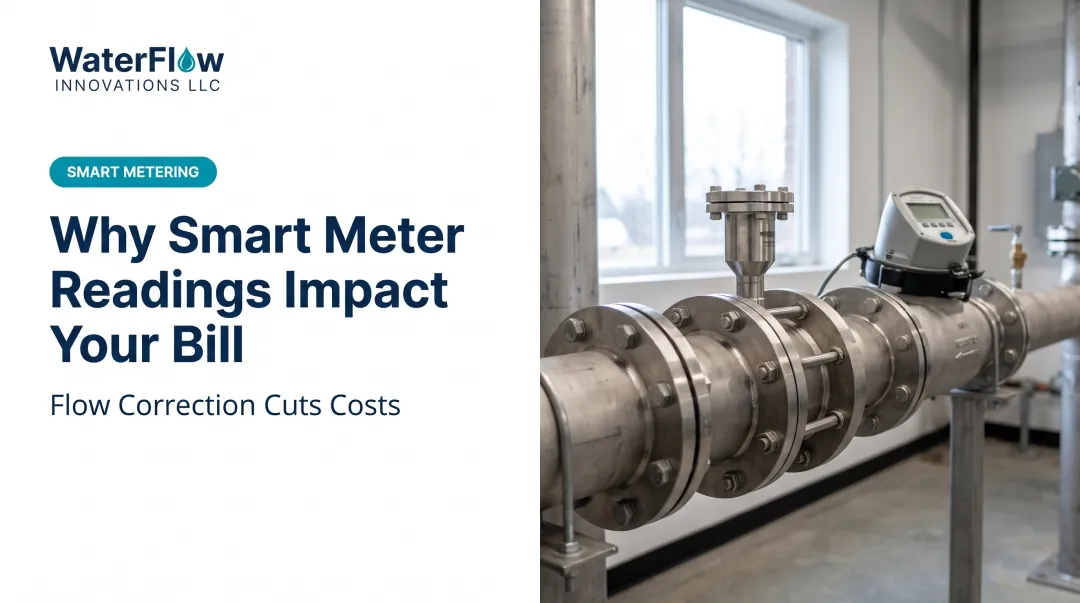
Most water meters measure by volume, not composition. They can't tell water from expanded air pockets moving past the measurement chamber. Both get counted. Both get billed.
What Drives This Beyond Air
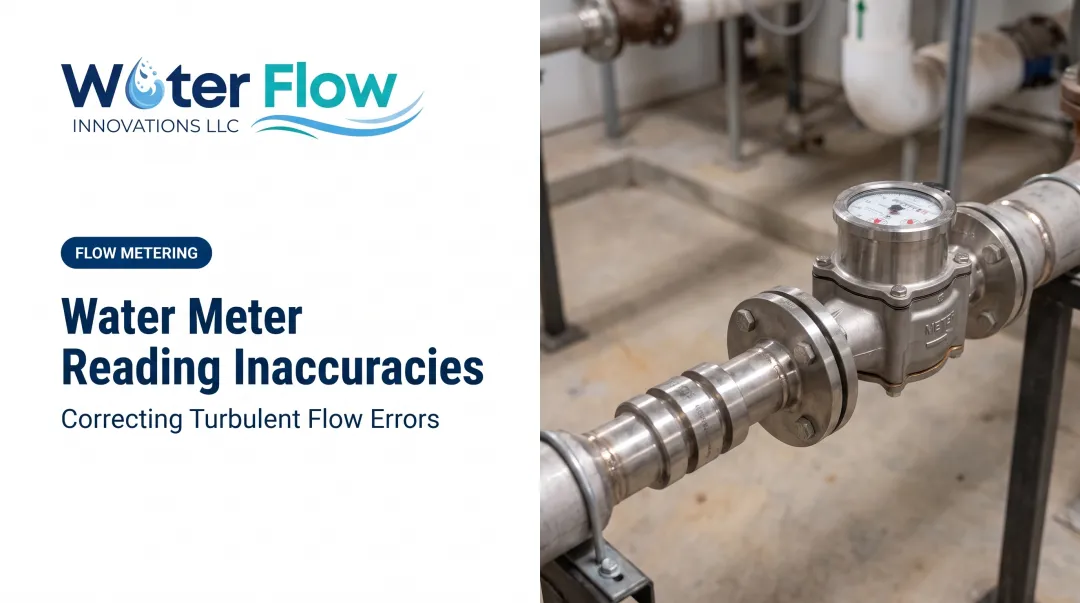
Compound and turbine meters need a completely filled line and steady backpressure to register accurately—guidance reflected in commercial meter specs for years. Removing trapped air and avoiding sudden flow surges cuts registration error and can protect the turbine from damage.
Additional contributors include:
- High system pressure that feeds surges when valves open or close quickly
- Turbulent flow near the meter from upstream fittings, elbows, or valves
- Off-range operation, especially at very low or very high demand
A peer-reviewed 2019 AWWA study tested five electromagnetic meters from five manufacturers. Disturbed flow caused inaccuracy, but the size and direction of that error varied by meter design and installation—not in a simple, proportional way.
A note on meter age: it's tempting to blame an older meter. Municipal guidance from Pittsburgh Water indicates over-registration is rare in failing meters—they typically under-register, not over-register. Even brand-new meters stay fully susceptible to air entrainment and turbulence. Age isn't the reliable indicator most people assume.

What Can Cause a Water Meter to Read High?
Most facilities see high readings from a mix of factors, not one isolated cause:
- Entrained air expanding as pressure drops
- Pressure surges from valve cycling
- Turbulent flow disrupting the meter's measurement chamber
- High static system pressure
- Meter aging or miscalibration (less common)
Signs Your Facility May Be Overpaying
Unlike a leak, over-reading leaves no wet spots, no pooling, no obvious physical evidence. That's exactly why it goes unnoticed for years at most facilities.
The No-Usage Test
Shut off every intentional water use in your facility. Then check the meter's flow indicator:
- Mark or photograph the current dial position
- Wait 30 minutes with zero water use anywhere on-site
- Compare the position again
If the meter still shows movement with everything off, either water is flowing somewhere, or the meter itself is behaving abnormally. This doesn't automatically prove over-reading, but it's a strong signal worth investigating further.
Usage-Pattern Red Flags
- Steady bill increases with no added equipment, occupancy, or production
- Metered charges consistently above what submeters or internal estimates show
- Seasonal spikes with no matching change in operations
If any of these sound familiar and the no-usage test shows no visible leaks, air or turbulence-driven over-reading is worth investigating.

How to Reduce Water Meter Reading: Proven Methods
Start cheap, then escalate. Here's the order that maximizes ROI.
1. Fix Known Leaks First
Toilets, irrigation lines, and worn fixtures waste real water on top of any meter inaccuracy. This step is free and should always come first, since it eliminates actual consumption issues before you invest in anything else.
2. Manage System Pressure
Installing pressure regulators to bring PSI into a stable, moderate range cuts waste from excess pressure and reduces surge-related meter errors.
The 2024 Uniform Plumbing Code requires regulation when static pressure exceeds 80 psi. That figure is a code maximum, not a performance target, but it's a useful benchmark for facilities running hot.
3. Request Municipal Meter Testing
If usage patterns still don't add up, request a formal accuracy inspection. Most municipalities, including NYC, offer this for a modest fee.
Most commercial and industrial facilities have never had their meter tested, simply because utilities don't proactively offer it. Bills get treated as fixed costs by default.
4. Install Flow Conditioning
This step targets the mechanism behind many inflated bills: turbulent flow and air entrainment that make meters over-read.
A flow conditioning device stabilizes pressure and flow at the meter so it registers actual water volume. Facilities with no leaks and no equipment changes often see the largest bill corrections here.
5. Add Smart Sub-Metering
Real-time monitoring won't correct over-reading on its own, but it helps catch anomalies early and validates whether your corrections are working.

Flow Conditioning Devices: A Certified Way to Correct Over-Reading
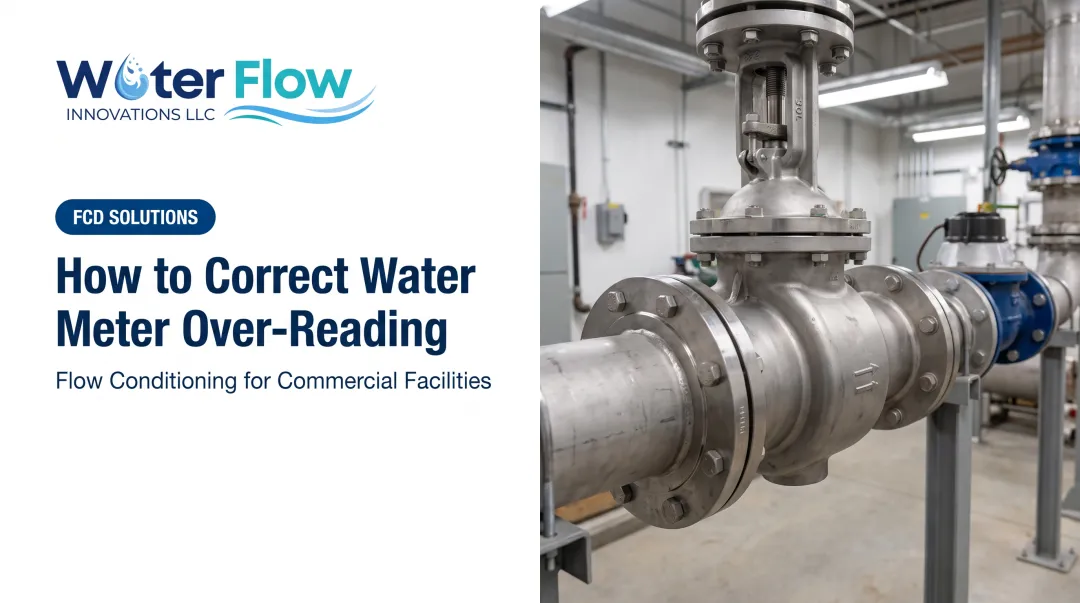
Water Flow Innovation offers a Flow Conditioning Device (FCD) engineered to correct over-reading from air entrainment and turbulence. Each unit is custom-fabricated in 316L stainless steel to the facility's exact pipe size, from 1/2 inch up to 20 inches.
How the 4-Component System Works
- Air/gas separation: Creates a static back-pressure zone that keeps air out of the meter's measurement area, so the meter reads a full water column
- Pressure regulation: Cuts water hammer and surge from valve cycling or variable demand, protecting downstream pipes and equipment
- Check valve (select configurations): Blocks reverse flow and stops air from re-entering lines after purging
- Turbulence elimination: Slows velocity enough to prevent vortex flow during CIP cycles, tank filling, or irrigation runs
The device installs immediately after the water meter, works with any meter type and any standard pipe size (½-inch to 12-inch), and takes about an hour with no disruption to operations. It suits facilities from manufacturing plants to hotels to hospitals.

What Facilities Can Expect
| Metric | Typical Result |
|---|---|
| Average bill reduction | 5-30% |
| Highest documented reduction | 46% |
| Time to see savings | Next billing cycle |
| ROI timeline | Under 12 months (90% of customers) |
The FCD carries IAPMO, NSF, ANSI, CAN 61, KIWA, GMP, and SQF certifications. Coverage includes a 6-month money-back guarantee (installation cost excluded) and a lifetime transferable warranty that follows the property through ownership or management changes.
For larger organizations, documented before-and-after billing records can support ESG reporting, LEED certification, and water-intensity metrics for sustainability programs.

Choosing the Right Approach for Your Facility
Free fixes come first. Check for leaks and assess your current pressure before spending anything on equipment. That maximizes ROI on whatever you do next.
Prioritize a flow conditioning evaluation if your facility has:
- High water and sewer costs relative to comparable facilities
- Older infrastructure or original meters
- Unexplained bill spikes with no operational changes
If any of those apply, get numbers before you buy. Water Flow Innovation offers a free water bill review. Share your most recent 12-month billing history, meter make/model, pipe size, and pressure conditions to project facility-specific savings before you commit to anything.
Frequently Asked Questions
What can cause a water meter to read high?
Entrained air, pressure surges, turbulent flow near the meter, high system PSI, and occasionally aging or miscalibration can all contribute. Most facilities experience a combination rather than one single cause.
How do I know if my water meter is faulty versus just over-reading due to flow issues?
Run the no-usage test: shut off all water and watch for meter movement. Continued movement usually points to a leak or mechanical problem. Over-reading from air or turbulence shows up on bills during normal use; a utility accuracy test confirms true meter faults.
Will reducing meter over-reading affect my water pressure or usage?
No. Certified flow conditioning devices are designed for negligible pressure loss and don't require any change to your operations, water usage, or downstream pressure.
How much can a business realistically save by correcting water meter over-reading?
Most facilities see a 5-30% reduction in water and sewer bills, with some documented cases as high as 46%. Savings typically appear on the very next billing cycle.
Who is responsible for fixing a faulty or over-reading water meter?
Municipal utilities are responsible for confirmed mechanical meter faults. Over-reading caused by internal plumbing conditions, air entrainment, or turbulence falls on the facility to address.
How long does it take to install a solution to reduce water meter over-reading?
Installation typically takes about an hour, with a brief water shutoff at the meter connection at the supply connection. No production lines or operational areas need to be accessed or modified.
Why does a lower reading cut two charges rather than one?
Because sewer is calculated from metered intake rather than measured discharge, commonly at 80–120% of the water charge. Reducing the registered volume therefore lowers the sewer line automatically on the same billing cycle.
What if the reading doesn't come down?
A 6-month money-back guarantee covers the device purchase price, with installation cost non-refundable, so it can be returned if metered consumption does not measurably fall. A lifetime transferable warranty against manufacturing defects also applies.