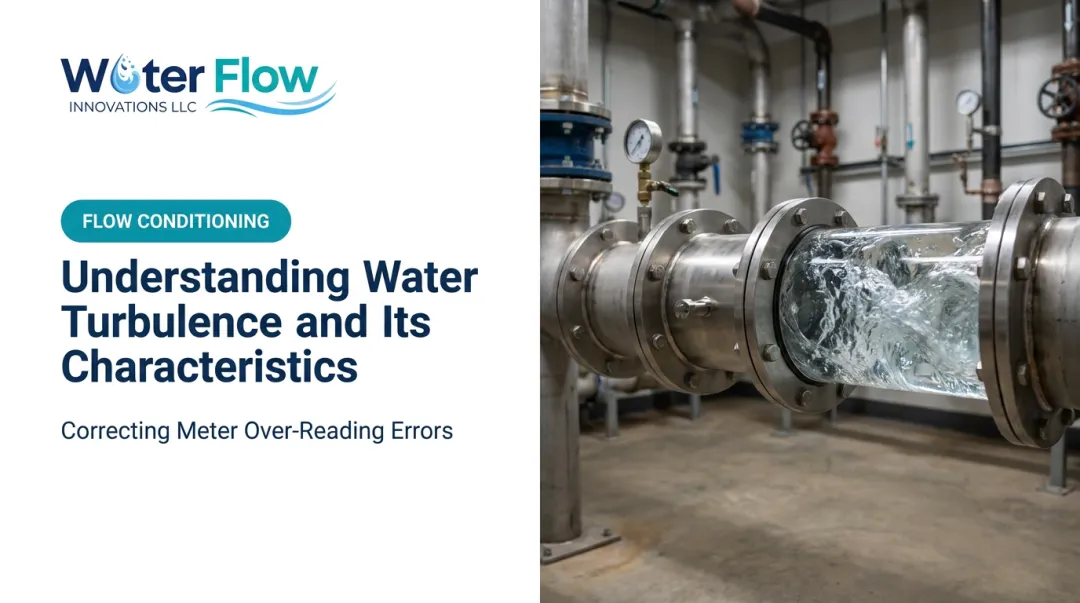

Water turbulence is chaotic, non-linear flow, the opposite of smooth, orderly laminar flow. It's not just a hydraulics curiosity. Turbulence is a documented root cause of water meter inaccuracies, accelerated pipe wear, and unnecessary energy loss.
This article breaks down what causes turbulence, the warning signs to watch for, what happens if you ignore it, and how facilities correct it.
Key Takeaways
- Main causes: pipe fittings, air entrainment, velocity spikes, and aging infrastructure
- Unmanaged turbulence can inflate meter readings, damage pipes, and raise utility costs
- Cut risk with correct pipe sizing, pressure regulation, air removal, and flow conditioning
- Sustain control through ongoing monitoring, maintenance, and certified flow equipment
Common Causes of Water Turbulence
Turbulence is irregular, swirling flow that disrupts smooth movement through pipes. It intensifies near valves, elbows, and meters. Most cases trace back to a mix of mechanical, hydraulic, and design factors.
Pipe Fittings, Elbows, and Restrictions
Sharp bends, tees, and sudden diameter changes force water to change direction abruptly, creating eddies and swirling flow. Research from the Pacific Northwest National Laboratory confirms that fittings and valves close to a meter disturb the flow profile and reduce measurement accuracy.
What this looks like: Turbulence spikes right after an elbow or valve positioned too close to a meter, causing chronic misreadings that persist until the layout changes.
Air Entrainment and Gas Bubbles
Trapped air enters water systems through pump cavitation, loose fittings, or intake air during service interruptions. A University of Perugia lab study found that air passing through a meter during pipeline refilling can register as significant over-volume. Meter spin reached roughly 14 times the water-driven velocity during air passage.
In practice: Air bubbles pass through a mechanical meter and register as water volume. Five of six meters tested in the study failed under these air-heavy conditions.
High Velocity and Pressure Fluctuations
Excessive flow velocity or pressure surges amplify turbulence, especially in high-demand commercial and industrial systems. AWWA guidance recommends keeping velocity at 5 ft/s or less specifically to limit water hammer potential.
Common example: Pumps cycling on and off, or a malfunctioning pressure-reducing valve, create repeated surges that keep flow chronically disturbed.
Pipe Diameter Mismatches and Aging Infrastructure
Undersized pipes, internal corrosion, and scale buildup narrow flow paths and force water into turbulent patterns it wouldn't otherwise take. The EPA links high velocity, turbulence, and abrupt direction changes to erosion-corrosion, particularly at pump impellers, partly closed valves, and constrictions.

Real-world impact: An older commercial building with legacy plumbing experiences chronic turbulence-related noise and billing issues that trace back to decades-old pipe.
What Happens If Water Turbulence Is Ignored
Ignoring turbulence doesn't just mean living with noisy pipes. The consequences compound over time:
- Inflated water and sewer bills from meters over-registering air and turbulent flow as water volume
- Accelerated pipe and fitting wear from erosion-corrosion and constant vibration
- Increased pump energy consumption from cavitation and inefficient operation
- Higher water hammer risk from pressure spikes that can rupture pipe and damage flow-control equipment
That bill impact is not small. Water Flow Innovation field data shows meter over-reading from turbulence and air entrainment commonly inflates combined water and sewer charges by 5–30%, with a highest recorded case of 46%.
Because sewer fees are often based on metered water use, the same over-registration drives both line items higher until the flow condition is corrected.

Warning Signs You're Experiencing Water Turbulence
These signs often go unnoticed until bills or maintenance costs spike. Watch for:
- Unusually high or fluctuating water bills despite unchanged usage patterns
- Banging, vibration, or "water hammer" noises in pipes, especially after valve closures or pump cycling
- Visible wear, leaks, or pressure drops at fittings and valves that shouldn't be failing yet
None of these signs are conclusive on their own. Together, though, they point toward a turbulence problem worth investigating.
How to Prevent Water Turbulence
You can cut turbulence with correct pipe sizing, flow conditioning at the meter, steady pressure, and clear flow paths. Most facilities need more than one of these.
Proper Pipe Sizing and Layout
Match pipe diameters and fitting choices to actual flow demand. That cuts velocity spikes and turbulence at transitions, especially near meters and valves. Plan sizing during new construction or retrofit design—changing layout later is far more disruptive.
Install a Certified Flow Conditioning Device
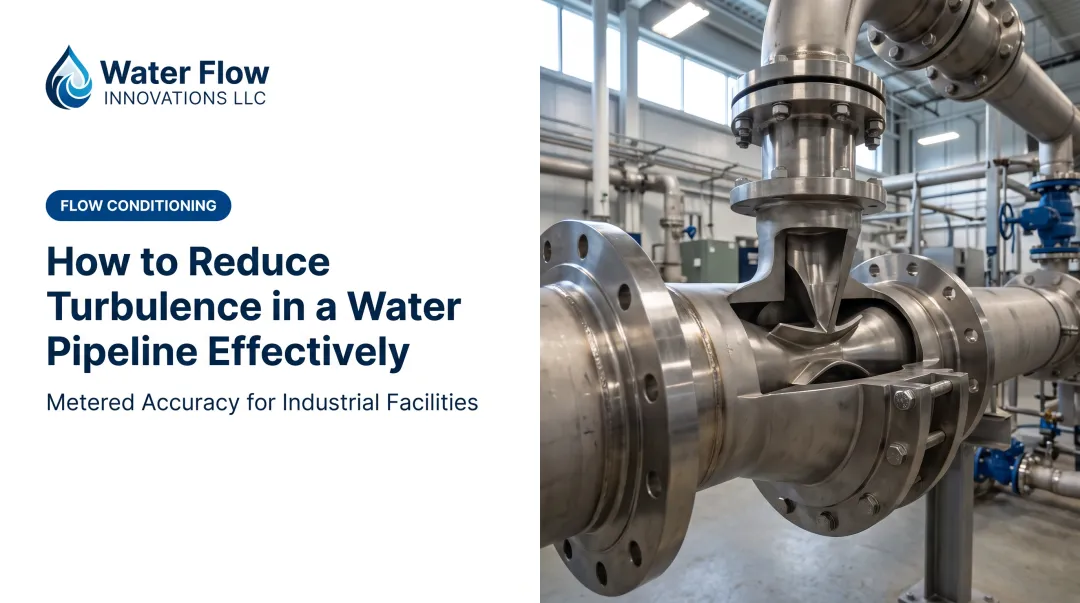
A flow conditioning device removes entrained air and gas, regulates pressure, and smooths turbulent flow at the meter.
Water Flow Innovation offers a Flow Conditioning Device (FCD) built around a four-component system:
- Separates air and gas by creating back pressure that forces bubbles back into the main line for a homogeneous water column
- Regulates pressure to stabilize surges from pump cycling and variable demand
- Adds a check valve where specified to stop reverse flow and limit pressure spikes
- Slows velocity at the meter to prevent vortex formation during CIP cycles, tank filling, and irrigation events
Each unit is custom-fabricated in 316L stainless steel for pipe sizes from 1/2" through 12", typically installs in about one hour, and carries IAPMO, NSF, ANSI, CAN 61, KIWA, GMP, and SQF certifications. Negligible pressure loss means system performance stays the same.

Best fit: facilities with water or sewer bills that stay high relative to actual usage, or operations with heavy CIP cycles, cooling-tower makeup, or irrigation cycling.
Pressure Regulation and Pump Maintenance
Install pressure-reducing valves and maintain pumps to avoid surges and cavitation. The Department of Energy recommends restoring internal clearances, replacing worn rings or impellers, and matching pump output to actual system requirements. This minimizes both air entrainment and velocity-driven turbulence. Build this into routine preventive maintenance schedules rather than waiting for failure.
Routine Pipe Inspection and Descaling
Inspect for corrosion, scale buildup, and aging fittings that narrow flow paths. Keeping flow paths clear reduces turbulence from obstructions before it becomes chronic. Follow manufacturer-recommended intervals, or at minimum, inspect annually.

Tips for Long-Term Prevention and Control
Beyond immediate fixes, sustained turbulence control depends on ongoing habits:
- Schedule routine flow and pressure monitoring using smart meters or sensors
- Train facility staff to recognize early warning signs before they become costly problems
- Keep documented maintenance and billing records to spot anomalies early
- Use certified flow conditioning technology for consistent correction without operational disruption
Documented, auditable bill data also supports LEED water-reduction documentation and ESG water-intensity disclosures with measurable before-and-after evidence rather than estimates.
Conclusion
Water turbulence has identifiable, correctable causes rooted in pipe design, pressure behavior, and air entrainment. Facilities do not have to accept it as a cost of doing business.
Proactive prevention protects infrastructure and cuts unnecessary utility costs. Certified flow conditioning devices offer fast, verifiable savings without changing actual water usage.
Frequently Asked Questions
What is the difference between laminar and turbulent water flow?
Laminar flow is smooth and orderly, with water moving in organized layers. Turbulent flow is chaotic and irregular, and becomes more likely in pipes at higher velocities when inertial forces overtake viscous forces.
Can water turbulence damage pipes over time?
Yes. Effects include erosion, joint stress, and increased failure risk from constant vibration and pressure fluctuations. High velocity combined with turbulence is specifically linked to erosion-corrosion in pipe materials.
How does water turbulence affect water meter accuracy?
Turbulence and air entrainment can cause mechanical meters to register more volume than actually passed through the pipe. This leads directly to inflated water and sewer bills, even though usage hasn't changed.
What is water hammer and how is it related to turbulence?
Water hammer is a shock wave caused by a sudden change in flow velocity or direction, often from valve closures or pump stops. It's frequently linked to turbulent conditions, though the two aren't identical.
How can I tell if turbulence is increasing my utility bills?
Compare billed usage against your actual fixture, equipment, and production usage. Unexplained spikes that don't track with occupancy or operations are a strong signal worth investigating.
Is a flow conditioning device a permanent fix for turbulence-related issues?
Certified devices like the FCD provide ongoing correction with a passive design and no moving parts. Water Flow Innovation backs its FCD with a lifetime transferable warranty and a 6-month money-back guarantee.
What does correcting turbulence-driven over-reading return?
Documented installations average a 5–30% reduction in combined water and sewer charges, with a highest documented single result of 46%, appearing on the very next billing cycle after installation.
Which facility types run the most turbulent supply lines?
Sites with constant on-off demand across one connection: car and truck washes, laundromats, hotels and hospitality, healthcare facilities, food and beverage and dairy plants, breweries and distilleries, and data centers.