
Fluctuating water pressure isn't just an annoyance for facility managers to shrug off. It's often a signal that something in the system, whether mechanical, structural, or supply-side, needs attention. Left unaddressed, it can accelerate equipment wear, compromise fire suppression readiness, and quietly inflate utility bills.
This guide breaks down what causes commercial water pressure fluctuations, the warning signs to watch for, and practical strategies to prevent them.
Key Takeaways
- Target 40–60 PSI in operation; codes require a PRV when static pressure hits 80 PSI
- Common causes: demand spikes, faulty regulators, pump cycling, and unstable municipal supply
- Ignored fluctuations cause water hammer, fixture wear, and inflated water/sewer bills
- Watch for banging pipes, inconsistent temperature, and uneven pressure between floors
- Prevention relies on booster pumps, calibrated PRVs, routine inspections, and digital monitoring
Common Causes of Water Pressure Fluctuations
Water pressure fluctuation means unpredictable rises and drops in PSI, not a steady state of high or low pressure. That distinction matters: consistently low pressure points to one fixable problem, while fluctuation usually points to several interacting issues.
Most facilities aim for a 40-60 PSI operating range. Plumbing codes don't mandate this exact band, but the 2021 International Plumbing Code requires pressure reduction once static pressure exceeds 80 PSI. Fluctuations typically stem from demand spikes, mechanical failures, supply-side instability, or problems in the building's piping and metering setup.
Peak Demand Surges
When restrooms, kitchens, and laundry facilities all draw water simultaneously, supply capacity gets overwhelmed. This is common in:
- Hotels during morning checkout and evening turndown
- Office towers at lunch rush
- Multifamily buildings in the early morning and evening hours
Faulty or Poorly Calibrated Pressure Regulators
A malfunctioning PRV can't hold steady output, so pressure swings between high and low instead of leveling out. An aging regulator left unserviced for years often starts cycling erratically—usually unnoticed until tenants complain.
Booster Pump Cycling Issues
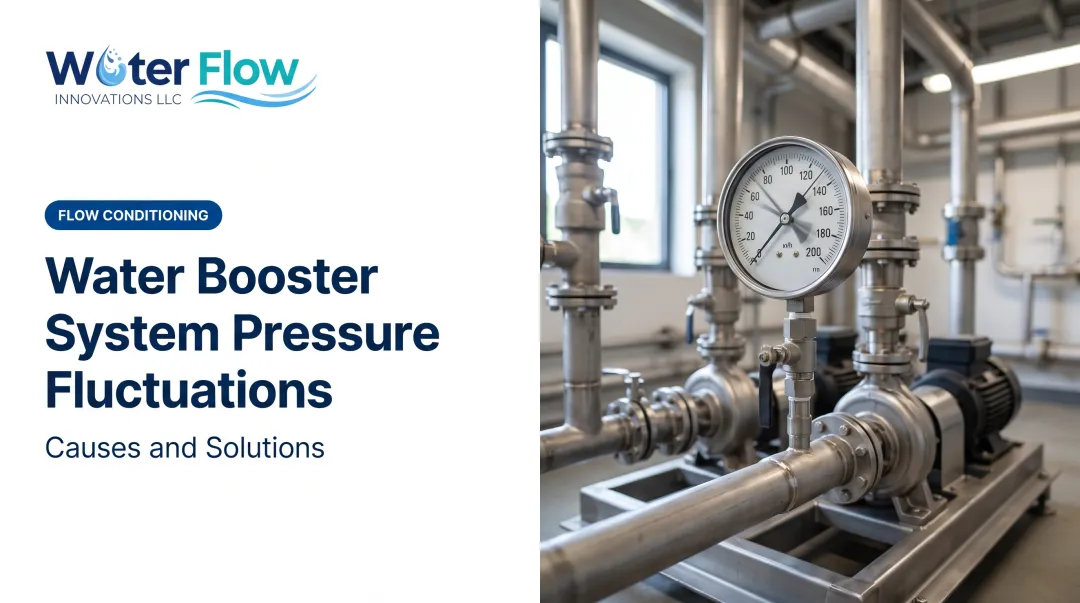
Buildings over 5-6 stories rely on booster pumps to push water to upper floors. Pumps that short-cycle, or lack variable frequency drive (VFD) control, create spikes and drops rather than smooth output. Undersized or aging pump systems are the usual culprits.
Municipal Supply Instability
Sometimes the problem isn't inside your building at all. Nearby construction, fire hydrant use, or peak neighborhood demand can destabilize the incoming municipal supply, which transfers directly into your system.
The EPA reports roughly 240,000 water main breaks occur annually across the US, and most buried water infrastructure is at least 50 years old. Older urban buildings are especially exposed to variable street-level PSI.
Pipe Corrosion, Clogs, and Sizing Problems
Partial blockages from mineral buildup or corrosion create intermittent flow restrictions, which show up as fluctuations rather than steady low pressure. Buildings with decades-old galvanized steel piping are particularly prone to this, since corrosion scale accumulates unevenly along the pipe interior over time.
Water Meter Inaccuracies and Air Entrainment
Turbulent flow and air entrainment near the meter can produce erratic readings that mimic, or mask, real pressure issues. Facilities sometimes blame their plumbing when the real culprit is what's happening right at the meter.
Air bubbles moving through a meter can register as billed water even though nothing came out of a tap. When this coincides with fluctuation complaints, it's worth investigating the metering setup itself, not just the pipes.
Water Flow Innovation's Flow Conditioning Device (FCD) addresses this specific problem. It stabilizes turbulent flow and removes air and gas from the meter's measurement zone, and holds IAPMO, NSF, ANSI, CAN 61, KIWA, GMP, and SQF certifications. For facilities facing both fluctuation complaints and unexplained billing spikes, it can support a broader diagnostic approach.

What Happens If Fluctuations Are Ignored
Pressure swings don't just annoy tenants. Left unchecked, they cause real damage:
- Accelerated wear on fixtures, faucets, and appliances from repeated pressure shock
- Water hammer, when shock waves that travel about 4,800 feet per second through 70°F water stress joints and connections
- Disrupted fire suppression readiness, since sprinkler systems depend on consistent pressure availability
- Tenant dissatisfaction, which shows up in lease renewals and reviews
- Inflated water and sewer bills from leaks, wasted flow, and longer fixture run times

Warning Signs of Pressure Fluctuations
Those failures rarely appear without notice. Watch for these early clues so you can act before damage stacks up:
- Banging or hammering noises in pipes during fixture use, often the first audible clue
- Inconsistent water temperature during showers, especially in multi-tenant buildings sharing a hot water riser
- Uneven pressure between floors or zones, which typically worsens during peak hours
How to Prevent Water Pressure Fluctuations
Prevention beats reactive repair every time. Think of it as proactive system design rather than waiting for tenants to call maintenance.
Install or Upgrade Booster Pump Systems
What to do: Deploy VFD-controlled or duplex booster pumps that adjust output to real-time demand.
How it helps: Variable-speed systems, like those that vary lead-pump speed and stage lag pumps automatically, maintain constant discharge pressure across a wide demand range rather than short-cycling.
When to implement: During renovations, or once a building exceeds 5-6 stories.
Install and Calibrate Pressure-Reducing Valves
What to do: Place PRVs at riser entry points and service them on a fixed schedule.
How it helps: A properly calibrated PRV maintains steady delivery pressure regardless of what's happening upstream. Manufacturer guidance for common commercial control valves calls for at least annual inspection.

When to implement: At installation, and reviewed during every annual plumbing inspection.
Schedule Routine Pipe and System Inspections
What to do: Conduct annual or biannual inspections checking for corrosion, blockages, and valve function.
How it helps: Catches gradual degradation before it produces fluctuation symptoms tenants notice.
When to implement: At minimum annually; more often for buildings with older galvanized piping.
Address Water Quality and Meter Accuracy
What to do: Install water softeners where hard water is an issue. Separately, check the meter setup for turbulent flow or air entrainment that can distort readings.
How it helps: Softening limits mineral scale that narrows pipes and destabilizes flow. Flow conditioning at the meter helps bills reflect actual usage by cutting turbulence-related over-reading, with negligible effect on downstream pressure or delivery.
When to implement: When water quality is a known issue, or when consumption bills seem inconsistent with actual usage patterns.
If you are tracing pressure complaints and bills still look off relative to real use, metering deserves a look alongside pumps, PRVs, and piping. Water Flow Innovation offers a free water bill review and savings analysis that examines billing cycles, meter configuration, and use patterns tied to over-reading.
Across hotels, multifamily buildings, and healthcare facilities, documented bill reductions average 5–30% (up to 46% in the strongest case), and 90% of customers reach full ROI within 12 months.

Tips for Long-Term Prevention and Control
Beyond immediate fixes, build these habits into your operations:
- Implement routine PSI monitoring with digital pressure sensors across multiple building zones
- Train facility staff to recognize and log early warning signs like unusual noises or temperature shifts
- Keep a documented maintenance log of inspections, repairs, and pump performance data
- Use BAS integration for real-time alerts on pressure anomalies, inlet/outlet pressure, and pump runtime
Conclusion
Water pressure fluctuations in commercial buildings almost always trace back to identifiable, fixable causes: demand surges, aging regulators, pump cycling problems, municipal instability, or pipe degradation.
Those causes are manageable when you address them directly:
- Prevent swings with proper equipment, consistent maintenance, and ongoing monitoring
- Protect tenant satisfaction, extend equipment life, and keep operating budgets predictable
Handle the root cause early, and stable pressure becomes routine instead of a recurring disruption.
Frequently Asked Questions
What causes water pressure fluctuations in a commercial building?
Common causes include peak demand surges, faulty pressure regulators, booster pump cycling issues, municipal supply instability, and pipe corrosion or blockages. Most buildings experience a combination of these rather than one isolated cause.
What is considered normal water pressure for a commercial building?
Most facilities target a 40-60 PSI operating range, though codes allow static pressure up to 80 PSI before requiring a reducing valve. Consistency matters as much as the specific number.
Can high water pressure fluctuations damage plumbing systems?
Yes. Repeated pressure swings cause water hammer, accelerate fixture wear, and stress pipe joints over time. Left unaddressed, this damage compounds and gets more expensive to repair.
How can I test my building's water pressure fluctuations myself?
Attach a pressure gauge to hose bibs or fixture supply lines at multiple floors and times of day to spot variation. For persistent or unexplained swings, professional diagnostics are recommended.
Do water pressure fluctuations affect my water bill?
They can. Turbulent flow and air entrainment near the meter can distort readings and inflate bills even without increased actual usage. Flow conditioning solutions can help ensure the meter reflects real consumption.
How often should commercial buildings inspect their plumbing systems for pressure issues?
Annual inspections are the baseline recommendation, with biannual checks advised for older buildings or those with high-demand systems like hotels and healthcare facilities.
How much does correcting that distortion recover?
Documented installations average a 5–30% reduction in combined water and sewer charges, with a highest documented single result of 46%, delivered through measurement accuracy rather than reduced consumption.
How long is the building's supply interrupted to fit it?
One hour, and only that hour. A licensed plumber or mechanical contractor installs the custom-built unit at the municipal supply connection, so tenants, risers, and cooling plant resume normally once water is restored.