
Many facility managers only notice pressure issues after a pipe bursts or a water bill spikes without explanation. By then, the damage (and the cost) is already done.
Understanding root causes helps utilities and facility managers avoid infrastructure damage, water loss, contamination risk, and inflated utility bills. This article breaks down what causes pressure fluctuations, what happens when they're ignored, and how to prevent them before they become expensive problems.
Key Takeaways
- Demand swings, pump/valve faults, damaged pipe, and elevation imbalances drive most pressure fluctuations
- Left unchecked: burst pipes, contamination risk, meter inaccuracy, and higher water and sewer bills
- Pressure zoning, regulators, monitoring tools, and routine maintenance prevent most problems
- Continuous monitoring, documented data, and proactive upgrades keep pressure stable long term
Common Causes of Water Distribution Pressure Fluctuations
Water distribution pressure is the force that pushes water through mains and service lines to end users. Municipal systems typically divide their networks into pressure zones, using regulators to keep pressure within a target range for each zone.
Fluctuations usually come from demand swings, equipment failure, damaged or aging pipe, elevation and hydraulic transients, or air and turbulence in the network. Here's how each shows up in the field.
Fluctuating Demand and Peak Usage
Simultaneous high-demand events draw pressure down across the system, sometimes sharply. Common triggers include:
- Irrigation systems on timers, especially during early morning and peak summer hours
- Firefighting operations pulling large volumes from hydrants
- Industrial batch processes that need sudden high-volume intake
- Large commercial or campus loads coming online at shift change
A 2022 distribution-system modeling study found pressure ran higher during low-demand periods than at peak demand. That matches what many operators already see: peak-hour demand is a predictable, recurring stress point.
Pump Station and Pressure Regulator Malfunctions
Failing pressure-reducing valves (PRVs), worn pump impellers, and miscalibrated controls cause erratic swings across an entire zone. This often shows up as:
- Pressure differences between adjacent zones served by the same pump station
- Intermittent spikes that seem to appear and disappear randomly
- Gradual pressure drift as wear-ring clearance increases on aging pumps
A 2014 AWWA survey found that 67% of surveyed utilities did not manage peak pressures, and only 13% monitored critical high- or low-pressure locations. That's a lot of blind spots across the industry.
Pipe Breaks, Leaks, and Aging Infrastructure
Corrosion and sediment buildup shrink a pipe's effective diameter over time. Pipe bursts create sudden, dramatic pressure drops that ripple through the surrounding zone.
A 2023 U.S.-Canada study analyzing nearly 400,000 miles of mains found 11.1 breaks per 100 miles annually—roughly 260,000 breaks per year—with failing mains averaging 53 years old at failure. Repairing those breaks costs an estimated $2.6 billion annually across North America.

Elevation Changes and Water Hammer Events
Topography differences between service zones naturally create pressure variation. Add a rapid valve closure or sudden pump shutoff, and you get water hammer: a hydraulic transient that sends pressure surging through the pipe.
These events are common near:
- Hilltop service areas where gravity works against system pressure
- High-rise buildings requiring booster pumps
- Zones immediately downstream of automated valve systems
Hydraulic transients can produce large pressure forces and rapid fluid accelerations. In severe cases, that leads to water-column separation and pipe rupture.
Air Entrainment and Turbulent Flow in the Network
This cause gets overlooked constantly, and it's the one most likely to hit your wallet without anyone noticing. Trapped air pockets and turbulent flow at meters or pipe bends can cause pressure readings to fluctuate even when actual flow is stable.
Peer-reviewed testing on intermittent-supply systems found air discharge during pipe filling reached 424.5% to 1,403.2% of a meter's upper accuracy threshold. In plain terms: the meter thought far more water was passing through than actually was.
This isn't just a pressure-perception issue. It directly affects billing accuracy, which we'll come back to.
What Happens If Pressure Fluctuations Are Ignored
Left unaddressed, pressure fluctuations compound into real operational and financial problems:
- Repeated pressure cycling fatigues pipes and fittings, weakening joints until they burst
- Low or negative pressure can pull contaminants into the system through breaks or loose fittings
- Pressure swings shorten the life of valves, water heaters, and connected equipment
- Meters over-register during turbulent or air-mixed flow, inflating water and sewer bills
- Drops below 20 psi can trigger mandatory boil-water advisories and notification requirements
A 2025 U.S. study found that households exposed to low-pressure events had a 20% higher risk of gastrointestinal illness compared to unexposed households. For facility operators, unstable pressure is a health and compliance risk as well as a maintenance one.

Warning Signs of Pressure Problems
Catching these early can prevent costly repairs later.
- Sudden meter jumps or unexplained bill increases often signal over-registration, not higher use
- Banging pipes or vibration during valve operation point to water hammer and surge stress on joints
- Uneven flow between fixtures on the same main suggests a regulator or zoning issue
How to Prevent Water Distribution Pressure Fluctuations
Prevention combines mechanical controls, monitoring technology, and smart system design. No single fix solves every cause, so most facilities need a layered approach.
Install and Maintain Pressure Regulating Valves (PRVs)
What to do: Size and calibrate PRVs correctly for each pressure zone, checking calibration annually.
Why it works: Properly sized PRVs keep demand-driven surges and drops within a controlled range, holding downstream pressure steady even as upstream conditions change.
When to implement: During new installations and as part of routine annual valve inspections.
Segment the Network into Pressure Zones
What to do: Divide distribution systems based on elevation and demand patterns rather than treating the whole network as one unit.
Why it works: Isolates fluctuations to smaller areas instead of letting them cascade through the entire network.
When to implement: During system design or major infrastructure upgrades.
Deploy Remote Pressure Monitoring and SCADA Alerts
What to do: Install sensors and data loggers at critical junctions with threshold alarms.
Why it works: Enables early detection of anomalies before they escalate into pipe damage or service interruptions. AWWA recommends at least two monitoring points per pressure zone, capturing both the highest and lowest pressure locations.
When to implement: Continuously, prioritizing high-risk or aging sections of the network first.
Correct Flow Conditioning at the Meter
Air entrainment and turbulent flow often drive pressure inconsistency and billing errors without showing up as an obvious break or leak.
What to do: Install a certified flow conditioning device immediately after the meter to remove air, regulate pressure, and reduce turbulence.
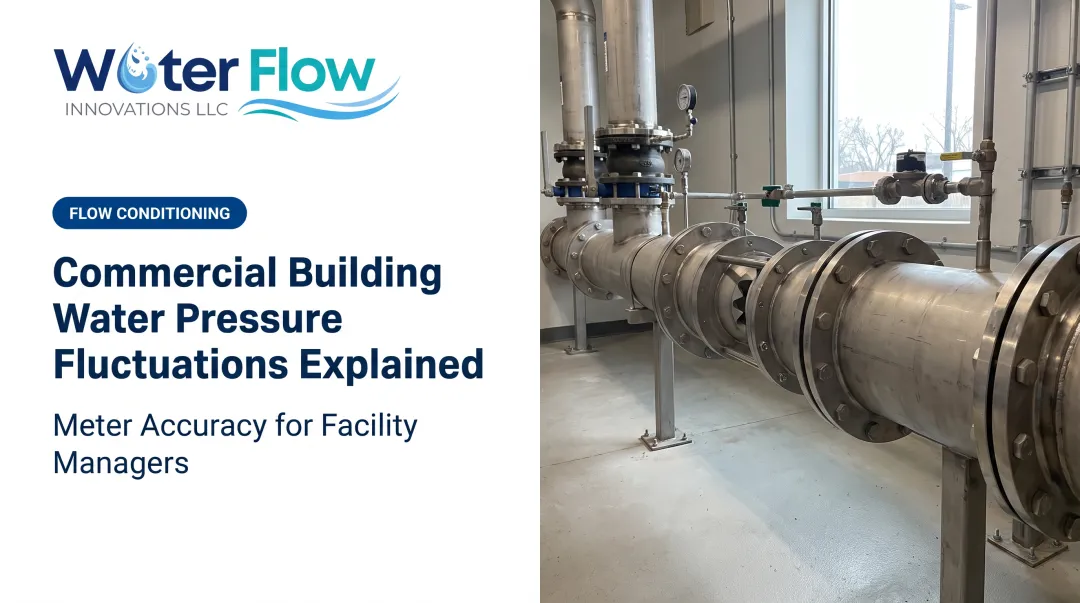
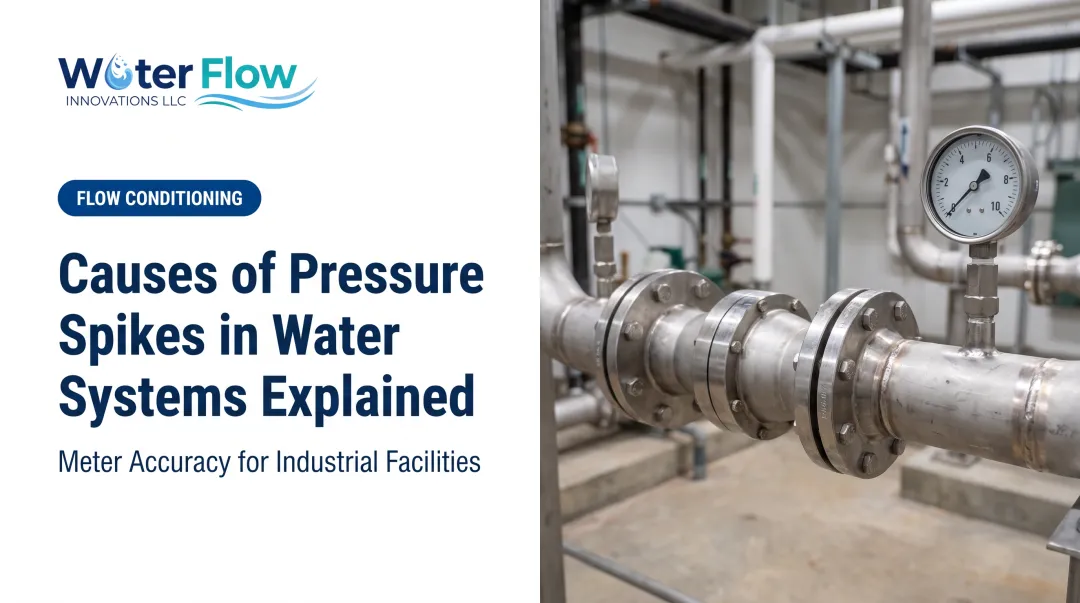
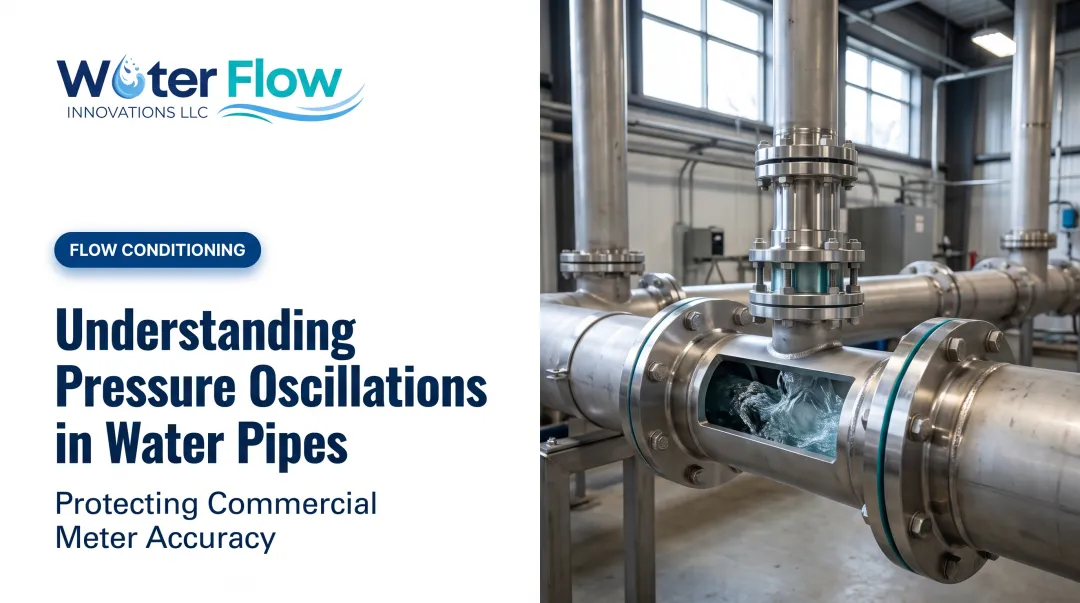
Water Flow Innovation's Flow Conditioning Device (FCD) is built for this problem. It is IAPMO, NSF, ANSI, CAN 61, KIWA, GMP, and SQF certified, and works with any pipe size (NPS ½" to 12" standard, custom sizes available) and any meter type. The FCD uses a four-part system:
- Air and gas separation, creating a homogeneous water column back through the meter
- Pressure regulation to reduce surges and water-hammer effects
- A check valve to prevent reverse flow and air re-entry
- Turbulence elimination to eliminate vortex formation that causes over-counting

Why it works: The FCD corrects meter over-reading from air entrainment and turbulent flow without changing system pressure or performance. Pressure loss is negligible in nearly all cases, with a rare 3-5 psi drop only during high-volume, open-discharge events.
When to implement: As a proactive retrofit when pressure inconsistencies track with inflated water and sewer bills. Installation typically takes about an hour. About 90% of customers reach full ROI in under 12 months, with documented bill reductions of 5% to 30% (highest single result: 46%).
Schedule Preventive Maintenance on Pumps and Aging Pipes
What to do: Conduct routine inspections, flushing, and replacement of corroded pipe sections.
Why it works: Reduces the likelihood of sudden breaks and mechanical failures before they happen.
When to implement: On a fixed annual or biannual maintenance schedule.

Tips for Long-Term Prevention and Control
Beyond immediate fixes, these practices help keep pressure stable over the long term:
- Conduct routine pressure monitoring and trend analysis using SCADA or telemetry data
- Train operators on standard response protocols for pressure alarms
- Document pressure readings for regulatory compliance and ESG reporting
- Use modeling tools to forecast pressure under changing demand
Conclusion
Pressure fluctuations in water distribution systems have identifiable root causes. They don't happen randomly.
Zoning, regulators, monitoring, and flow conditioning technology make prevention practical. Proactive management protects infrastructure, cuts water loss, and lowers utility costs for municipal systems and commercial facilities alike.
Frequently Asked Questions
Why does water pressure fluctuate so much?
Fluctuations usually stem from demand spikes, failing regulators, pipe damage, or air entrainment. Track when and where the swings happen; that pattern usually points to the cause.
What is considered normal water pressure in a distribution system?
Most jurisdictions target 60-80 psi under normal conditions, with a minimum of 35 psi and an absolute floor of 20 psi at all flow rates. Requirements vary by state and system design.
Can fluctuating pressure damage pipes and appliances over time?
Yes. Repeated pressure swings accelerate wear on joints and fittings, cause leaks, and shorten the lifespan of connected fixtures and appliances.
How can utilities monitor pressure across a large distribution network?
Sensors, data loggers, SCADA systems, and remote telemetry placed at critical junctions provide continuous visibility. AWWA recommends at least two monitoring points per pressure zone.
Does low or fluctuating pressure affect water quality?
Yes. Low or negative pressure can allow contaminants to enter through breaks or loose fittings. Studies link low-pressure events to a 20% higher risk of gastrointestinal illness in exposed customers.
How does air entrainment affect water meters and billing?
Turbulent, air-mixed flow can cause meters to over-register usage, inflating water and sewer bills even when actual consumption hasn't changed. Correcting the flow the meter sees resolves this without affecting system performance.
What proportion of the bill does the sewer side add to that error?
Commonly 80–120% of the water charge, because sewer is calculated from metered intake rather than measured discharge. A single over-registered volume therefore produces two inflated charges on the same statement.
How disruptive is fitting a correction on a live connection?
About an hour, with a brief water shutoff at the meter connection, carried out by a licensed plumber or mechanical contractor at the service connection. Monitoring, telemetry, and regulators keep operating as configured.