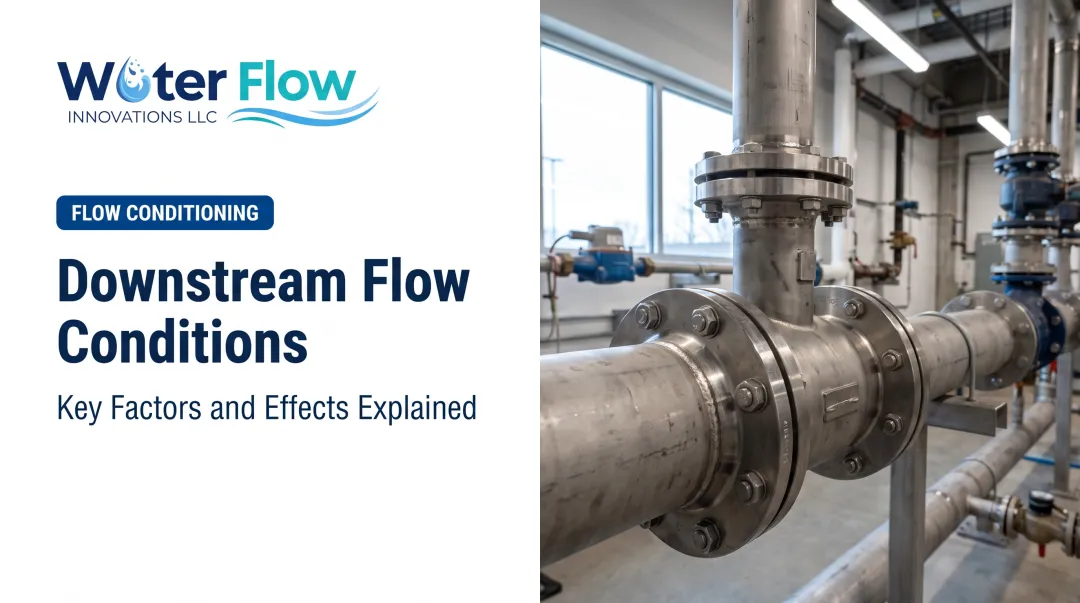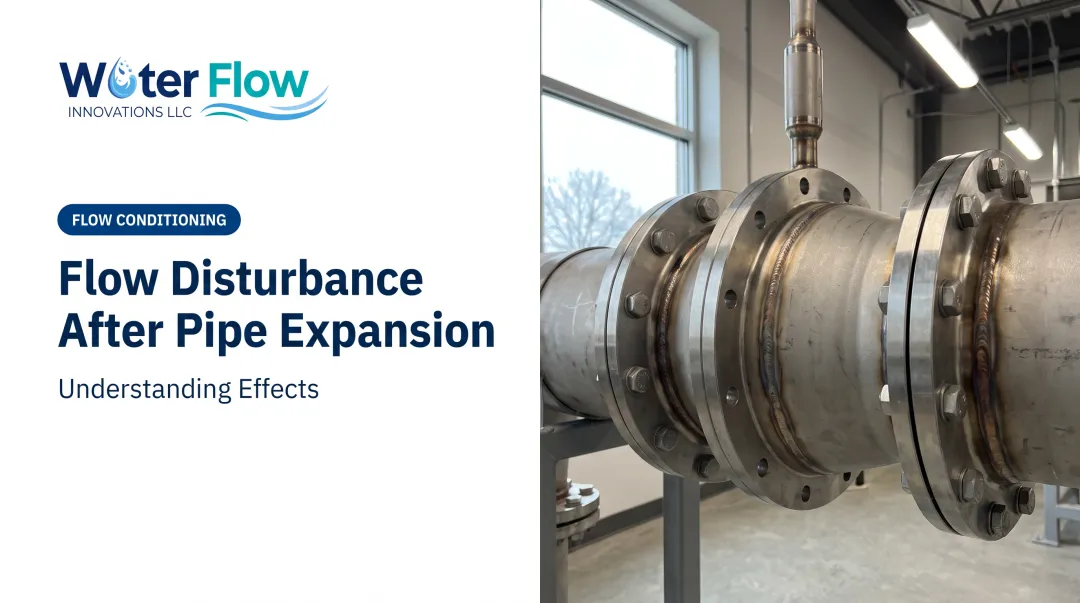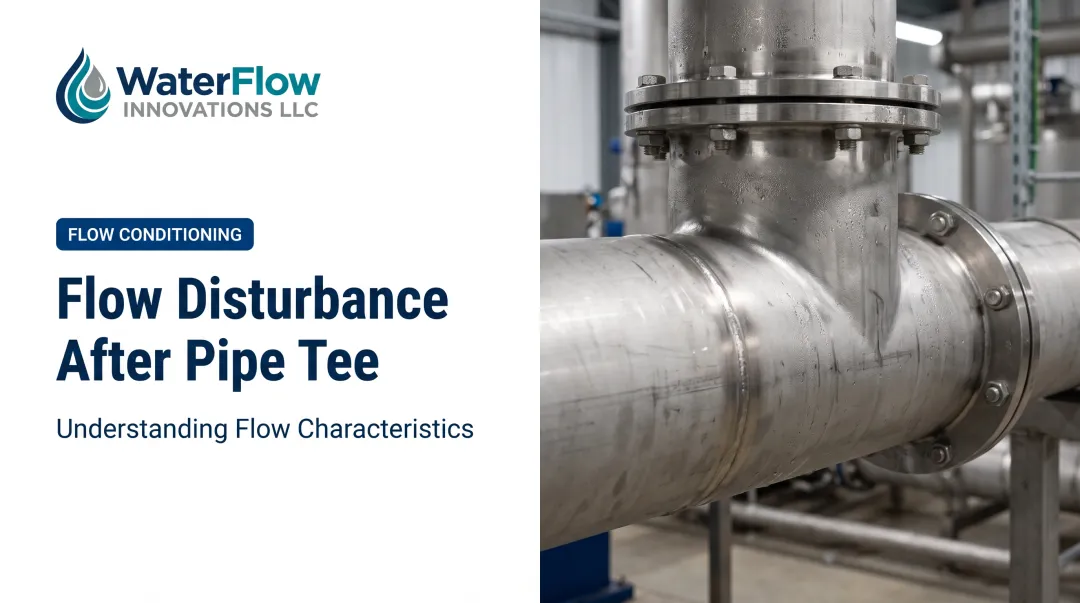

Downstream flow disturbance refers to turbulence, swirl, or asymmetric velocity profiles that form after a pipe fitting, valve, or meter and distort the flow field passing through your measurement point. For commercial and industrial facilities, this isn't an abstract engineering concern. It directly affects water meter accuracy, monthly billing, and equipment performance.
A 2020 peer-reviewed study of large water meters found that a 90%-closed butterfly valve near a meter produced errors as high as 293% at certain flow rates. Identifying the causes of these disturbances, and knowing how to prevent them, helps facilities avoid inflated water bills, inaccurate data, and unnecessary equipment strain.
Key Takeaways
- Fittings, valves, turbulence, and trapped air distort flow profiles reaching your meter
- Unaddressed disturbance causes meters to over-read or under-read, skewing utility bills and process data
- Watch for inconsistent readings, unexplained bill spikes, and pressure swings
- Prevention starts with proper pipe design, straight-run length, and flow conditioning
- Sustain control with monitoring, documentation, and certified flow conditioning devices
Common Causes of Downstream Flow Disturbance
Downstream flow disturbance happens when turbulent, swirling, or asymmetric flow patterns form after an obstruction or geometry change upstream of your meter. Water doesn't just flow in a neat, even column through pipes. Any change in direction or diameter disrupts that column, and the disruption travels.
Pipe Fittings and Elbows
Elbows, tees, and reducers force water to change direction abruptly. This creates asymmetric velocity profiles and turbulence that can persist for a surprising distance.
A common scenario: two elbows installed out of plane with each other create a swirling vortex. According to OIML's international water meter standard, this configuration produces rotational swirl that can take many pipe diameters to dissipate naturally.

Partial Obstructions and Valves
Partially closed valves, control valves, and screens disturb flow uniformity two ways: swirl (rotational distortion of the velocity field) and asymmetric flow (an uneven velocity profile across the pipe cross-section).
A control valve running at partial capacity often generates both problems, making it one of the harder disturbances to correct with distance alone.
Air Entrainment and Turbulent Flow
Trapped air or gas bubbles, combined with turbulent eddies, distort the flow profile passing through a meter. This is a leading contributor to water meter over-reading.
BERMAD's technical bulletin on magnetic flowmeters models a pipe running 75% full because of trapped air. The meter's electrodes respond as though the pipe were completely full, calculating a volume that's 25% higher than what actually passed. Air pockets like this commonly enter systems at pumps, elevation changes, or right after valves.

Insufficient Straight Pipe Runs
Meters need a minimum length of undisturbed, straight pipe both upstream and downstream to stabilize the flow profile before measurement. Space constraints in real facilities often violate this requirement.
A frequent culprit: retrofit projects that move a meter to fit new equipment or piping without verifying the straight-run length still meets manufacturer specs.
What Happens If Downstream Flow Disturbance Is Ignored
Ignoring these disturbances doesn't just create a minor rounding error. It leads to:
- Consistent meter over-reading or under-reading
- Inflated water and sewer bills, month after month
- Regulatory compliance issues for facilities tracking discharge or consumption limits
- Skewed data feeding into sustainability and ESG reporting
The same 2020 large-meter study tested butterfly and gate valves at various closure levels and distances from the meter. Even at 10 pipe diameters downstream, worst-case errors still ranged from +10% to -15%. Distance alone doesn't always solve the problem.
Warning Signs of Downstream Flow Disturbance
These issues often go unnoticed until a bill or an audit reveals a pattern. Watch for:
- Unexplained increases in water or sewer bills despite no change in actual usage or operations
- Inconsistent or fluctuating meter readings across billing cycles with no obvious cause
- Recent pipe modifications, valve replacements, or meter relocations completed without verifying straight-run compliance

How to Prevent Downstream Flow Disturbance
Prevention combines smart design choices, targeted equipment fixes, and corrective devices.
Proper System Planning and Design
Work with a flow meter manufacturer during the design phase, not after the piping layout is already finalized. This ensures adequate straight-run lengths and correct meter placement from day one. New construction and major retrofits are the cheapest times to lock this in.
System Modification and Valve Management
Once you've identified a specific disturbance source through inspection, fix it directly:
- Fully open valves where operationally possible
- Relocate problematic valves away from the meter run
- Adjust piping layout to eliminate unnecessary direction changes
This reduces turbulence at its source rather than trying to manage it downstream.
Flow Straighteners and Conditioners
When space doesn't allow for full straight-pipe runs, install a flow conditioning device. These mechanically correct swirl and asymmetric flow, and they specifically address the air entrainment issue that causes meter over-reading. They're a practical fix for retrofits with space constraints or facilities seeing persistent billing discrepancies.
Certified Flow Conditioning Solutions
When you need more than a basic straightener—air removal, surge control, and turbulence correction in one install—a multi-function certified unit is often the practical path. Water Flow Innovation's Flow Conditioning Device (FCD) combines four functions in a single certified assembly: air and gas removal, pressure regulation, a check valve, and turbulence elimination.
Each function targets a common disturbance source:
- Air and gas separation creates static back pressure and laminar flow, forcing entrained air back into the main line so the meter sees a homogeneous water column
- Pressure regulation smooths surges from on-off cycling and variable demand, protecting downstream plumbing
- The check valve reduces water hammer, prevents reverse flow, and limits air re-entering the line
- Turbulence control slows velocity enough to prevent vortex formation during CIP cycles, tank fills, and irrigation events
The FCD is custom-fabricated in 316L stainless steel for pipe sizes from NPS 1/2" to 12" (larger sizes on special order). It carries IAPMO, NSF, ANSI, CAN 61, KIWA, GMP, and SQF certifications.

Facilities use it when billing looks inconsistent and they want documented savings without redesigning the system:
- Install time is about an hour with a brief planned shutoff at the meter
- Negligible pressure loss and no production interruption
- Documented bill reductions between 5% and 46%, with 90% of customers reaching ROI within 12 months
- Savings appear on the next billing cycle
Tips for Long-Term Prevention and Control
Beyond immediate fixes, build these practices into standard operations:
- Schedule routine meter calibration and flow profile checks, especially after any piping modification
- Train facility staff to recognize warning signs of flow disturbance in billing and operational data
- Maintain documentation of pipe layouts, meter locations, and straight-run compliance for audits and ESG reporting
- Use monitoring tools to flag abnormal flow patterns and billing anomalies before they become costly errors
That same documentation supports sustainability reporting. Before-and-after utility bill comparisons provide auditable evidence for LEED water-reduction credits and ESG water-intensity metrics, using records you already have.
Conclusion
Downstream flow disturbance has well-documented causes—pipe geometry, valve placement, air entrainment, and poor upstream conditions. Once you know what to inspect, the problem stops looking mysterious.
You can prevent it with sound design, targeted system changes, and certified flow conditioning. Facilities that act early cut unnecessary water and sewer costs, reduce compliance risk, and get meter data they can trust. That matters when a single misread meter can quietly inflate a bill for years.
Frequently Asked Questions
What is flow disturbance in a pipe system?
Flow disturbance is turbulence, swirl, or an asymmetric velocity profile caused by fittings, valves, or obstructions that distort the normal flow pattern in a pipe. It typically forms right after a geometry change and affects any meter downstream of it.
How far downstream does flow disturbance affect meter accuracy?
It varies significantly by disturbance type and meter technology. Manufacturer requirements range anywhere from 10 to 40 pipe diameters, so always check the specific meter manual rather than assuming a universal number.
Can flow disturbance cause a water meter to over-read?
Yes, especially through air entrainment and turbulence. A meter can register more volume than actually passed because trapped air or eddies distort how the sensor reads the flow.
What is the difference between a flow straightener and a flow conditioner?
A straightener removes swirl but has little effect on asymmetric flow. A conditioner addresses both swirl and asymmetric flow, making it the better choice for complex disturbances.
How can I tell if my facility's high water bill is caused by flow disturbance?
Look for unexplained bill increases without any corresponding change in usage or operations. That pattern—especially after recent piping or valve work—warrants comparing billed volume against actual process use.
Do flow conditioning devices reduce water pressure or system performance?
Certified devices like the Flow Conditioning Device (FCD) are engineered for negligible pressure loss and no operational disruption. They correct meter accuracy without changing how your system actually performs.
How much operational interruption does correcting it involve?
About an hour, with a brief water shutoff at the meter connection. A licensed plumber or mechanical contractor fits the custom-built unit at the supply connection, so the offending fitting or valve can stay exactly where it is.
What billing improvement follows the correction?
Documented installations average a 5–30% reduction across combined water and sewer charges, with a highest documented single result of 46%, showing on the first bill after installation.