Introduction
Water infrastructure across the U.S. is aging faster than most utilities can replace it. Stricter cross-connection control codes and rising liability concerns make backflow protection operational risk management, not a nice-to-have.
The EPA's 2023 needs survey puts the nationwide cost to modernize drinking-water infrastructure at $625 billion. That number reflects how hard aging systems are already being pushed.
Many facility managers still treat backflow protection like a checkbox: install the assembly, pass the inspection, move on. Real value shows up later, when a main break or pressure surge doesn't become a contamination event, a fine, or a shutdown.
This article covers what backflow protection actually does, why it matters in practice, what happens when it's neglected, and how to get more value from systems already in place.
Key Takeaways
- Check valves, RPZs, double-check valves, and air gaps stop contaminated water from entering potable lines
- Backflow protection safeguards public health, keeps facilities compliant, and limits liability exposure
- Untested or unrepaired devices fail silently—often found only after a violation or contamination event
- Testing is legally mandated, typically annually; intervals vary by state code and hazard class
- Pairing backflow compliance with flow conditioning protects both safety and billing accuracy
What Is Backflow Protection?
Backflow protection covers the devices and methods that keep non-potable water from flowing backward into a clean water supply. When pressure in a pipe drops or reverses, contaminated water can get pulled or pushed into the lines that feed drinking water.
These devices are typically installed at cross-connection points—anywhere a potable line meets a source that could carry contaminants:
- Irrigation systems using treated or reclaimed water
- Fire sprinkler systems
- Boilers and chemical feed lines
- Industrial equipment tied into a potable water main
Backflow protection does not improve water pressure or delivery speed. It is a mechanical fail-safe that activates only when pressure drops or reverses upstream or downstream.
Key Advantages of Backflow Protection
These advantages map to numbers facility managers already track: incident rates, compliance costs, downtime hours, and insurance premiums.
Protects Public Health and Water Quality
Backflow protection stops chemicals, sewage, or irrigation runoff from contaminating potable water during pressure-loss events—main breaks, flushing, pump failures, or high-demand surges.
Check valves and RPZ assemblies block reverse flow the instant pressure drops, stopping contamination before it spreads through a building or a municipal zone.
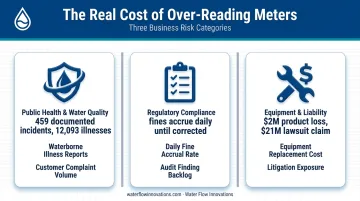
The scale of this risk is well documented. The EPA compiled 459 documented cross-connection incidents and an estimated 12,093 illnesses between 1970 and 2001, and noted that missing national reporting likely makes that figure an undercount.
One EPA-cited case involved ethylene glycol backsiphoning from a hospital air-conditioning system into a dialysis unit, contributing to patient deaths.
KPIs impacted: contamination incident rate, water quality test pass rate, public health complaint volume.
This advantage matters most in high-hazard environments: hospitals, food and beverage plants, dairy processors, and irrigation systems mixing treated and reclaimed water.
Ensures Regulatory Compliance and Avoids Penalties
Most commercial facilities are legally required to meet EPA, state, and municipal cross-connection control mandates. Certified assemblies, periodic testing, and documented records are what satisfy inspections and permit renewals.
Skipping this isn't a minor paperwork issue. Non-compliance can trigger fines, mandatory retrofits, or water service termination.
Durham, North Carolina's 2025 program gives facilities 60 days to fix a noncompliant preventer after notice, then applies daily penalties until it's corrected. Washington State's plumbing code authorizes utilities to deny or discontinue service entirely for uncontrolled hazards.
KPIs impacted: compliance audit pass rate, fines avoided, uninterrupted water service.
Municipal facilities, healthcare systems, schools, and correctional facilities feel this pressure most during routine inspections and new construction permitting.
Protects Equipment and Limits Liability
Contaminated backflow doesn't just threaten health. It can damage plumbing, production equipment, and product batches. Consistent one-way flow control preserves system integrity and limits exposure to lawsuits and insurance claims.
Historical EPA case data shows how expensive failures get. One documented incident spoiled roughly $2 million worth of pork product after wastewater contamination.
Another pesticide-related event affected 63 homes and businesses, generated a $21 million lawsuit claim, and left properties without water for days.
KPIs impacted: unplanned downtime hours, remediation cost, insurance premium trends, customer retention.
For data centers, manufacturing plants, and hospitality properties running continuous operations, any disruption is expensive—and backflow failures sit high on that risk list.
What Happens When Backflow Protection Is Missing or Ignored
Neglecting backflow protection rarely causes an immediate problem. That's exactly what makes it dangerous.
Devices that go untested or unrepaired often fail silently. A check valve can stick open, a seal can degrade, and nothing outwardly changes until pressure drops and the assembly can't do its job.
The USC Foundation for Cross-Connection Control and Hydraulic Research reviewed 18,000 field tests and found failure rates averaging 11%, ranging from 0.5% to 25% across reporting authorities. That's roughly one in nine assemblies not meeting field-test criteria when tested.
Common consequences when protection is missing or has failed:
- Contamination outbreaks that force emergency remediation and boil-water notices
- Emergency shutdowns while crews isolate and repair the cross-connection
- Regulatory fines that accrue daily until the assembly is fixed and retested
- Loss of water service until compliance is restored, including immediate disconnection for high-hazard violations
Nashville's Metro Water Services, for example, sets correction windows ranging from immediate disconnection to 90 days after a failed inspection, depending on hazard level.
Most facilities don't discover a protection gap on their own. They find out after a violation notice arrives, or worse, after a contamination event has already reached the water supply.
How to Get the Most Value from Backflow Protection
Getting real value from backflow protection isn't about installing the cheapest assembly that passes inspection. It comes down to three things:
- Match the device to the hazard. Air gaps and RPZ assemblies suit high-hazard connections like chemical feed lines or dairy processing. Double-check assemblies fit lower-hazard, continuous-pressure systems.
- Keep testing consistent, not reactive. Most state codes require testing at installation, after any repair or relocation, and then annually. Waiting for a violation notice defeats the purpose of having the assembly in place.
- Repair failures immediately. A failed field test means the mechanical seal or check has degraded. The window between a flagged failure and a real contamination event can be short.
Working with certified testers and keeping organized, dated records of every test and repair makes future inspections faster and reduces the odds of a compliance gap slipping through during an audit.
The Trade-Off Nobody Talks About: Meter Accuracy
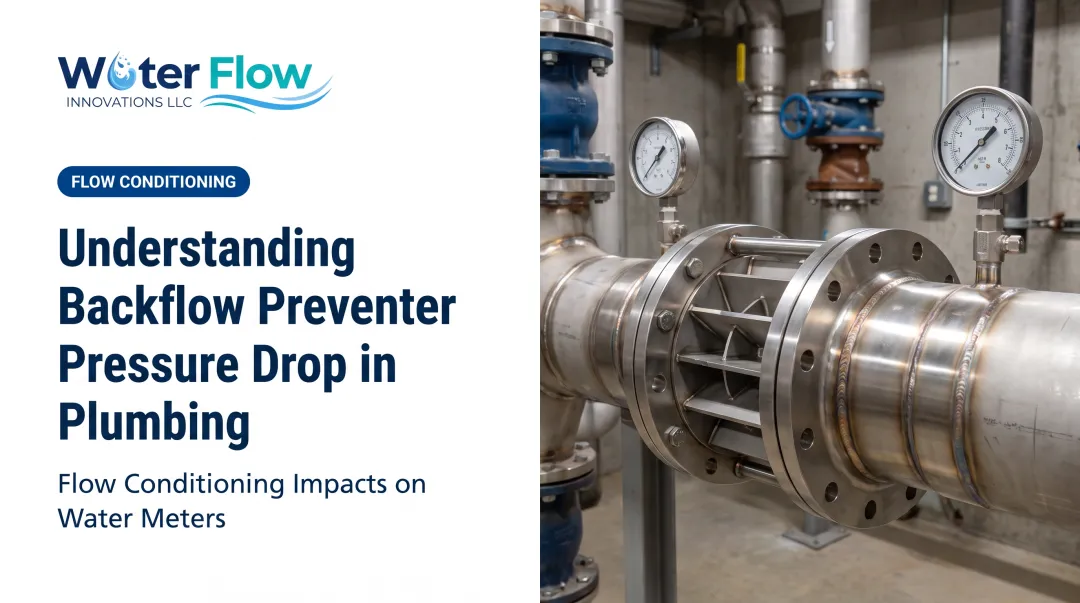
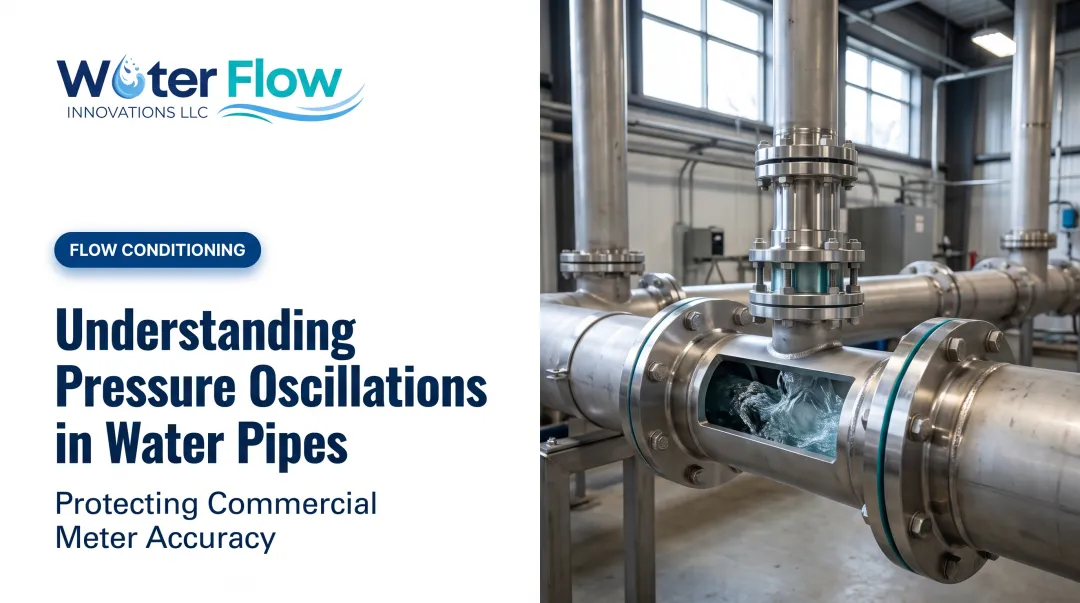
Backflow preventers—especially RPZ and double-check assemblies—introduce turbulence and air entrainment into the water line by design. That turbulence is a known contributor to water meter over-reading, so facilities can end up paying for water they never used.
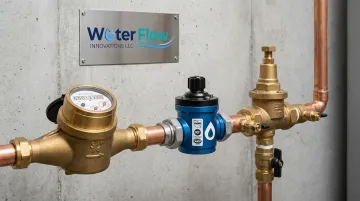
That trade-off doesn't justify skipping backflow protection. It does mean looking at the full pipe run. Facilities that want both safety compliance and billing accuracy can pair the backflow assembly with a certified flow conditioning solution installed between the meter and the backflow device.
Water Flow Innovation's FCD is built for that placement. It corrects meter over-reading from turbulent flow and air entrainment without affecting backflow performance or system pressure, because it sits before the backflow assembly rather than after it.
The device carries IAPMO, NSF, ANSI, CAN 61, KIWA, GMP, and SQF certification, and installation typically takes about an hour. Facilities using it have seen water and sewer bill reductions averaging 5% to 30%, with some cases reaching 46%.
If you're already investing in backflow compliance, fixing meter accuracy on the same line protects both your water supply and your utility bill.
Conclusion
Backflow protection is public health infrastructure, legal compliance, and operational risk control in a single device. Its real return is the contamination event that never happens and the fine that never arrives—often months or years after install.
That protection only holds with consistent testing and prompt repairs. A device ignored until a violation notice shows up has already failed its job.
Treat backflow work as part of broader water-system stewardship. Pair compliance maintenance with meter accuracy and billing efficiency so every dollar in water infrastructure protects both safety and operating cost.
Frequently Asked Questions
What does a backflow preventer do?
It uses check valves or a reduced pressure zone to stop contaminated water from reversing into the potable water supply during pressure drops or cross-connections. This protects drinking water from chemicals, sewage, or other non-potable sources.
Is a backflow preventer really necessary?
Yes. It's legally required wherever cross-connections exist, and it's essential for protecting public health and avoiding regulatory penalties, including fines or water service termination.
How much does backflow protection cost?
Costs vary by device type, pipe size, and installation complexity. Utility-side inspections often run around $50 per device, with retests around $40 to $50, though installation quotes depend heavily on site conditions and device standard (AVB, DCVA, RPZ).
What are the 4 types of backflow preventers?
Atmospheric Vacuum Breakers (AVBs) and Pressure Vacuum Breakers (PVBs) protect against back-siphonage only. Double Check Valve Assemblies (DCVAs) suit lower-hazard, continuous-pressure systems, while Reduced Pressure Zone (RPZ) assemblies handle both backpressure and contamination hazards.
How often should backflow preventers be tested?
Most state codes require testing at installation, after any repair, and at least annually for both RPZ and double-check assemblies. Requirements vary by state and hazard classification, so check your local code.
What is the difference between backflow and back-siphonage?
Back-pressure is a form of backflow that happens when downstream pressure exceeds supply pressure, pushing water backward. Back-siphonage happens when negative pressure—from a main break or pump failure—pulls contaminated water into the supply line.
Does a flow conditioning device replace a backflow preventer?
No, and it should never be treated as a substitute. Backflow protection is a code-mandated safety function; flow conditioning corrects billing accuracy at the meter. A conditioning device does include check valve functionality, but the required assembly stays in place.
Does the turbulence around these assemblies affect the sewer charge?
It can, indirectly. Sewer is usually calculated from metered intake rather than measured discharge, commonly 80–120% of the water charge, so any volume the meter over-registers is billed on both lines.