
"No visible leak" doesn't mean no leak. It usually means the water loss is happening somewhere you can't see: inside a wall, under a slab, in a toilet tank, or even in the meter's own measurement.
The EPA estimates the average household leaks 9,400 gallons a year, and 9% of homes have leaks wasting at least 50 gallons a day. This guide walks through the hidden causes, a DIY test you can run tonight, and a commercial-specific culprit almost nobody talks about: the meter itself over-reading.
Key Takeaways
- Most invisible leaks hide behind walls, under slabs, or inside toilet tanks
- The two-hour meter test confirms in one afternoon whether water is escaping at all
- Rate hikes, extra occupants, and seasonal irrigation can spike bills with zero leaks
- Commercial facilities can get billed for air and turbulence, not water: a fixable measurement issue
What Counts as a "High" Water Bill?
Before chasing leaks, check whether the bill is actually abnormal for your household or facility.
For homes: the EPA's benchmark is about 82 gallons per person per day, or roughly 2,460 gallons per person monthly. Here's how a 9,000-gallon monthly bill stacks up:
| Household size | Normal 30-day baseline | 9,000 gallons vs. baseline |
|---|---|---|
| 1 person | 2,460 gal | 3.7x — very high |
| 2 people | 4,920 gal | 1.8x — elevated |
| 3 people | 7,380 gal | 1.2x — slightly high |
| 4 people | 9,840 gal | Below baseline — normal |
So 9,000 gallons isn't automatically a red flag. It depends entirely on who's living there. The EPA also notes that a four-person household topping 12,000 gallons in a colder month — when irrigation shouldn't be a factor — is worth investigating for serious leaks.
For commercial and industrial sites, raw gallon totals mean little on their own. An unexplained spike against your baseline matters more than any generic industry average. Compare usage against:
- Your facility's historical trend—same month in prior years, not a one-off read
- Submeter or fixture-level data where available
- Property-type benchmarks such as ENERGY STAR Water Use Intensity medians (a hospital and a warehouse have very different normals)
Common Hidden Causes of a High Water Bill With No Visible Leak
"No visible leak" almost always means the water loss is invisible, not absent. It usually hides in fixtures, irrigation, mechanical equipment, or buried lines.
Silent Toilet Leak
- Symptoms: faint trickling sound, tank refilling on its own, slight sound changes at night
- Likely cause: worn flapper, misaligned float, or a fill valve that won't fully seat
A running toilet isn't a minor issue—especially across multifamily, hospitality, or campus restrooms. Utility examples range from 200 gallons a day for a mild leak to 1,000–4,000 gallons a day for a stuck flapper, according to municipal utilities in Minnesota and Indiana.
At the high end, that's tens of thousands of gallons in a single billing cycle, and several quiet failures can stack on one meter.

Irrigation or Outdoor System Leak
- Symptoms: soggy zones, turf that stays green in dry spells, controllers or valves running past schedule
- Likely cause: cracked lines, broken heads, or a timer stuck on
Landscape and irrigation leaks often stay out of sight along buried laterals and valve boxes. On larger properties, one stuck zone can waste thousands of gallons before anyone notices the bill.
Appliance or Water Heater Leak
- Symptoms: damp closets or mechanical rooms, musty smell, puddling near the unit
- Likely cause: worn supply hoses, tank corrosion, loose fittings
Slow seepage behind equipment rarely looks dramatic, but it registers on the meter every hour the system is pressurized.
Underground Supply or Slab Leak
- Symptoms: warm spots on the floor, meter still spinning with everything off, mildew smell with no obvious source
- Likely cause: pinhole corrosion or a cracked line under the slab, foundation, or service run
These losses bypass fixtures entirely, so walkthroughs look normal while the meter keeps moving. A shutoff test is often the first clear signal.
Why Your Water Meter Might Be Over-Reading (Not Actually a Leak)
Here's what almost nobody checks: sometimes there's no leak at all—the meter is simply reading high.
Standard displacement and turbine meters can't tell the difference between water and the air, micro-bubbles, or turbulence traveling alongside it. When pressure fluctuates from valve cycling, pump starts, or process surges, air gets pulled into the line.
The meter counts that air as billed water.
This is easy to miss because it produces zero physical symptoms. No wet spot, no damp cabinet, no warm floor. The bill just runs high, month after month, and every leak-detection method comes up empty.
Facilities most prone to this include:
- Breweries and dairy processors (frequent pressure cycling from CIP systems)
- Beverage bottlers (rapid on/off filling and rinsing)
- Hotels, hospitals, and manufacturing plants with cooling-tower makeup or irrigation cycling
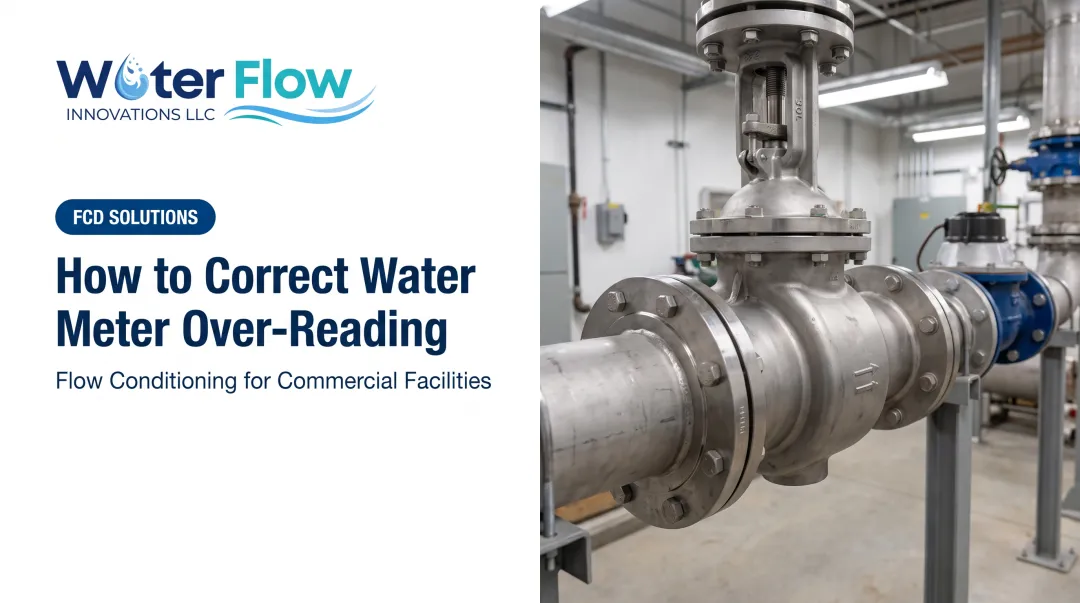
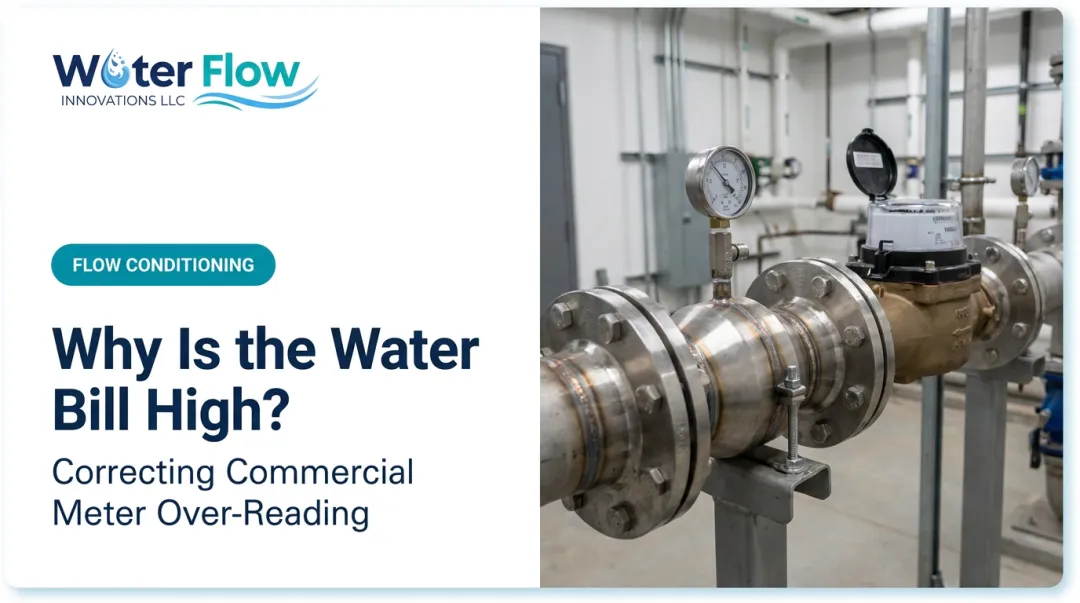
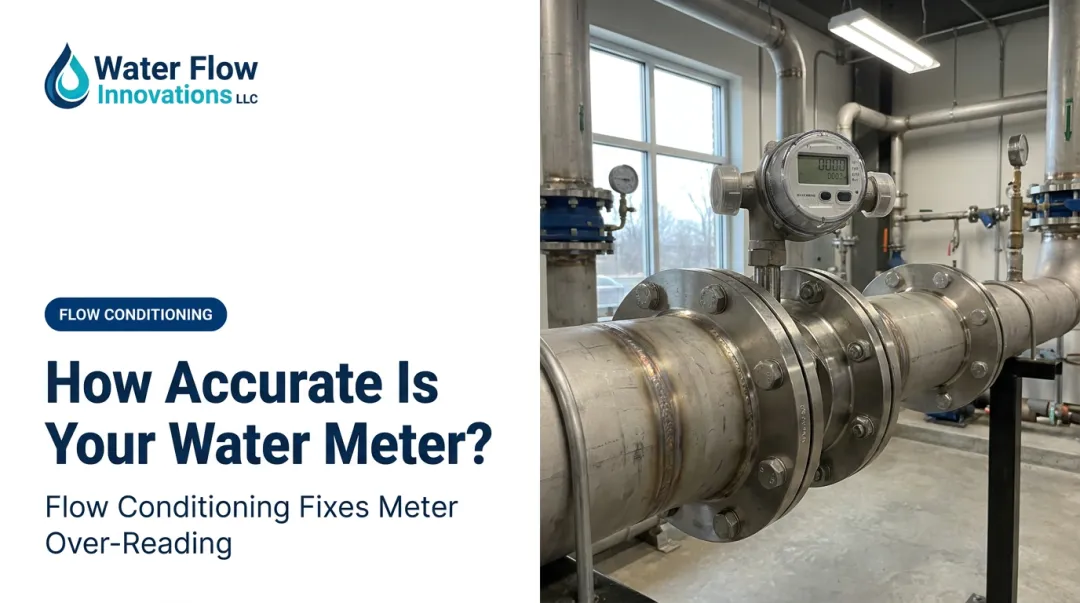
This is the problem Water Flow Innovation built its Flow Conditioning Device (FCD) to solve. The FCD is a custom-fabricated 316L stainless steel unit installed immediately after the meter. It combines four components (air/gas removal, pressure regulation, a check valve, and turbulence elimination) so stable, bubble-free flow reaches the measurement zone. It works on any meter type and pipe sizes from ½" to 12".

What facilities typically see:
- 5–30% average reduction in water and sewer bills, with a documented high of 46%
- Savings on the very next billing cycle
- No changes to actual water usage or operations
It's backed by a 6-month money-back guarantee and a lifetime transferable warranty, so you can rule out over-registration with low risk once physical leak checks come back clean.
How to Diagnose the Real Cause (Step-by-Step)
Step 1: Run the Two-Hour Meter Test
- Shut off every fixture, appliance, and irrigation line
- Record the meter reading
- Wait one to two hours with zero water use, then check again
- If the number moved, water is escaping somewhere. If not, look at billing, rates, or usage patterns instead
Step 2: Isolate Indoor vs. Outdoor Loss
Shut off the main indoor stop valve and watch the meter.
- Meter stops: the loss is inside the building
- Meter keeps moving: suspect the supply line, irrigation, or other outdoor systems
Step 3: Test Fixtures and Check Equipment
- Add food coloring to toilet tanks; wait 10–20 minutes without flushing and check bowls for color
- Inspect appliance hoses, water heaters, and ice machines for dampness or corrosion
- Check flush valves, cooling equipment, and process water connections for seepage

Step 4: Rule Out Meter and Billing Errors
Compare your own reading to the utility's billed figure. Confirm the bill shows an actual read, not an estimate. If the numbers don't match, request a formal meter accuracy test from your utility.
If the meter is accurate and no leak turns up, turbulent flow or air in the line can still cause over-registration—and a high bill—without any water loss.
When to DIY vs. When to Call a Professional
DIY-appropriate:
- Confirmed toilet leak from the dye test
- Visible, damaged appliance hose
- Simple sprinkler head replacement
Call a professional when:
- The meter keeps moving with the main shutoff closed
- You find warm floor spots suggesting a slab leak
- Lush, unexplained wet patches point to an underground line
For commercial and industrial sites that run every test above and still can't pin down the loss, call a leak-detection specialist for hidden lines and slab issues. Separately, have meter accuracy checked—leaks are not the only cause of a high bill.
Water Flow Innovation offers a free water bill review and savings analysis (no purchase required) that checks whether meter over-reading is still inflating the bill after leaks are ruled out.
Preventing Future Unexplained Bill Spikes
A few facility habits catch problems before they show up as a shocking bill:
- Schedule annual checks on restrooms, hose connections, and water heater fittings
- Read your meter monthly and log usage so anomalies stand out early
- Inspect irrigation systems seasonally and winterize outdoor lines
- If bills stay high after clean leak checks, get a flow conditioning assessment to rule out chronic meter over-reading
FAQ
Why is my water meter running or increasing when I'm not using water?
This usually signals an active leak somewhere in the system. Occasionally it reflects meter over-reading from turbulent flow. Run the isolation test above to narrow down which one it is.
How long can a water leak go unnoticed?
Silent leaks like a worn toilet flapper or a cracked underground pipe can run for weeks or months. Many property owners and managers only discover them when the bill arrives.
Is 9,000 gallons a month a lot of water?
It depends on occupancy. Against the EPA's 82-gallon-per-person-daily benchmark, 9,000 gallons is high for one or two people but roughly normal for a household of four.
Can a high water bill be caused by something other than a leak?
Yes. Rate increases, seasonal irrigation, occupancy changes, inefficient fixtures or equipment, and meter over-reading can all inflate a bill without a single drop escaping.
How much can a leaking toilet actually add to my bill?
A running toilet can waste anywhere from 200 gallons a day to several thousand, depending on the flapper or fill valve condition. That's easily tens of thousands of gallons over a billing cycle.
Can I get a refund or credit if a hidden leak caused my high bill?
Many utilities, including NYC's DEP and utilities in Portland, Dallas, and Seattle, offer leak adjustment programs. You'll typically need proof of repair and to file within a set window after the high bill.
If every leak check comes back clean, what is left to explain the bill?
The measurement itself. Most meters cannot separate entrained air and gas from water, so pumps, valve closures, tank fills, and rapid demand cycling add phantom volume the meter records as consumption. There is no leak to find because none exists.
How is that confirmed without more guesswork?
A free savings analysis reviews your water and sewer bills, meter size, pipe size, line pressure, and PRV configuration to confirm whether over-reading conditions are present and what correction the connection needs. It is completed remotely and carries no commitment.