
Introduction
Decorative fountains at hotels, campuses, municipal plazas, and corporate parks all depend on one thing: a steady, predictable water supply. Basin levels need to stay consistent. Spray patterns need to look intentional. Make-up water lines need to replenish evaporation and splash-out without surprises on the utility bill.
But metered water lines aren't always as stable as they look. Air pockets, pressure swings, and turbulent flow inside the pipe can interfere with how a meter records what's passing through it.
A fountain can run exactly as designed and still generate a bill that doesn't match actual consumption. Peer-reviewed research has traced this to air entrainment during pipe filling (IWA Publishing, 2022).
This guide covers what water flow conditioning devices actually do for fountain systems, where they fit into the plumbing layout, and how they differ from the pumps, filters, and treatment equipment already running your water feature.
Key Takeaways
- A flow conditioning device stabilizes supply-line conditions and is not a pump, filter, sanitizer, or purification system.
- Air removal, pressure regulation, check-valve protection, and turbulence reduction work together ahead of the meter.
- The device supports metered incoming or make-up water, while the pump handles in-fountain circulation.
- Bill savings depend on the fountain's plumbing, meter type, pressure conditions, and billing structure.
What Is a Water Flow Conditioning Device?
A water flow conditioning device is a plumbing component installed on a metered water line to stabilize flow before it reaches the meter. It doesn't add water, treat water, or move water through the fountain. It manages air content, pressure, and turbulence so the meter gets a cleaner signal to read.
The Measurement Gap It Addresses
Water moving through a pipe isn't always a smooth, uniform column. It can carry:
- Entrained air or gas bubbles from pressure changes
- Turbulent flow from elbows, valves, pumps, or cycling demand
- Pressure fluctuations tied to intermittent fill-valve operation
Any of these can complicate how a meter interprets the volume passing through, particularly on installations with limited straight-run pipe or frequent on-off cycling.
What a Conditioning Device Is Not
It's easy to lump this equipment in with other fountain hardware. It isn't:
- A fountain pump - pumps circulate water and create the visible jet, spray, or cascade.
- A filter or strainer - these remove debris and suspended particles.
- A chemical treatment system - these manage algae, bacteria, and water clarity.
- Leak-detection equipment - this identifies water loss, not flow condition.
A conditioning device typically operates on the metered supply or make-up line, not the full recirculation loop. Recirculated fountain water cycles continuously through the pump, nozzles, and basin; it isn't metered the same way as incoming water replacing what's lost to evaporation, splash-out, or maintenance draindown.
Example: A Four-Part Design
Water Flow Innovation manufactures a Flow Conditioning Device (FCD) built around four components:
- Air and gas separation
- Pressure regulation
- Check-valve protection
- Turbulence reduction
The device is IAPMO, NSF, ANSI, CAN 61, KIWA, GMP, and SQF certified, and fabricated in 316L stainless steel. Reported performance includes a 5–30% average water and sewer bill reduction, based on the company's customer data rather than a guaranteed outcome for every fountain. Actual results depend on plumbing layout, meter type, and site flow conditions.
How Does a Water Flow Conditioning Device Work?
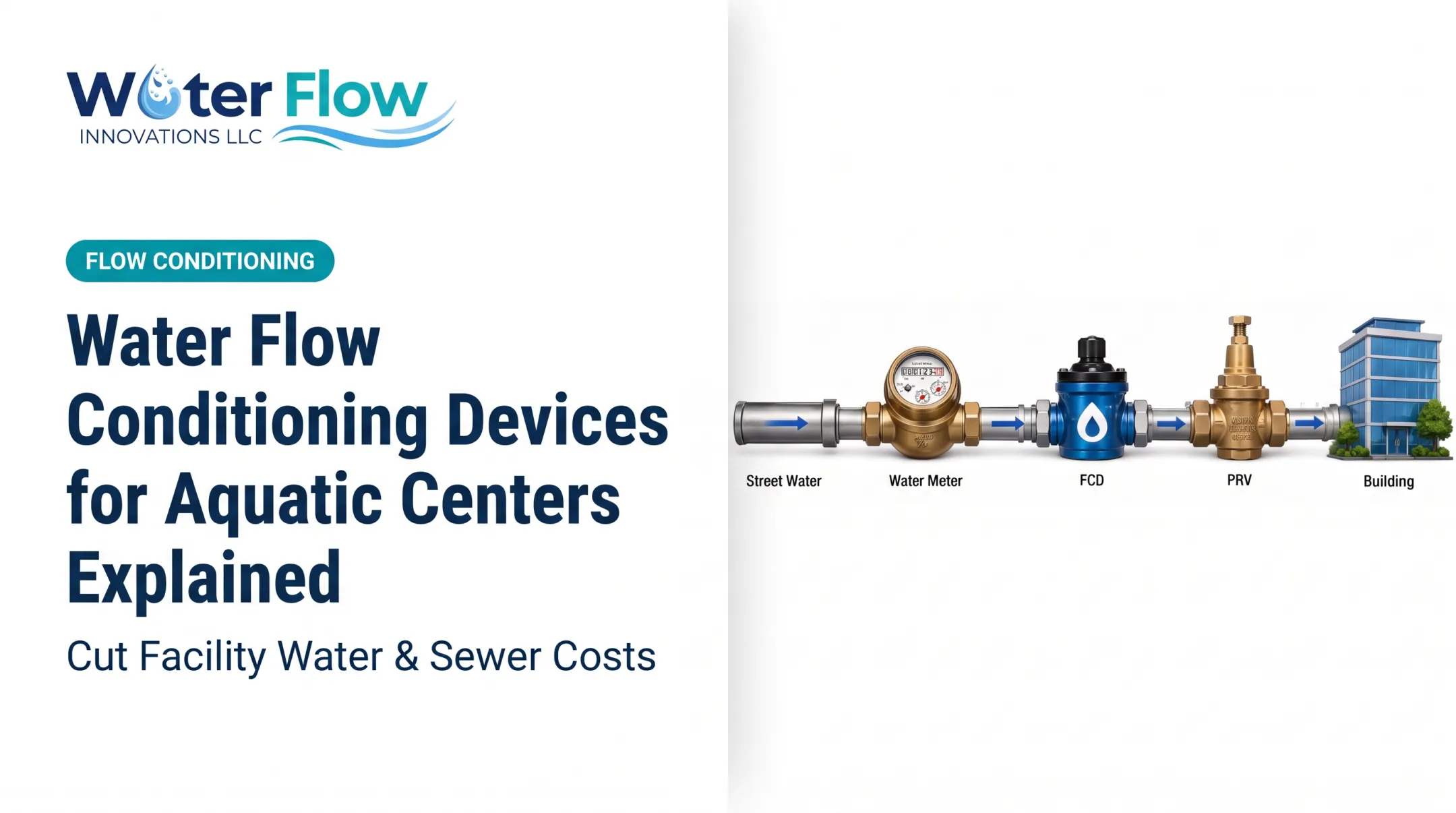
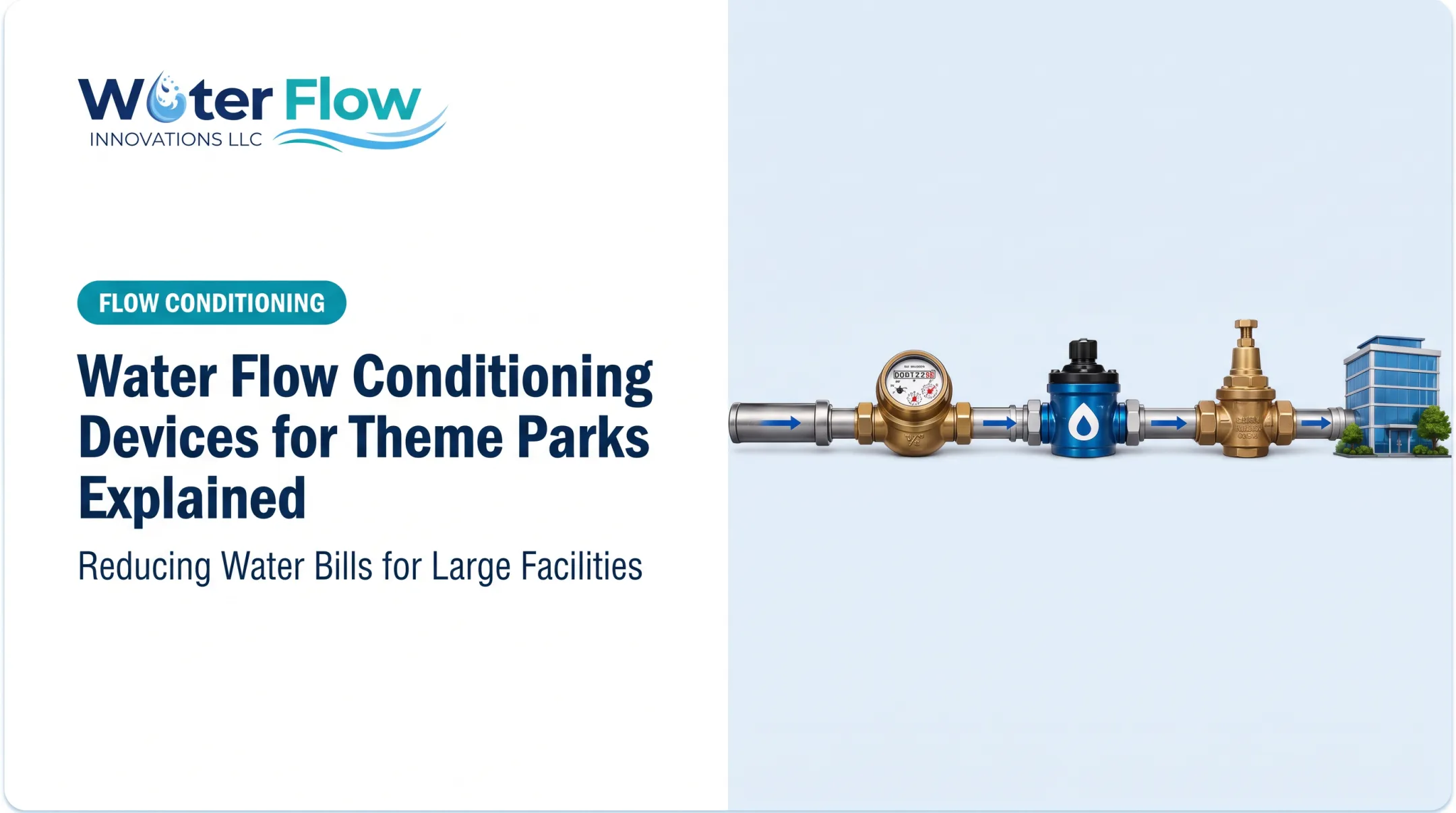
The sequence is straightforward: make-up water enters the supply line, the conditioning device stabilizes flow, the meter records volume, and the fountain receives water for filling or top-off.
Incoming Water Enters the System
Make-up water typically enters through a municipal or facility line connected to an automatic fill valve, a float-controlled fill line, or another controlled replenishment point. Depending on the fountain, flow may be:
- Continuous, for features with constant top-off demand
- Intermittent, triggered by evaporation or splash-out
- Scheduled, tied to maintenance or seasonal operation
A typical layout runs: water source, shutoff valve, conditioning device, meter, fill controls, fountain basin. The exact order shifts depending on local plumbing and code requirements, which is why a site walkthrough matters more than a generic diagram.

Air Separation and Turbulence Control
Air pockets, sudden velocity changes, and tight fittings such as elbows, valves, and pump inlets can all create unstable flow. A properly designed conditioning device helps separate entrained air, calm turbulence, and produce a stable flow profile heading into the meter.
Not every fountain line has a meaningful air problem. A 2022 study in the IWA journal AQUA found that jet-type water meters registered volume during airflow in pipe-filling conditions, before water actually arrived downstream. That mechanism matters for meter accuracy, but it does not mean every continuously supplied fountain line behaves the same way. Assess each installation on its own conditions.
Pressure Regulation and Reverse-Flow Protection
Pressure regulation keeps flow within an appropriate operating range, reducing the effect of pressure swings on downstream fountain equipment. A check valve, where included, limits reverse flow and protects the intended direction of movement, though exact component configuration varies by device and plumbing design.
Those components still have to satisfy local rules. Review pressure control and backflow protection against applicable US plumbing codes and utility requirements, and use a qualified professional for installation—pressure thresholds and cross-connection rules vary by jurisdiction.
Metering and Fountain Output
Stabilized flow conditions feed directly into the measurement stage. The goal: reduce conditions that might cause a meter to register more volume than the facility actually received, subject to the specific meter type and system design.
A correctly selected and installed device should not reduce visible spray, change the pump's required head, or restrict normal operation—and any negligible-pressure-loss claim should rest on technical documentation, not marketing copy. Downstream, make-up water still feeds level control while the pump, nozzles, and display run independently of the conditioning equipment.
Verifying Ongoing Performance
Before installation, establish a baseline from:
- Utility bills and meter readings
- Operating schedules and make-up water volume
- Pressure conditions and maintenance records
EPA's WaterSense program recommends comparing usage to the same month in a prior year and tracking meter readings at least monthly. Seasonal shifts can otherwise look like equipment performance.
After installation, compare like-for-like operating periods. Factor in weather, evaporation, leaks, cleaning schedules, occupancy, and any change to the fountain's operating profile.

Where Are Water Flow Conditioning Devices Used in Fountain Systems?
Fountains that carry real make-up water costs tend to share one trait: someone is watching the utility bill closely. That includes:
- Hotels and hospitality properties
- Commercial office buildings and mixed-use developments
- Multifamily and apartment communities
- Schools, universities, and healthcare campuses
- Municipal plazas and civic buildings
- Theme parks, stadiums, and golf facilities
Fountain Configurations Worth Assessing
Not every water feature needs a closer look. Configurations that typically warrant assessment include:
- Large architectural fountains with substantial basin volume
- Decorative plaza features with frequent public-facing operation
- Multiple connected water features sharing a supply line
- Systems with automatic fill controls
- Installations with high or frequent make-up water usage Once a feature fits that profile, fit still depends on site conditions:
- Pipe diameter and meter type
- Line pressure and available straight-run space
- Connection standards
- Dedicated vs. shared supply line
A Practical Suitability Checklist
Before pursuing a conditioning device, confirm:
- The suspected issue involves the metered incoming or make-up line, not ordinary evaporation or an undetected leak.
- The facility can collect reliable pre- and post-installation data for comparison.
- A licensed plumber, engineer, or utility representative has reviewed the proposed installation.
- The device can be installed without interrupting fountain operation for an unacceptable period. Water Flow Innovation manufactures Flow Conditioning Devices for US commercial facilities in pipe sizes from 1/2 inch to 12 inches, custom-built to each site's meter and pipe specification. Installations are typically completed in about an hour by a qualified plumber, with purchase or lease options, a 6-month money-back guarantee, and a lifetime transferable warranty. Match the device documentation to your actual meter and pipe configuration before you buy.

Keeping Fountain Water Clean Is a Separate Task
Flow conditioning addresses the supply line, not what happens inside the basin. Water quality requires its own maintenance:
- Routine filtration and debris removal
- Continuous circulation to limit stagnation
- Appropriate sanitizing or treatment for biological growth
- Regular basin cleaning and inspection The CDC recommends operating decorative fountains daily rather than leaving them idle, servicing filters where applicable, and monitoring water quality parameters on a regular schedule (CDC Legionella control guidance). A flow conditioning device doesn't replace any of that.
Conclusion
A water flow conditioning device manages the hydraulic conditions of a fountain's incoming or make-up water supply. It doesn't circulate water like a pump, clean it like a filter, or sanitize it like a treatment system. It conditions the flow before the meter reads it.
Before you decide, work through these fundamentals:
- Document a real baseline from your utility data
- Confirm exactly where the device would sit in the plumbing layout
- Review applicable codes and meter requirements
- Verify performance against your own readings rather than assumptions
Frequently Asked Questions
How do I keep water clean in a water feature?
Keep fountain water clean with steady circulation, debris removal, filtration, appropriate sanitizing or treatment, and regular basin cleaning. A flow conditioning device doesn't clean or disinfect fountain water. It only conditions the incoming supply line.
What does a water flow conditioning device do for a fountain?
It stabilizes the incoming or make-up water flow, addressing air, pressure, and turbulence conditions that can affect meter accuracy. It's separate from the fountain pump and any water-treatment equipment.
Can a water flow conditioning device replace a fountain pump?
No. The pump circulates water and creates the fountain's visible spray or cascade effect. A conditioning device works on the supply or make-up line and doesn't perform any circulation function.
Where is a flow conditioning device installed in a fountain system?
Placement depends on the plumbing layout, meter location, supply source, and applicable codes. A qualified plumber or engineer should confirm the correct installation point for your specific system.
Will a flow conditioning device reduce a fountain's water pressure or spray performance?
A correctly sized and installed device shouldn't noticeably affect pressure or spray performance. Ask the manufacturer for pressure-loss documentation rather than assuming performance will be unchanged.
Can a flow conditioning device lower a fountain's water bill?
Potential savings depend on meter behavior, existing air or turbulence conditions, make-up water demand, and billing structure. Results should be confirmed with measured before-and-after data, not a guaranteed percentage.