Introduction
Hotels use a lot of water, and the numbers back that up. Lodging properties account for roughly 15% of all U.S. commercial and institutional water use, according to the EPA, making hospitality one of the thirstiest sectors in commercial real estate.
That share is getting harder to ignore. Water and sewer rates keep climbing, droughts are squeezing supply in key markets, and guests increasingly book with sustainability in mind. Owners and investors are asking tougher questions about ESG reporting, too.
This guide walks through the practical steps: running a water audit, upgrading fixtures, tightening up irrigation, and getting guests and staff on board. We'll also cover a billing issue most hotels never think to check — one that can compound every dollar saved elsewhere.
Key Takeaways
- Water audits and sub-metering reveal leaks and usage patterns before you fund upgrades
- Low-flow fixtures, efficient laundry, and smart irrigation cut use with minimal guest impact
- Towel and linen reuse programs deliver strong savings with almost no upfront cost
- Meter over-reading correction lowers bills immediately, without changing usage
Why Water Conservation Matters for Hotels
For hotels, water conservation is a monthly P&L line item, not only an environmental concern.
Utility costs have been rising steadily across most U.S. markets, and water/sewer charges often move in tandem since sewer fees are typically calculated as a percentage of metered water use. When one goes up, so does the other.
Under current global trends, water demand is projected to exceed supply by 40% by 2030, according to a UNEP-backed report from the International Resource Panel.
Hotels in drought-prone regions such as the Southwest and parts of California already feel that squeeze through tiered pricing and usage restrictions.
There's a reputational layer, too:
- Guests increasingly filter bookings by sustainability credentials
- Hotel brands are under pressure to document water performance for ESG reporting
- LEED v5 requires ongoing potable and alternative water metering plus annual reporting, per the U.S. Green Building Council
- Green certifications (Green Key Global, ENERGY STAR for Hospitality) increasingly ask for verified consumption data, not estimates
All of these pressures start with accurate measurement, which is why the water audit comes first.
Conduct a Water Audit: Establish Your Baseline
You can't manage what you don't measure. Before spending on fixtures, irrigation controllers, or recycling systems, every hotel needs a baseline: gallons per occupied room, tracked consistently over time.
Measure Current Consumption
Pull your last 12 months of water bills alongside occupancy reports, then divide total gallons by occupied room-nights each month. This gives you a gallons-per-occupied-room figure you can track and benchmark.
For context, the AHLA/Greenview Cornell Hotel Sustainability Benchmarking Index (2022 data) reports median use of 105.0 gallons per occupied room for limited-service hotels and 141.1 gallons for full-service properties. Those figures come from the 2024 U.S. Green Lodging Trends Report.
If your numbers run well above these medians, look for a leak, an inefficient system, or outdated fixtures.
Track monthly, or every two weeks if you want finer detail on seasonal swings tied to occupancy and events. On larger properties, sub-meter kitchens, laundry, and pools so you can see where water actually goes, then assign clear targets and an owner for the water management plan.
Detect Hidden Leaks
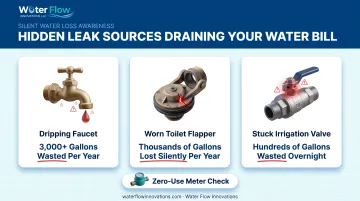
Leaks hide in plain sight. The zero-use meter check is the simplest diagnostic: read your meter late at night when no water should be running, wait an hour, then read it again. Any movement means water is escaping somewhere in the system.
The scale of leak waste is easy to underestimate:
- A faucet dripping once per second wastes more than 3,000 gallons per year, per EPA's Fix a Leak Week data
- A worn toilet flapper can silently leak thousands of gallons a year with no visible sign
- A single stuck irrigation valve can waste hundreds of gallons overnight before anyone notices
Upgrade to Water-Efficient Fixtures and Equipment
Three zones drive most indoor water use in a hotel: guest bathrooms, kitchens, and laundry. Each has proven, low-disruption upgrade paths.
Guest Bathroom Upgrades
WaterSense-labeled fixtures cut consumption without guests noticing a difference in pressure or performance:
| Fixture | Standard flow | WaterSense limit | Reduction |
|---|---|---|---|
| Showerhead | 2.5 gpm | 2.0 gpm | 20% lower |
| Bathroom faucet | 2.2 gpm | 1.5 gpm | 30%+ lower |
| Toilet | 1.6 gpf | 1.28 gpf | 20% lower |
Dual-flush toilets and faucet aerators are typically the fastest, cheapest retrofits — most installs take minutes per fixture, with no plumbing changes required.
Kitchen and Laundry Efficiency
Commercial kitchens hide one of the biggest water hogs: the pre-rinse spray valve. Older valves ran at 1.6 gpm or higher. Current federal maximums cap valves at 1.00 to 1.28 gpm depending on class.
Replacing an inefficient valve can save more than 7,000 gallons per year, with payback in as little as 5 to 8 months, according to EPA data on pre-rinse spray valves.
Pair that swap with a few low-effort kitchen and laundry habits:
- Run dishwashers only when fully loaded, on economy cycle settings
- Choose water-efficient ice machines with air-cooled condensers where climate allows
- Install laundry equipment with water-saving cycle options for linens and towels
Consider Water Recycling Systems
For larger properties, greywater recycling — reusing shower, sink, and laundry water for irrigation or toilet flushing — cuts freshwater demand.
A 300-room Abu Dhabi property reported a 24% reduction in monthly water use after installing a greywater system, per One Planet Network case data. These systems carry higher upfront costs and suit properties with the scale to justify them.
Outdoor Irrigation and Landscaping Efficiency
At resorts and properties with extensive grounds, landscaping can rival or exceed indoor water use entirely. This is often the most overlooked opportunity on the list.
Smart, weather-based irrigation controllers adjust watering schedules from real-time rainfall, temperature, and soil moisture data. That cuts the overwatering and runoff fixed timers often cause.
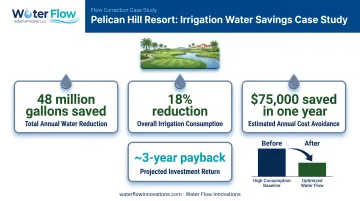
Pelican Hill Resort combined smart controllers with drought-tolerant planting and hydrozoning to save more than 48 million gallons (18%) and an estimated $75,000 in a single year, per an EPA case study. Estimated payback on the controller investment was about three years.
Other proven approaches:
- Xeriscaping with native, drought-tolerant plants — Arizona hospitality guidance puts potential water-use reduction at up to 40%
- Drip irrigation instead of overhead sprinklers, which can cut irrigation demand by up to 25%
- Hydrozoning by grouping plants by water need so high-demand areas aren't watered on the same schedule as low-demand turf
Adoption is already mainstream: 43.4% of surveyed U.S. hotels now use native or drought-tolerant landscaping, per the 2024 AHLA/Greenview report.
Engage Guests and Train Staff for Lasting Water Savings
Behavior change costs almost nothing to implement and often delivers the biggest return relative to investment.
Towel and linen reuse programs are the clearest example. A peer-reviewed field study found reuse rates jumped from 64.3% with no signage to 79.6% when hotels used well-designed messaging.
Nearly every major hotel brand runs some version of this program. As of 2024, 98.9% of surveyed hotels already had a bed-linen reuse policy.
To get participation up without guilt-tripping guests:
- Use clear, positive signage that explains why, not just "please reuse towels"
- Offer digital reminders through the booking app or in-room tablet, not just a card on the counter
- Add small incentives: loyalty points, a discount, or a charitable donation per reuse choice
Staff training matters just as much:
- Designate a water steward: one person accountable for tracking metrics and flagging issues
- Train housekeeping: report dripping faucets, running toilets, and leaks immediately instead of waiting on a maintenance ticket
- Review water metrics in regular ops meetings the same way you review occupancy or RevPAR
None of this requires capital investment. It takes consistency.
Stop Paying for Water You Never Used: Fixing Meter Over-Reading
Here's something most facility managers never check: your water meter might be overstating how much water you actually use, even after every conservation program above is running perfectly.
The cause is mechanical, not behavioral. Air entrainment and turbulent flow inside pipes create micro-bubbles and vortex conditions at the meter. Commercial meters can't tell the difference between water and air passing through, so they count both. The result is a bill for water the property never received.
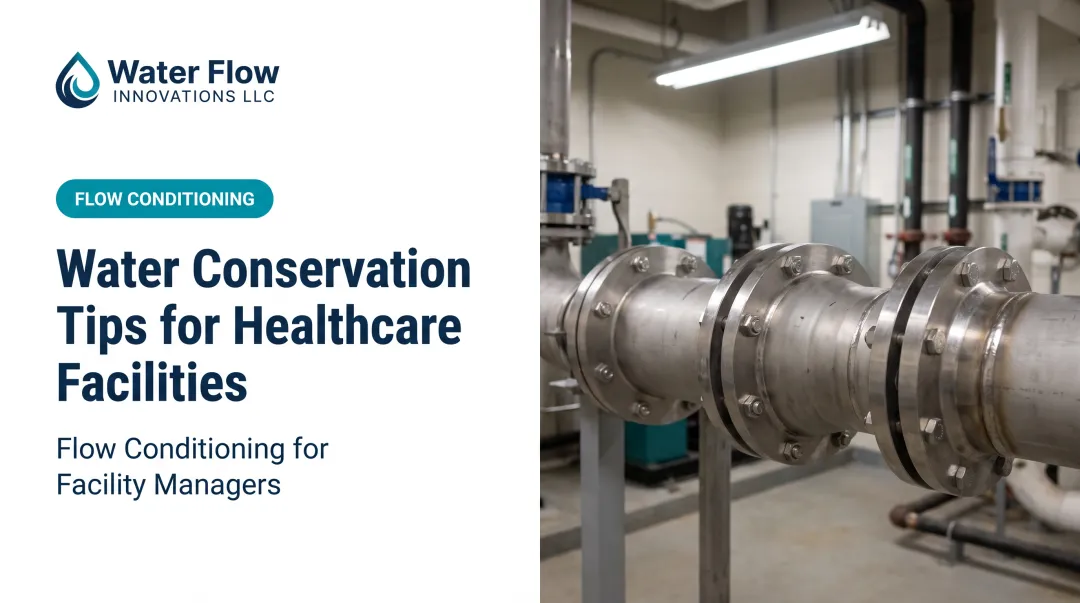
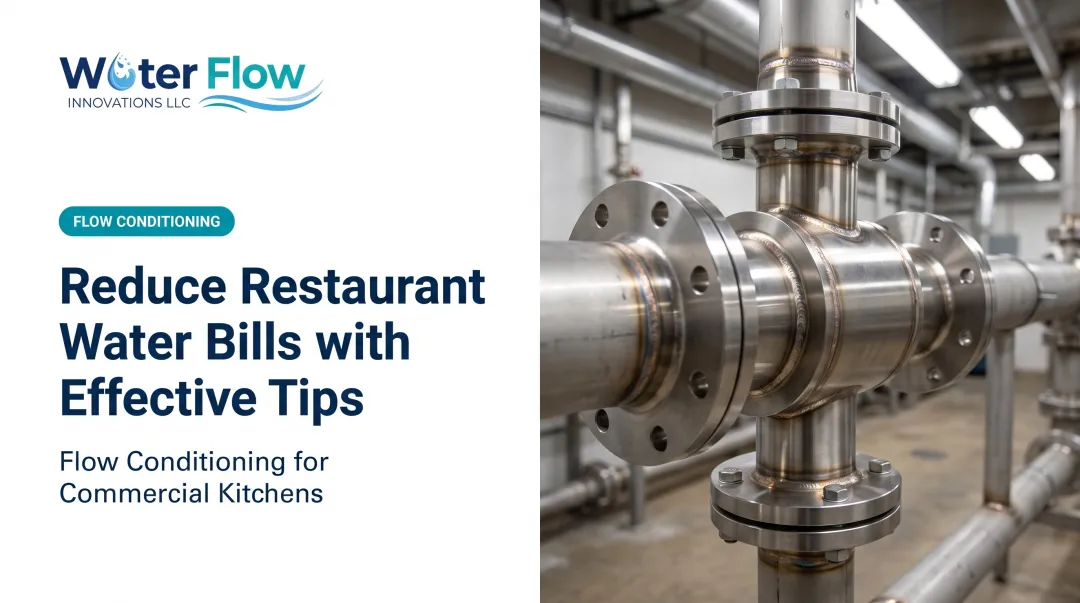
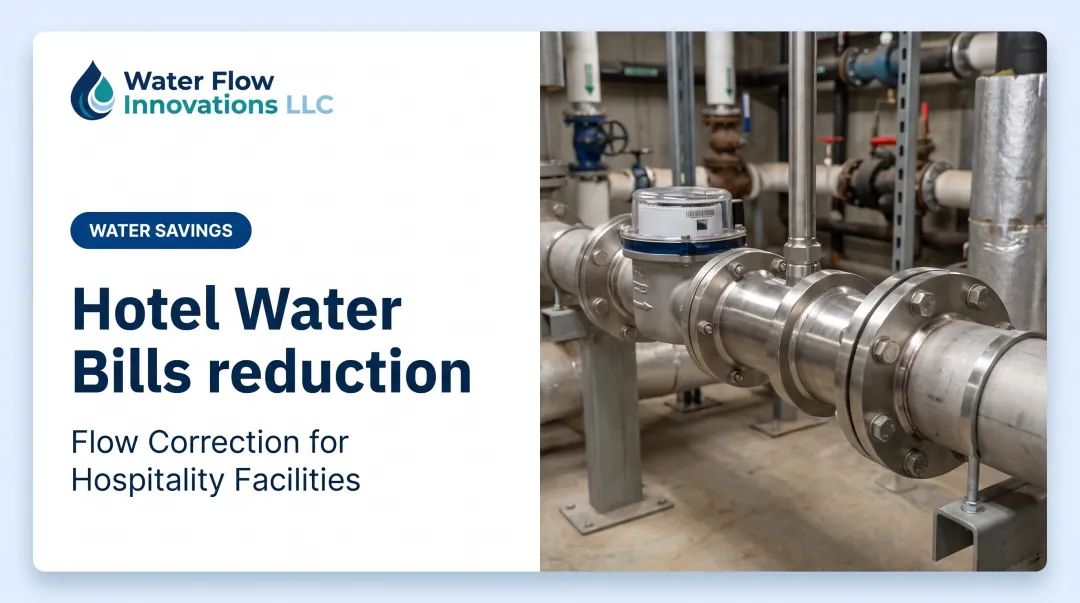
Water Flow Innovation's Flow Conditioning Device (FCD) is built for that gap. It's a custom-fabricated, 316L stainless steel unit installed immediately after the water meter that:
- Removes entrained air and micro-bubbles from the measurement zone
- Regulates pressure spikes that cause water hammer and air re-entry
- Eliminates the turbulent, vortex flow that causes meters to over-count volume
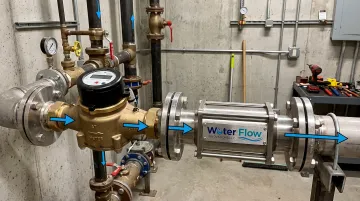
Installation takes about one to two hours, works with any meter type and any standard pipe size (½-inch to 12-inch), and requires only a brief planned water shutoff. Guest room pressure, showers, pools, kitchens, and laundry stay unaffected.
The device is certified to IAPMO, NSF/ANSI, CAN 61, KIWA, GMP, and SQF, covering plumbing code compliance, potable water safety, and food-grade standards relevant to hotel restaurants and banquet kitchens.
Documented results run 5–30%, with a top-end case at 46% savings on combined water and sewer bills. Those savings show up on the next billing cycle. Because sewer charges are typically calculated from metered water volume, correcting the meter cuts both charges at once. 90% of customers reach full ROI within 12 months.
Risk stays low: a 6-month money-back guarantee, a lifetime transferable warranty that survives ownership changes, and flexible purchase or lease terms.
This doesn't replace the strategies above. It complements them, and it's often the only lever that hits next month's bill without a single operational change.
Frequently Asked Questions
How can hotels reduce water usage most effectively?
Start with a water audit to establish your baseline, then upgrade to WaterSense-labeled fixtures in guest bathrooms and kitchens. Add guest and staff engagement programs like towel reuse for the fastest additional gains.
What percentage of a hotel's operating costs go toward water?
There's no single verified industry-wide figure, since it varies significantly by property type, region, and local utility rates. What's consistent is that water and sewer charges move together, so any water reduction typically cuts both line items at once.
Do low-flow fixtures reduce guest comfort?
No. Modern WaterSense-certified showerheads and faucets are engineered to maintain pressure and performance while cutting flow rates by 20–30%. Most guests never notice a difference.
How much water can towel and linen reuse programs save?
Well-designed programs can push guest participation from roughly 64% to nearly 80%, based on published behavioral research. The exact laundry-load reduction depends on your property's baseline participation and load sizes—and it's among the cheapest programs to launch.
Can hotels reduce water bills without changing how much water they use?
Yes. Meter over-reading caused by air and turbulent flow can inflate bills regardless of actual consumption. Correcting it with a flow conditioning device is a billing-side fix that works alongside (not instead of) usage-reduction efforts.
Is greywater recycling worth the investment for hotels?
It suits larger properties with high laundry or irrigation demand best, given the upfront system cost. Documented cases show meaningful long-term ROI through reduced freshwater dependency, but the payback period is site-specific.
Which hospitality properties benefit most from correcting meter over-reading?
Any property on a metered municipal connection with frequent demand cycling — hotels and resorts, restaurants and fast food, vacation rentals, theme parks and attractions, marinas, and cruise ship terminals. Commercial laundry, kitchens, pools, and irrigation are the usual compounding drivers.
Does correcting the meter also reduce the sewer charge?
Most utilities calculate sewer as a percentage of metered water intake, typically 80–120% of the water charge. Every phantom gallon is therefore billed twice, once as water and once as sewer, even though it never entered a drain. Correcting the reading reduces both lines on the same billing cycle, which is why savings are quoted as a combined water and sewer figure.