What makes this particularly costly is the compounding effect: water charges and sewer fees typically move together. When your metered consumption goes up — whether from an actual leak or a measurement error — both line items increase simultaneously.
Identifying the root cause matters more than simply paying the bill and moving on. The wrong diagnosis means the wrong fix, and another inflated bill next cycle. This article covers the five leading causes, the warning signs most facilities miss, and the prevention steps that deliver lasting results.
Key Takeaways
- High water bills stem from leaks, meter inaccuracies, operational changes, system malfunctions, or rate increases — and actual overuse is often the last culprit
- Water meters can over-read consumption due to air entrainment and turbulent flow, inflating bills even when no leak exists
- Sewer fees typically mirror water charges, so every over-billed gallon effectively costs twice
- Early warning signs like usage spikes, overnight meter movement, and wet spots can catch problems before they compound
- FCD installation, leak audits, fixture upgrades, and smart metering can cut bills 5–30% with no impact on daily operations
Common Causes of High Water Bills in 2026
An abnormally high water bill isn't just about water consumption charges. Most commercial bills include sewer or discharge fees calculated directly from metered water intake — meaning one spike drives two line items up simultaneously. Many facilities don't realize this until the bill arrives.
High water bills typically trace back to one of five root causes. Identifying the right one upfront determines whether your fix actually works.
Undetected Plumbing Leaks
Leaking toilets, faucets, pipes, and fixtures are the most frequently cited cause of high commercial water bills. In large buildings, a single constantly running toilet or a dripping boiler line can waste tens of thousands of gallons per month without anyone noticing.
The bigger challenge is hidden leaks. Leaks inside walls, underground service lines, and mechanical rooms can go undetected for multiple billing cycles. The key diagnostic clue: a water meter that never reaches zero usage, even during confirmed non-operating hours.
EPA case studies document the financial scale clearly — a hospital in Olympia reduced water and sewer costs by $140,000 per year through efficiency measures, and the Hyatt Regency Atlanta achieved roughly $1 million in annual savings. Neither was from a single leak fix, but both illustrate the financial territory commercial facility leaks occupy.
Water Meter Over-Reading Due to Air Entrainment and Turbulent Flow
Most facilities overlook this cause entirely, which makes it one of the costliest to ignore.
When air or gas becomes trapped in the water supply line, commercial meters register higher-than-actual consumption. The meter's measurement mechanism physically cannot distinguish between water and entrained air; it counts everything that passes through it as billable volume. The result is inflated readings and higher bills, even when no water is actually being wasted.
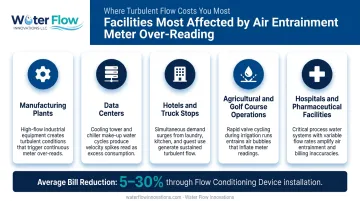
The root cause is physics — specifically how commercial plumbing generates air entrainment and turbulent flow conditions. Facilities particularly susceptible include:
- Manufacturing plants with cooling tower makeup water and CIP system cycling
- Data centers running continuous high-volume variable-demand cooling loads
- Hotels and truck stops with high-frequency on/off pressure events from showers and kitchens
- Agricultural and golf course operations with multi-zone irrigation start/stop cycling
- Hospitals and pharmaceutical facilities with 24/7 pressure-variable systems
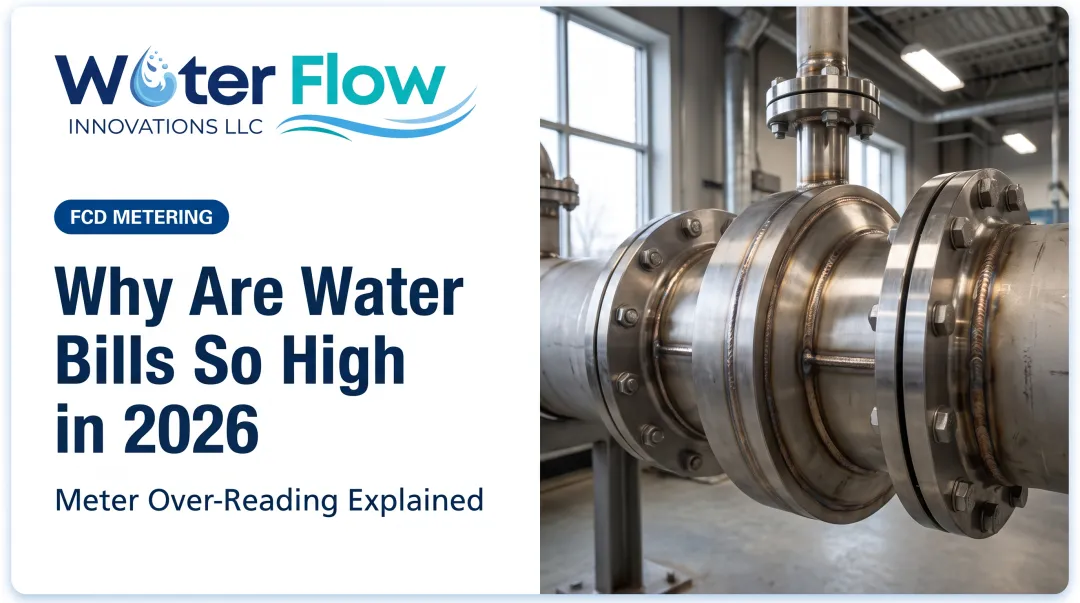
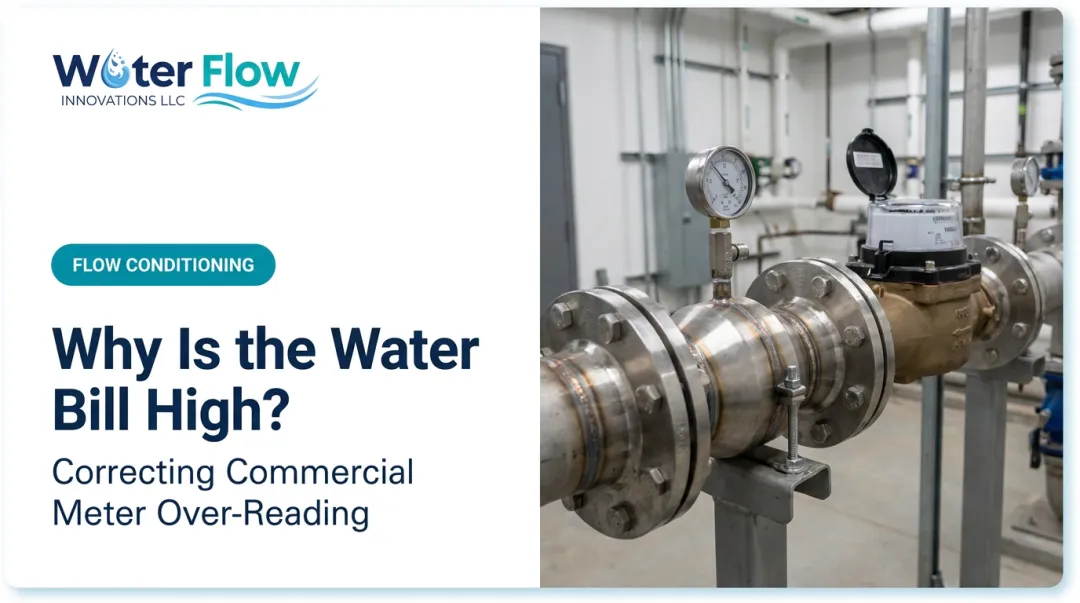
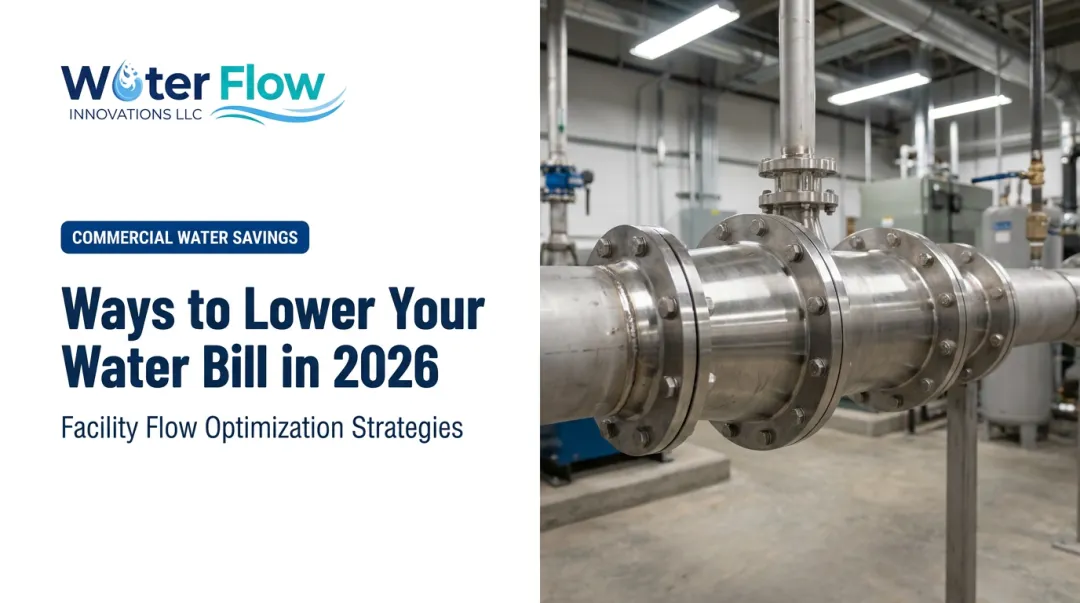
Water Flow Innovation's Flow Conditioning Device (FCD) is specifically engineered to correct this problem. Its four-component system — air/gas separation, pressure regulation, check valve, and turbulence elimination — creates laminar, bubble-free flow conditions in the meter's measurement zone.
The result: the meter reads only actual water consumption, not air and turbulence counted as water. Customers across 20+ industries have documented average bill reductions of 5–30%, with a highest single-installation result of 46%.
Increased Consumption From Operational or Occupancy Changes
Not every bill increase signals a malfunction. New equipment, expanded shifts, higher occupancy, or additional operations can all drive real consumption increases that go undetected because the change feels incremental. Common scenarios:
- A hotel adding banquet operations
- A school increasing enrollment
- A manufacturer adding a production line
- A multifamily property onboarding new tenants
Without a consumption baseline tracked by zone, these increases look identical to billing anomalies on the surface. The only way to distinguish real usage growth from a billing problem is data — specifically, historical consumption benchmarks that let you see exactly when usage changed and by how much.
Irrigation and Cooling System Malfunctions
Automated irrigation systems with broken heads, stuck valves, or incorrect programming can waste enormous water volumes silently — especially at golf courses, universities, large estates, and campuses. DOE data shows that cooling towers alone can account for 20–50% of a facility's total water use, and raising cycles of concentration from 3 to 6 reduces makeup water by 20% and blowdown by 50%.
The compounding factor: these systems often run during off-hours or overnight, making waste invisible until the bill arrives. Watch for:
- Soggy ground or unusually lush vegetation near irrigation lines
- Unexpected wet patches near mechanical equipment
- Meter movement during confirmed non-operating hours
Rising Utility Rates and Sewer Surcharges
Even with flat consumption, a rate increase can make a bill look like a spike. According to Bluefield Research, U.S. water and sewer bills increased 24% over five years, driven by aging infrastructure, drought conditions, and regulatory compliance costs. That trend has continued.
The sewer surcharge dynamic compounds this further. In New York City, the FY2025 sewer charge is 159% of the metered water charge — meaning every metered gallon generates 2.59x the cost in combined water and sewer fees. Many municipalities use similar multiplier structures.
Facilities that don't review their rate schedules annually regularly miss tier changes and surcharge increases until they're already paying them.
What Happens If a High Water Bill Is Left Unaddressed
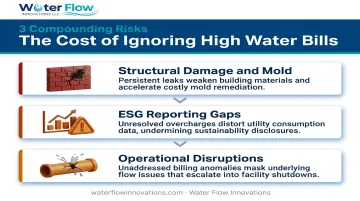
Unresolved causes don't stay flat — they compound. Every billing cycle adds to the total loss, and because sewer fees mirror water charges, every over-billed or wasted gallon effectively costs twice.
Beyond the financial impact, unaddressed causes create secondary problems:
- Structural damage and mold: Hidden leaks deteriorate walls, flooring, and mechanical rooms over time — liability exposure that can dwarf the original water cost
- ESG reporting gaps: Meter over-reading inflates consumption figures, distorting sustainability metrics and putting LEED certification or CDP water security disclosures at risk
- Operational disruptions: Pipe failures and system deterioration trigger unplanned shutdowns — with their own labor, repair, and downtime costs on top of the water bill
Most corrective measures — including FCD installation — deliver savings on the very next billing cycle. That makes the cost of waiting concrete: one more month of full, unrecovered charges.
Warning Signs You're About to Face a Serious Problem
Catch these early before a major bill or damage event forces your hand:
- Consecutive billing cycles showing rising consumption with no operational changes to explain it
- Meter movement during non-operating hours — overnight, weekends, or during confirmed facility shutdowns
- Physical indicators: wet spots, corrosion staining, musty odors, or unusually lush vegetation near underground service lines
How to Prevent High Water Bills
Prevention works best as a layered strategy: eliminate waste, verify metering accuracy, manage systems proactively, and address infrastructure issues before they escalate.
Conduct Regular Leak Audits
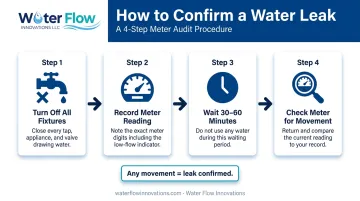
A commercial leak audit covers toilets, faucets, fixtures, appliances, pipe joints, irrigation valves, and mechanical equipment. The simplest starting point requires no equipment:
- Turn off all water-consuming equipment and fixtures
- Record the meter reading
- Wait 30–60 minutes without any water use
- Check the meter — any movement confirms a leak exists somewhere in the system
Schedule formal audits quarterly or after any major operational change. Many utility providers offer free or subsidized audit services for commercial accounts — worth requesting before hiring an outside contractor.
Verify Water Meter Accuracy
Testing meter accuracy is straightforward: measure a known volume of water through a single fixture and compare it to the meter reading. If discrepancies appear, contact the utility to request a meter inspection.
One critical point: meter inaccuracies caused by air entrainment and turbulent flow won't be resolved by swapping the meter. The problem is in the flow conditions, not the meter itself. Installing a flow conditioning solution immediately after the meter addresses the underlying physics.
Water Flow Innovation offers a free water bill review and savings analysis — covering your utility bills, meter type, pipe size, and operational profile to project facility-specific savings before any commitment. Facilities paying more than $500/month in combined water and sewer charges average 5–30% bill reduction, and 90% reach full ROI within 12 months.
The FCD is custom-fabricated for pipe sizes from ½" NPS to 12" NPS (DN20–DN500), works with any meter type, and installation is usually about an hour (+/-) with only a brief water shutoff. It carries IAPMO, NSF, ANSI, CAN 61, KIWA, GMP, and SQF certifications, a 6-month money-back guarantee, and a lifetime transferable warranty.
Upgrade to Water-Efficient Fixtures and Systems
Replacing aging toilets, faucets, showerheads, and irrigation components with WaterSense-certified alternatives reduces base consumption permanently. EPA's WaterSense commercial flushometer-valve toilets use a maximum of 1.28 gallons per flush — 20% less than the federal standard.
For industrial facilities, optimizing cooling tower cycles-of-concentration can cut water consumption substantially. These upgrades often qualify for utility rebates and can be documented as water reduction achievements for ESG and LEED reporting.
Monitor Usage in Real Time With Smart Metering or Submetering
Smart meters and IoT-connected flow sensors provide continuous usage visibility — catching spikes immediately rather than waiting for the monthly bill. Implement submetering for high-consumption zones:
- Irrigation systems
- Cooling towers
- Laundry and kitchen operations
- Process water systems
Submetering makes each system's contribution to the total bill visible and accountable, accelerating leak detection and consumption analysis.
Tips for Long-Term Water Cost Control
Keeping water costs down over time comes down to consistent operational habits — not periodic scrambles after a surprise bill:
- Establish monthly baseline benchmarks by facility zone and flag any reading that exceeds it by more than 10–15% as an automatic investigation trigger
- Train facility staff to recognize and report early signs of leaks or system irregularities — build water efficiency into standard operating procedures
- Maintain a consumption and audit log: consumption data, repairs, and upgrades create the paper trail needed for ESG reporting, regulatory compliance, and utility dispute resolution
- Review utility rate schedules annually and cross-check billed rates against the current tariff to confirm correct charges and identify upcoming tier changes before they hit
Frequently Asked Questions
What is the most common reason for a high water bill?
Undetected plumbing leaks — particularly in toilets, faucets, and underground service lines — are the most frequently cited cause for commercial facilities. Water meter over-reading from air entrainment is also a major driver, particularly in facilities with high-frequency on/off cycles, cooling systems, or irrigation demand.
Why is my water meter reading high but I can't find a leak?
The most likely culprit is meter over-reading caused by air entrainment or turbulent flow. Air bubbles register as billable water volume — and no standard leak check will catch it, because there's no leak to find.
How do I check if my commercial building has a hidden water leak?
Use the shut-off meter test. Turn off all equipment and fixtures, record the meter reading, then wait 30–60 minutes without using any water. If the meter has advanced, a leak exists somewhere in the system.
Can utility rate increases cause my water bill to rise even if my usage hasn't changed?
Yes. Rate hikes and sewer surcharge increases can raise bills sharply even with flat consumption. Review your utility's published rate schedule annually and compare both the water charge and sewer fee line items — they don't always increase by the same percentage.
What is air entrainment and why does it affect my water bill?
Air entrainment occurs when air or gas becomes trapped in the supply line — typically from pressure events like valve closures or demand cycling. The meter counts this air as billable water volume, producing inflated readings and higher bills with no additional water consumed.
How quickly can water bill savings appear after fixing the root cause?
Leak repairs show results on the very next billing cycle. FCD installations also deliver immediate reductions — savings appear starting with the first bill after installation, with no ramp-up period required.
What scale of reduction is documented once over-reading is corrected?
Documented installations average a 5–30% cut in combined water and sewer bills, with a highest documented single result of 46%. The figure depends on how much air entrainment and turbulence the facility's own demand cycling generates.
Does correcting the cause interrupt facility operations?
No. A licensed plumber or mechanical contractor fits the custom-built device at the supply meter in about an hour, with a brief water shutoff at the meter connection. Nothing downstream is shut down beyond that window and no process parameter changes.