
The good news: crooked or uneven faucet flow is rarely a plumbing emergency. It's almost always a clogged aerator, mineral buildup, or a screen that's sitting slightly off-center. This guide covers why it happens, how to fix it in about 20 minutes, and when the problem actually needs a plumber.
Key Takeaways
- Most common cause: clogged or misaligned aerator screen
- DIY-friendly: Yes — almost always fixable without a plumber
- Quick fix: Remove the aerator, soak in vinegar, scrub, and reassemble
- Call a plumber when: low pressure remains after cleaning, or multiple fixtures are affected
What Is a Faucet Aerator (and Why It Controls Water Flow)?
The aerator is the small mesh screen attachment threaded onto the tip of your faucet. Denver Water describes it as the part that adds air into the water stream, shapes the flow, controls pressure, and catches debris before it splashes everywhere.
That air-mixing action is also what makes faucets more efficient. Per the EPA's WaterSense program, labeled bathroom faucets cap out at 1.5 gallons per minute, at least 30% less than the standard 2.2 gpm, without any noticeable drop in performance.
Over months of use, that same tiny screen collects calcium, magnesium, and sediment. Once the holes start clogging unevenly, the stream stops flowing straight and starts spraying wherever there's still an open path.

Common Causes of Crooked or Uneven Water Flow
Nearly every crooked-stream complaint traces back to one of these four issues.
Cause 1: Clogged Aerator Screen
- Symptoms: sideways spray, a stream that splits into two, general splashing
- Likely cause: mineral buildup from hard water (calcium and magnesium deposits), according to the USGS
Cause 2: Misaligned or Loose Aerator
- Symptoms: water shooting diagonally, or leaking around the base of the faucet tip
- Likely cause: the aerator wasn't screwed on evenly during reassembly
Cause 3: Damaged Rubber Washer or Screen
- Symptoms: uneven flow that continues even after a thorough cleaning
- Likely cause: worn or cracked components that no longer seal properly. Delta Faucet notes these parts often need replacement, not just cleaning
Cause 4: Low or Inconsistent Water Pressure
- Symptoms: weak, sputtering, or air-mixed flow at multiple faucets, not just one
- Likely cause: sediment in the supply line, or in larger buildings, turbulent and over-aerated water entering the system
This last cause matters more for larger properties. The Portland Water Bureau notes that flow and pressure are different problems: a single clogged faucet can look like a "pressure issue" even when building pressure is fine.
When air, spitting, and inconsistent pressure show up across many units in an apartment building, hotel, or commercial property, the source is often turbulence or air entrainment at the master meter—not any one faucet. That's a facility-level flow conditioning issue, not a toothbrush-and-vinegar fix.
How to Straighten Water Flow From Your Faucet (Step-by-Step)
Before grabbing tools, figure out whether the problem is the aerator, the cartridge inside the faucet, or the supply line. Fixing the wrong part wastes time. Start with the aerator, since it's the cause in most cases.
Step 1: Remove the Aerator
Try unscrewing it by hand first. If it's recessed or stuck, use an aerator key, or wrap the jaws of the pliers with tape to avoid scratching the finish. Delta recommends removing by hand whenever possible, since too much pressure can bend the aerator body. Note how the washer, flow restrictor, and mesh screen are stacked before pulling them apart.
Step 2: Soak and Clean the Parts
Submerge the pieces in an equal-parts white vinegar and water solution. Soak times vary by source. Denver Water suggests around 5 minutes, while Delta's own service guidance recommends soaking overnight for stubborn buildup.
When in doubt, soak longer rather than shorter. Scrub gently with an old toothbrush, focusing on the mesh screen holes.
Step 3: Flush the Faucet
Run hot and cold water for 15-30 seconds with the aerator still removed. This clears loose debris out of the line before it gets trapped again.
Step 4: Reassemble and Reattach
Stack the washer, restrictor, and screen back in their original order. Hand-tighten the aerator. Don't overtighten, since that can crack the housing or strip the threads.
Step 5: Test the Flow
Turn the water on slowly and watch the stream. It should run straight and even. If it's still crooked, repeat the soak. Sometimes one pass isn't enough for heavy scale.
Step 6: Check the Cartridge or Supply Lines
Still off after cleaning? Turn off the water, remove the handle, and inspect the cartridge and inlet screens for trapped debris. It's a deeper fix, but often the missing piece when aerator cleaning alone doesn't work.

When to Clean vs. When to Replace
Not every crooked or weak stream means a new faucet. Use this quick check to decide whether a clean-up is enough or a part needs replacing.
| Scenario | Clean or Replace? | Why |
|---|---|---|
| Minor mineral buildup | Clean (vinegar soak) | Replace only if screen holes stay clogged |
| Cracked washer or corroded threads | Replace the aerator | Cleaning won't fix damage; aerators are inexpensive |
| Flow still off after aerator and cartridge cleaning | Call a plumber | Internal parts may be failing and need inspection |
Preventive Maintenance to Keep Water Flow Straight
- Clean the aerator every 6 months. Denver Water recommends this baseline, and more often in hard water regions or after nearby plumbing work.
- Treat minerals at the source. A water softener or sediment filter cuts buildup building-wide so each faucet needs less frequent attention.
Individual faucet cleaning only fixes individual faucet problems. Commercial buildings, HOAs, and multifamily properties often face something else: air entrainment and turbulence at the master meter, not just dirty screens.
Common signs include:
- Water bills rising without a matching increase in occupancy or usage
- Sewer charges climbing in lockstep with water charges
- Spitting or inconsistent pressure at fixtures across many units
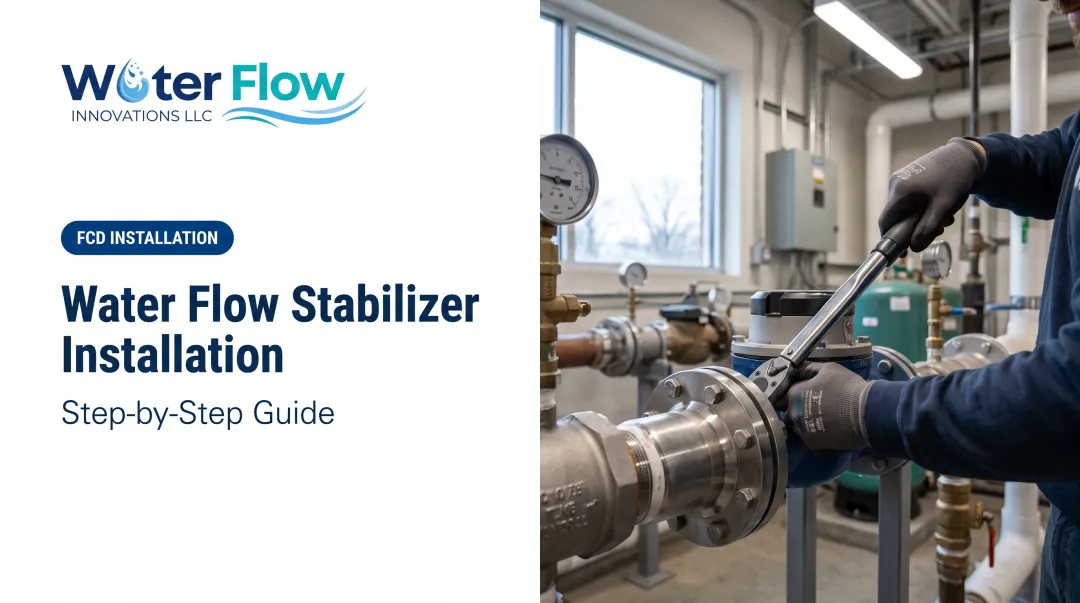
A certified flow conditioning device installed right after the meter stabilizes the water column so the meter records actual use instead of entrained air and turbulence. Water Flow Innovation custom-builds each Flow Conditioning Device with air and gas separation, pressure regulation, a check valve, and turbulence control for any meter type and any standard pipe size (½-inch to 12-inch).
Install usually takes about an hour and adds no measurable pressure loss downstream. Properties see average water and sewer bill reductions of 5-30%, with a documented high of 46%, and 90% of customers reach ROI within 12 months.

Frequently Asked Questions
Why is my faucet spraying weird or sideways?
A clogged or misaligned aerator is almost always the cause. Removing, cleaning, and reseating the aerator usually fixes the issue immediately.
How often should I clean my faucet aerator?
Every 6 months, or more often if you have hard water or notice buildup sooner.
Can I fix low water pressure without a plumber?
In most cases, yes. Cleaning the aerator and supply line screens fixes most low-pressure problems. If pressure stays low after cleaning, call a plumber.
What household items clean a clogged aerator?
White vinegar, a small bowl or plastic bag for soaking, and an old toothbrush to scrub the mesh screen.
Does a dirty aerator affect water pressure?
Yes. Mineral buildup restricts the openings in the screen, which can cause both reduced pressure and a crooked or splashing spray pattern.
Why does my faucet still spray unevenly after cleaning the aerator?
A damaged washer, debris in the cartridge, or a supply line issue is likely the next culprit. Check the cartridge and inlet screens before assuming a bigger plumbing problem.
Does straightening flow at the tap change what the meter records?
No. An aerator only affects the stream leaving that one fixture. Billing is decided far upstream at the supply meter, where entrained air and turbulence in the main line are registered as water — a separate problem from a spitting faucet.
Where does straightening flow actually reduce a bill?
At the supply connection, on properties billed through one shared meter — multifamily and apartment buildings, HOAs, luxury high-rise buildings, hotels, senior living, and university dormitories, where constant demand cycling drives the over-reading. Documented corrections there average 5–30% of combined water and sewer charges, with a highest documented result of 46%.