Introduction
Commercial and industrial water and sewer rates have climbed for over a decade, yet most facility teams only notice when finance starts asking questions. Unlike electricity or gas, water bills rarely get a second look. There's no dashboard flashing red, no obvious spike to chase down.
For manufacturing plants, hospitals, campuses, and municipal systems running high water throughput, that inattention adds up fast. A few cents per hundred gallons, multiplied across millions of gallons a year, quietly eats into margins nobody's watching.
Bill size varies by facility size, industry, and how a utility structures its sewer surcharges. The part most operators miss: high water bills usually aren't about how much water you're actually using. They're about inaccurate metering, wasted hydraulic energy, and weak visibility into what's really happening in the pipe.
This article breaks down how those costs build, what drives them, and practical ways to cut them, from better metering and flow conditioning to hydropower-based energy recovery where site conditions allow.
Key Takeaways
- Water bills rise from usage and tiered rates, but meter over-reading often inflates the total
- Meter accuracy, sewer surcharges, and pumping energy are the biggest hidden cost drivers
- Hydropower and in-conduit recovery offset the energy cost of moving and treating water
- Pairing energy recovery with certified flow conditioning delivers faster, fuller savings than either alone
- Lower bills fastest by finding where costs originate, not only by cutting usage
How Costs Around Water Bills Typically Build Up
Water and sewer costs don't arrive as one lump charge. They accumulate every billing cycle through volumetric usage and, in many cases, tiered rate structures that charge more per gallon once you cross certain thresholds.
According to the EPA's guide to understanding water bills, utilities use several tariff designs: uniform rates, increasing-block pricing, seasonal rates, and combinations of a fixed base charge plus a variable volume charge. Each structure changes how a given volume of water translates into dollars.
That build-up is usually gradual and compounding. A slightly over-reading meter adds a small percentage to every bill, cycle after cycle, until it's a real number on the annual budget.
But costs can also spike suddenly, driven by:
- Leaks in irrigation lines, cooling loops, or process piping
- Meter degradation from age, sediment, or wear
- Equipment failure, such as a stuck valve or failed steam trap
Several of the biggest cost drivers, including meter over-reading, sewer surcharge miscalculations, and wasted pumping energy, stay completely invisible until someone runs a bill audit or a facility review. Most teams don't go looking until the number on the invoice forces them to.
Key Cost Drivers for Water Bills
Every water bill starts with the same baseline: volumetric usage run through a tariff structure, sometimes adjusted for season. That's the part everyone expects. What catches most facility managers off guard is everything layered on top of it.
Metering and Measurement Errors
Aging or improperly sized meters can register more flow than what's actually passing through, largely because of turbulence and air entrainment near fittings, valves, and pressure changes. A meter measuring a churning, bubble-filled water column can't tell the difference between air and water. It just counts volume.
Sewer discharge fees make this worse. Most utilities calculate sewer charges as a percentage of metered water use, so a metering error doesn't just inflate one bill. It compounds across both the water charge and the sewer charge on every cycle.
The Energy Hiding Inside Your Water Bill
A share of your bill covers the electricity utilities use to pump, treat, and pressure-regulate water before it reaches your facility.
The EPA notes that energy typically accounts for 25%–30% of a water or wastewater utility's total operating budget, and for some drinking water systems that figure climbs to 40%. That energy cost gets built into your rate.
The mix of these drivers shifts by facility type:
- Irrigation-heavy operations feel tariff and seasonal-rate pressure most
- High-rise buildings deal more with pressure regulation and metering placement
- Manufacturing plants carry heavier sewer surcharge exposure tied to process water discharge
Hydropower Benefits for Reducing Water-Related Costs
Here's the lever most facilities never consider: the water moving through their own pipes carries energy that's currently going to waste.
In-Conduit and Micro-Hydropower, Explained
Any facility with an elevation drop, a pressurised pipeline, or a pressure-reducing valve (PRV) has hydraulic energy being dissipated as heat and noise instead of being captured. Irrigation canals, municipal water lines, and industrial process water systems all fit this description.
In-conduit micro-hydropower installs a small turbine at that pressure-drop point. Instead of a standard PRV simply throttling pressure down and wasting the difference, the turbine converts that drop into electricity that directly offsets the utility costs tied to pumping and treatment described above.

The scale of opportunity is bigger than most people assume. A Department of Energy assessment identified roughly 1.41 gigawatts of conduit hydropower potential across the US, split across municipal, agricultural, and industrial systems. Most of that potential sits in infrastructure that already exists.
Why the Payback Math Works
Hydropower equipment isn't cheap to install, but it's built to last. The Department of Energy confirms hydropower systems typically run 65 to 85 years, with low operations and maintenance costs relative to that lifespan. Spread a significant upfront cost across eight decades of low-maintenance operation, and the average annual cost drops well below what the sticker price suggests.

Sectors best positioned for this:
- Agricultural and irrigation operations with pressurised delivery systems
- Municipal and government water and wastewater facilities
- Golf courses and campuses with natural elevation change
- Industrial sites with process water pressure-reduction points
The Important Limitation
Hydropower recovery reduces the energy cost embedded in delivering water. It does not reduce your volumetric water charge. You are still billed for every gallon that passes through your meter, accurately or not.
That's why energy recovery works best as one piece of a larger strategy, paired with metering accuracy fixes that address the usage side of the bill.
Federal clean electricity tax credits for qualifying projects placed in service after 2024 can improve payback further. Phaseout follows broader emissions targets rather than a fixed near-term date, so confirm eligibility with a tax advisor before counting on a specific credit.
Why Pairing Hydropower with an FCD Compounds Savings
Hydropower and flow conditioning aren't two versions of the same fix. They sit on two different line items of the same bill.
- The energy charge — what the utility spends pumping, treating, and pressure-regulating water before it reaches you, built into your rate — is what in-conduit hydropower offsets, by capturing the pressure-drop energy a standard PRV would otherwise waste as heat and noise.
- The volumetric charge — what you're billed per gallon the meter registers — is what a certified Flow Conditioning Device corrects. It creates static back pressure that forms a laminar flow through the meter, producing a homogeneous water column so the meter is not fooled by the turbulence and entrained air that cause over-registration. Documented installations average a 5–30% reduction in combined water and sewer charges, with 46% the highest documented single result, and about 90% of customers reach full ROI in under 12 months.

Because neither fix touches the other's line item, running them together doesn't produce diminishing returns the way stacking two similar efficiency measures often does. Each closes a separate gap on the bill, so the combined savings are closer to additive than overlapping, one of the few pairings where that's reliably true.
Cost-Reduction Strategies for Water Bills
Not every fix belongs in the same category. Some strategies change decisions made before installation. Others change how water gets managed day to day. And some change the broader system context surrounding your water infrastructure.
Strategies That Reduce Costs by Changing Decisions
These are choices made at the procurement or retrofit stage, before a facility locks itself into years of higher bills.
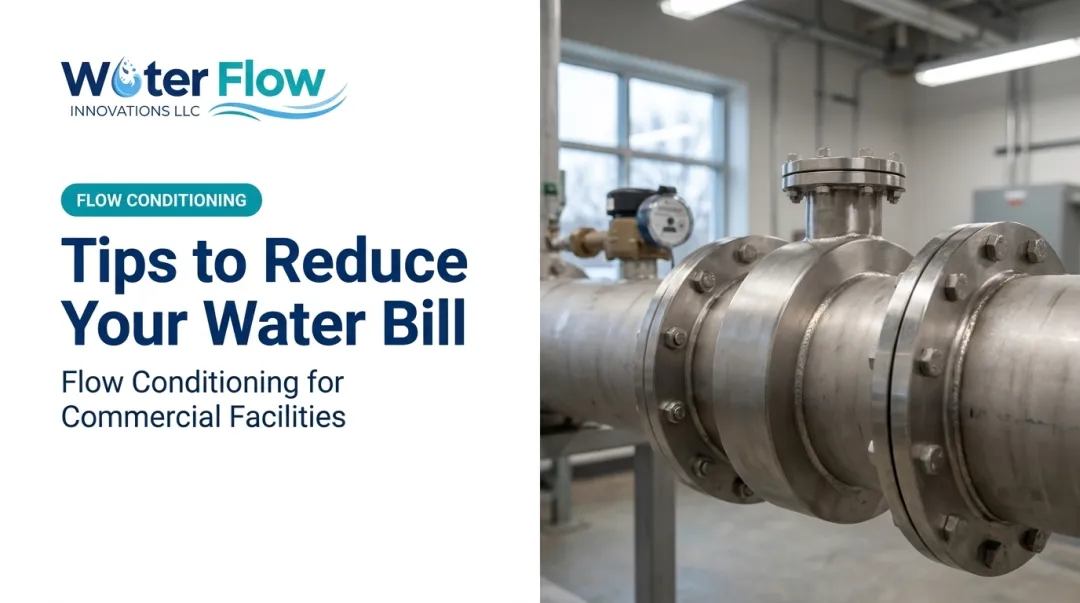
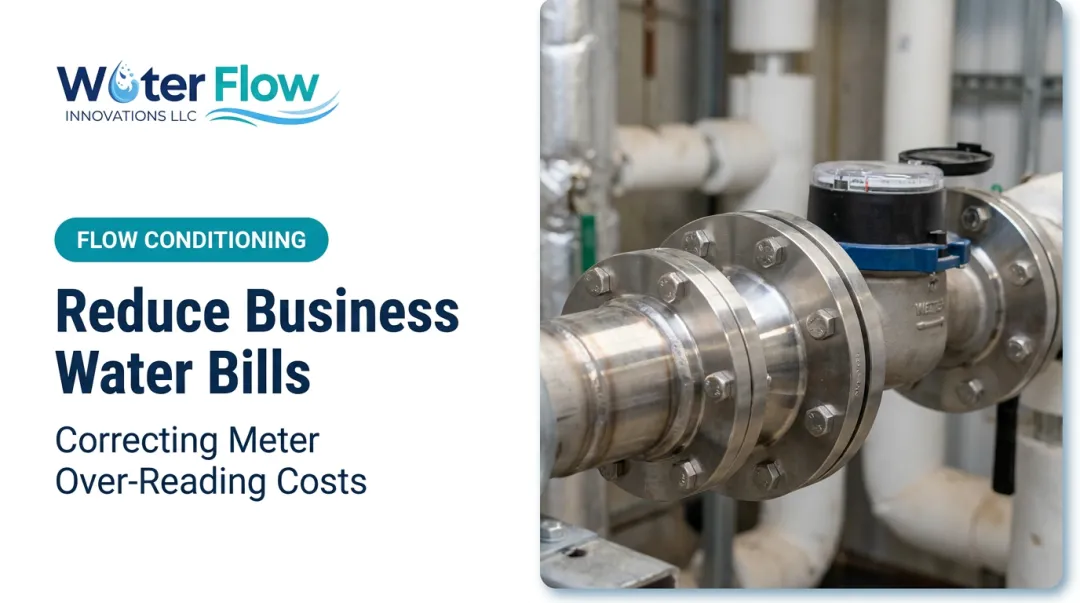
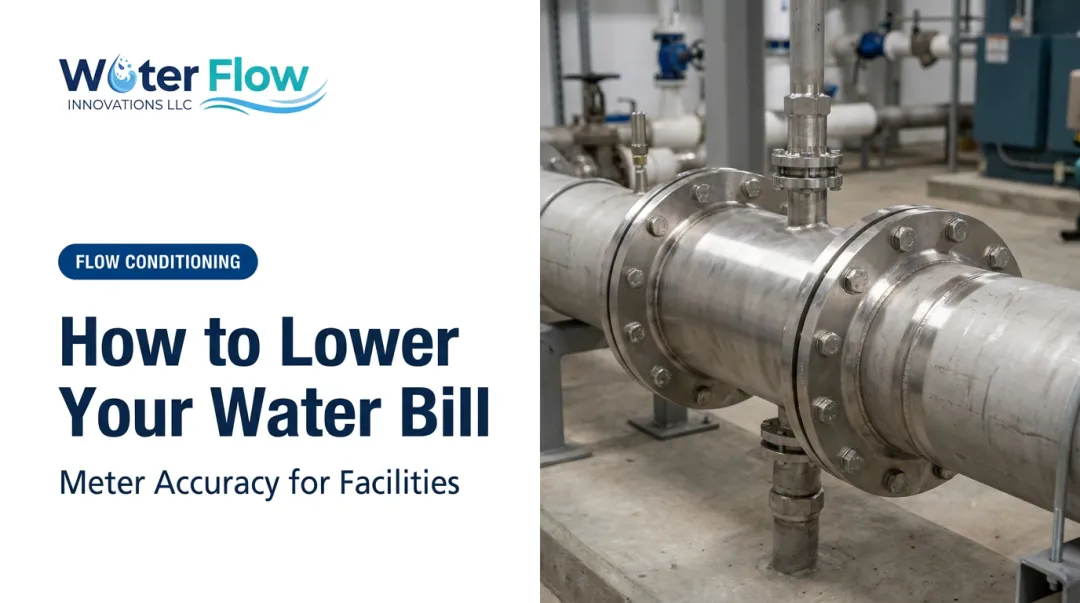
- Specify accurate metering technology upfront, including flow conditioning that corrects over-reading from air entrainment and turbulent flow. Water Flow Innovation's FCD mounts on the main line immediately after the meter, on the consumer side of the connection, and typically installs in about an hour with a brief water shutoff at the meter connection. Where a PRV is present, the preferred order is Water Meter → FCD → PRV → Building. Installing after the PRV is a fallback only, and runs roughly 20–40% less effective. It corrects the metered municipal supply reading only: it is not a general remedy for turbulence elsewhere in the piping system, and it has no effect on NPDES-regulated discharge lines.
- Choose water-efficient fixtures at time of purchase rather than retrofitting later, when downtime and labour costs run higher.
- Negotiate tariff structures using verified, audited usage data instead of assumed consumption figures.
- Evaluate lease-versus-buy options for efficiency retrofits. Leasing can shift cost to an operating expense and cut upfront capital; buying may unlock volume advantages across multi-site portfolios.
Strategies That Reduce Costs by Changing How Water Use Is Managed
Once the right equipment is in place, ongoing management determines whether savings stick.
- Implement submetering across zones, departments, or tenants to catch leaks and anomalies faster than a single master meter allows.
- Run regular meter calibration and system audits, since billing drift compounds across cycles if it goes unchecked.
- Deploy real-time monitoring and alerts for leaks, pressure anomalies, or unexplained consumption spikes.
- Track billing data against internal usage benchmarks to flag discrepancies between what's metered and what's actually consumed.
Strategies That Reduce Costs by Changing the Context Around Water Systems
In many facilities, the larger cost driver sits in the infrastructure around the meter and the management practice.
- Recover embedded energy through hydropower or turbine retrofits on pressure-reducing valves and elevation drops, as covered above.
- Address system-wide inefficiencies like cooling tower cycles, irrigation scheduling, or oversized pumps that drive up both water and energy costs.
- Review wastewater discharge and sewer fee structures separately. Since sewer charges typically scale directly with metered water use, any metering error compounds straight through to the sewer bill.
- Recognise that pipe layout, pressure zones, and meter placement are often the real cost driver, not your facility's actual water usage.
Conclusion
Cutting water bill costs starts with finding where the money actually leaks:
- A meter that over-reads from turbulent flow
- Energy wasted at a pressure-reducing valve
- Usage or billing anomalies nobody is monitoring
The strongest results come from stacking fixes: energy recovery such as hydropower, certified metering corrections, and active monitoring. Run together, the savings compound instead of plateauing.
If meter accuracy is one of your leaks, a free water bill review can show whether flow conditioning would cut your next cycle, often without changing how much water you use.
Frequently Asked Questions
Why is hydropower inexpensive?
Hydropower relies on a free, naturally occurring resource in moving water, with minimal fuel costs and equipment that lasts 65 to 85 years. That long lifespan spreads out the high upfront construction cost, keeping average annual costs low.
How much can hydropower realistically reduce my water bill?
Hydropower mainly offsets the energy cost embedded in pumping and treatment, not your volumetric water charge. For full bill reduction, it works best paired with metering and usage-focused strategies.
What is a flow conditioning device and how does it lower water bills?
A flow conditioning device corrects water meter over-reading caused by turbulence and air entrainment. It ensures your bill reflects the water you actually received, not an inflated reading from turbulent flow.
Can small facilities install hydropower systems?
Yes. In-conduit micro-hydropower and turbine retrofits can scale for smaller operations with enough elevation drop or pressure-reducing valves. Feasibility still depends on site-specific hydraulic conditions.
How is sewer/wastewater billing connected to water bill costs?
Sewer fees are typically calculated as a percentage of metered water usage, commonly 80–120% of the water charge. Any metering inaccuracy compounds across both bills simultaneously, since both are derived from the same reading.
How quickly can businesses see ROI on water bill reduction strategies?
Metering corrections, like flow conditioning devices, often show savings on the very next billing cycle. Hydropower and infrastructure investments have longer payback timelines but remain cost-effective given their multi-decade lifespan.
Why is entrained air counted as consumption at all?
Because most meters simply register whatever volume passes through them and cannot separate air and gas from water. Pump starts, valve closures, and pressure changes push air into the line, and the meter records it as delivered water.
What cover applies if the correction underperforms?
A 6-month money-back guarantee applies to the device purchase price, with installation cost non-refundable, so it can be returned if metered consumption does not measurably fall. A lifetime transferable warranty also applies.