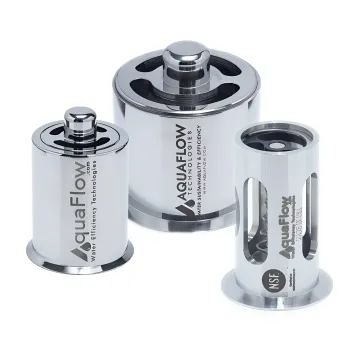
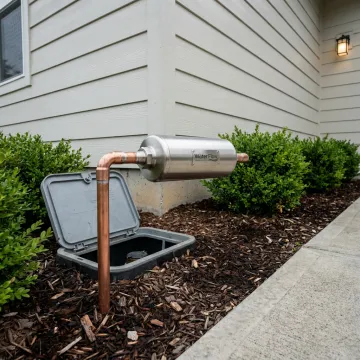
Flow Conditioning Device (FCD)
- 5-30% average water bill reduction
- Negligible pressure loss on your plumbing
- Lifetime transferable warranty included


IAPMO Certified
NSF International Certified

ANSI Certified
This page covers GPM water flow meters for residential use, focusing on how accurate flow measurement impacts water billing. Featured is the Flow Conditioning Device (FCD), a patent-pending, NSF/IAPMO-certified solution that corrects meter over-reading, delivering verifiable GPM accuracy and reducing residential water and sewer bills without affecting water pressure or usage.
GPM stands for gallons per minute, the standard unit for the rate of water flow passing through a meter, and accurate GPM readings determine how much usage is billed. The complication is that most meters cannot distinguish water from air. Turbulence, entrained air and gas, pressure cycling, or aging meter components inflate the registered GPM, so the reading includes volume that never reached a tap, an appliance, or an irrigation zone.
Most homes operate efficiently between 6 and 12 GPM at the main service line, depending on fixture count and household size, with showers typically using 1.5 to 2.5 GPM and faucets around 1 to 1.5 GPM. Readings well above these ranges can indicate leaks, oversized piping, or meter inaccuracy. On master-metered properties such as multifamily buildings, HOAs, and high-rises, the same comparison is made per unit, and a persistent gap between expected and billed flow usually points to the meter.
You can time how long a container of known volume takes to fill from a fixture and convert to a per-minute rate, or read the flow indicator on your meter over a fixed interval. Both methods measure a single point under controlled conditions, which is precisely why they often disagree with the bill: over-reading happens during rapid on-off demand, not during a steady test draw. A professional water meter assessment evaluates whole-property accuracy under real operating conditions.
No. GPM measures flow volume over time, while pressure, measured in PSI, measures the force pushing water through the pipe. High pressure does not guarantee high flow, and low pressure can still deliver adequate GPM depending on pipe diameter. The distinction matters when evaluating corrective devices: a pressure reducing valve lowers PSI and a restrictor limits GPM, whereas a Flow Conditioning Device changes neither and corrects only the accuracy of what the meter registers.
Yes. Meters over-register when air entrainment, turbulent flow, and pressure fluctuation reach them, which is common in older meters, homes with irregular plumbing layouts, and properties with irrigation zones, pumps, or tank fills that cycle frequently. The meter faithfully counts everything passing through it, air included, so you are billed for volume you never consumed. Flow conditioning corrects this by stabilizing flow so the meter registers actual delivered water and GPM measurement is restored, with documented reductions in combined water and sewer bills averaging 5-30% and a highest documented single result of 46%.
No. Negligible pressure loss is a fundamental design characteristic, so showers, appliances, and irrigation systems continue operating normally, and the device is not a restrictor or a pressure reducing valve. In rare cases a minor drop of a few psi has been recorded at the meter itself, with no noticeable effect on day-to-day pressure or performance. It also does not filter, soften, or otherwise alter water composition.
Installation takes approximately one hour, with water off for that one hour only, and is performed by a licensed plumber. The device is custom-made to the existing pipe size and meter location and is fitted immediately after the meter on the consumer side, so no changes to existing plumbing, fixtures, or water-use habits are required. Savings appear on the very next water and sewer billing cycle, with no ramp-up period. The device carries a 6-month money-back guarantee on the purchase price, with installation cost non-refundable, plus a lifetime transferable warranty that stays with the property if it is sold.
Yes, and this is where most of the overcharge sits. Utilities rarely meter discharge; sewer is calculated as a percentage of metered water intake, typically between 80% and 120% of the water charge. Every phantom gallon the meter over-registers is therefore billed twice, once as water and once as sewer, even though it never entered a drain. Water used outside, on irrigation or car washing, is billed on the sewer line too unless a separate irrigation meter is fitted.
Usually not. A brand-new meter can still over-read if the underlying cause is entrained air or turbulent flow generated by your own pumps, tank fills, irrigation cycling, or on-off demand, because the meter is accurately counting everything that reaches it, air included. Swapping the instrument does not change the flow conditions feeding it. The correction has to happen in the flow itself, which is what a conditioning device does, and properties that have already changed meters without result are strong candidates for an assessment.
Talk to our experts for custom solutions and tailored guidance.
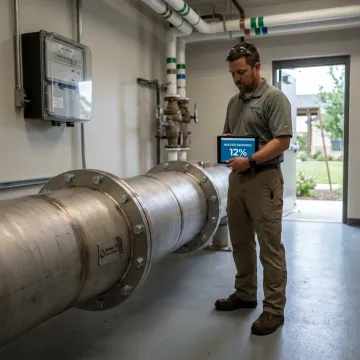
Reduces shared water and sewer costs across multiple units by correcting meter over-reading at the community connection point.
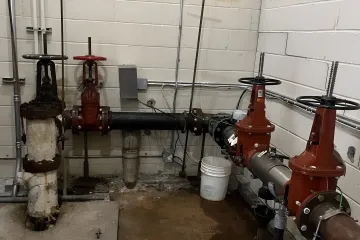
Improves billing accuracy for property managers by correcting over-reading on master water meters serving multiple units.
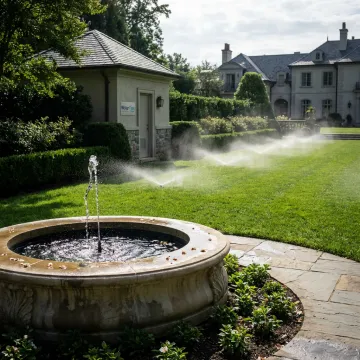
Ensures accurate GPM measurement for high water-use estates with pools, irrigation, and multiple outdoor fixtures.
Helps rental property owners avoid inflated water bills caused by meter over-reading during high guest turnover periods.
Talk to our experts for custom solutions and tailored guidance.
IAPMO, NSF, ANSI, and KIWA certified technology ensures GPM readings reflect true water usage in every home or community.
Homeowners and HOAs see 5-30% average water and sewer bill reductions starting the very next billing cycle after install.
Quick one-hour install, 6-month money-back guarantee, and a lifetime transferable warranty protect every residential investment.
Share your property details and our team will provide a free water bill review and savings estimate within one business day.
For immediate assistance, feel free to give us a direct call at 1-844-934-8258. You can also send us a quick email at Info@WaterFlowInnovations.com.
For immediate assistance, feel free to give us a direct call at 1-844-934-8258. You can also send us a quick email at Info@WaterFlowInnovations.com.