
For homeowners, this waste often means an extra $50-$150 a year in avoidable charges. For facility managers running multifamily buildings, hotels, or manufacturing plants, the stakes multiply fast, sometimes into thousands of dollars monthly.
The average US residential sewer bill sits around $54 per month, or $648 annually, though this swings widely by city. Commercial and industrial bills vary even more based on meter size, volume, and local tariffs.
Here's the good news: sewer bills aren't expensive by nature. They're expensive because of habits, inefficiencies, and metering issues that are almost always fixable. This guide breaks down exactly where those costs come from and how to cut them.
Key Takeaways
- Sewer charges are usually tied directly to metered water usage, not a separate measurement
- Costs often climb unnoticed from small leaks and aging equipment until a bill spike hits
- Leak repairs, fixture upgrades, and tighter daily water use deliver the fastest savings
- Larger facilities can also target hidden meter over-reading issues for significant, ongoing reductions
- Consistent monitoring beats one-time fixes for long-term bill control
How Sewer Bill Costs Typically Build Up
Most utilities don't measure sewage directly. Instead, they calculate your sewer charge as a percentage of your metered water usage, or read it from a shared water/sewer meter. Charleston, South Carolina, for example, bills commercial accounts at a full 100% of metered water use—so every gallon the meter records shows up again on the sewer side.
This creates two very different cost patterns:
- Gradual build-up: Small continuous losses—running fixtures, process lines that never fully shut off, or irrigation that creeps upward—add volume daily until a later bill shows an unexplained jump
- Episodic spikes: A burst line, failed valve, or short-term process dump can drive a sharp increase within a single billing cycle

Those patterns show up when you compare bills month to month or run a basic water-use review against occupancy and production.
For commercial and industrial properties, there's a third driver: meters that over-read because of turbulent flow or air in the line. Unlike a leak, this isn't wasted water. You're billed for volume the meter recorded that never actually passed through as usable flow—and that inflated read often flows straight into the sewer charge.
Key Cost Drivers Behind High Sewer Bills
Indoor Usage Dominates Residential Bills
For most households, indoor water use (showers, laundry, and dishwashing) drives the bulk of sewer charges. Showering alone accounts for nearly 17% of residential indoor water use, or close to 40 gallons a day for the average family.
Outdoor usage complicates things further. Watering lawns, filling pools, and washing cars can make up more than 30% of household water use, climbing to 60% in arid regions. That water never touches the sewer system, yet many utilities still bill it as sewer discharge.
Fixture Age and Undetected Leaks
Older toilets, faucets, and appliances use more water per cycle. Add an unnoticed leak, and the bill climbs steadily with no change in behavior.
Commercial and Industrial Metering Issues
For larger facilities, the drivers shift from habits to infrastructure. According to federal guidance on water metering best practices, several conditions can inflate the volume a meter reports:
- Pipe turbulence from fittings and valves installed near the meter
- Air entrainment that the meter registers as water volume
- Short or obstructed straight-pipe runs on compound and turbine meters
- Meter accuracy drift as equipment ages

Residential bills are usually a habits problem. Facility-level bills are often an infrastructure and metering problem. The fixes look different depending on which category you fall into.
Cost-Reduction Strategies for Lowering Your Sewer Bill
Whether you manage a multifamily property, a commercial facility, or a multi-building portfolio, cost cuts fall into three buckets: changing decisions, changing habits, and fixing the system.
Strategies That Reduce Costs by Changing Decisions
- Fix leaks immediately — a single dripping faucet can waste 20 gallons or more per day; small leaks add up fast across a building
- Install WaterSense-labeled fixtures — WaterSense toilets cut use by 20–60% and can save about $170 a year versus older models
- Upgrade to ENERGY STAR appliances — a certified clothes washer uses about 30% less water than a standard model; a certified dishwasher saves roughly 5,800 gallons over its lifetime
- Install a separate irrigation meter where your utility permits it, so outdoor water use gets excluded from sewer billing entirely
Strategies That Reduce Costs by Changing Daily Habits
- Shorten showers and shut off faucets while brushing teeth or washing dishes
- Only run dishwashers and washing machines with full loads
- Water lawns early morning or evening to cut runoff and evaporation
- Sweep driveways and patios instead of hosing them down
None of these require capital spend—only consistent attention to where water is used.
Strategies That Reduce Costs by Addressing the Broader System
For many properties, especially larger ones, the real cost driver isn't habits at all. It's outdated infrastructure or inaccurate metering that no amount of behavior change will fix.
A few system-level moves worth pursuing:
- Ask your utility about winter-usage averaging. Cities like Portland calculate sewer charges based on winter water use, since outdoor water generally doesn't enter the sewer during colder months. This can shift your billing baseline lower for the rest of the year.
- Address meter over-reading on commercial and industrial services. Air entrainment and turbulent flow—common with CIP cycles, cooling-tower makeup, tank fills, and irrigation starts—can make a meter register water that was never delivered.
- Schedule periodic professional plumbing audits. These catch inefficiencies that habit changes alone can't touch, particularly in larger buildings with complex plumbing systems.
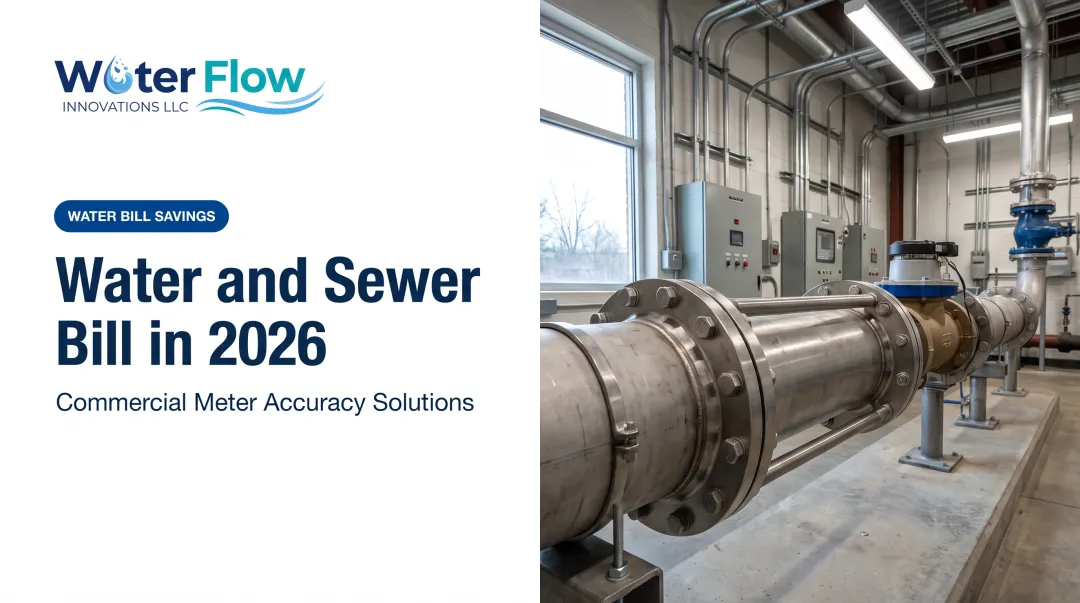
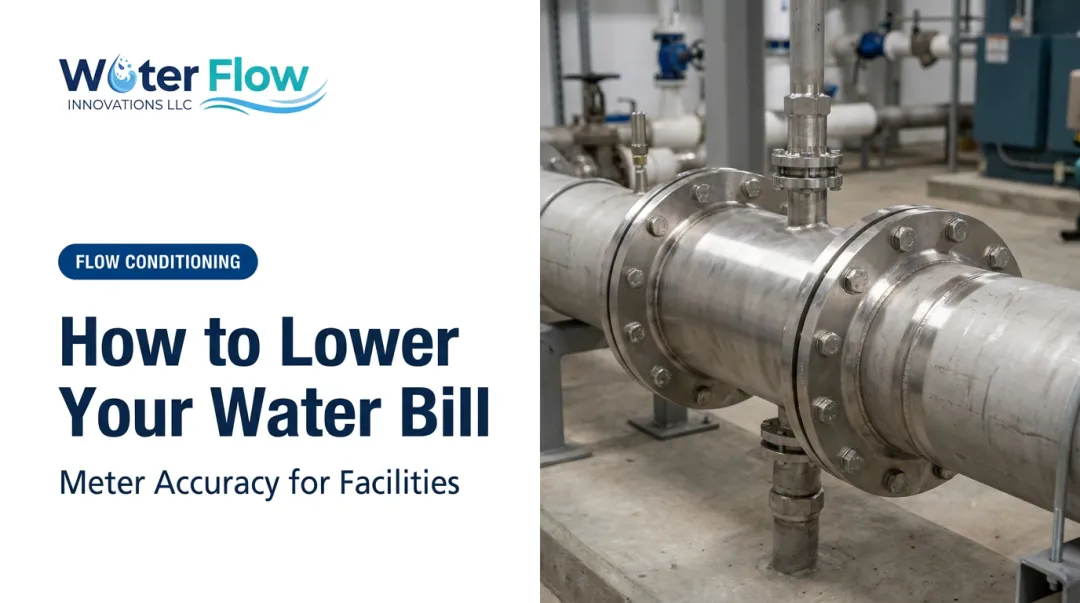
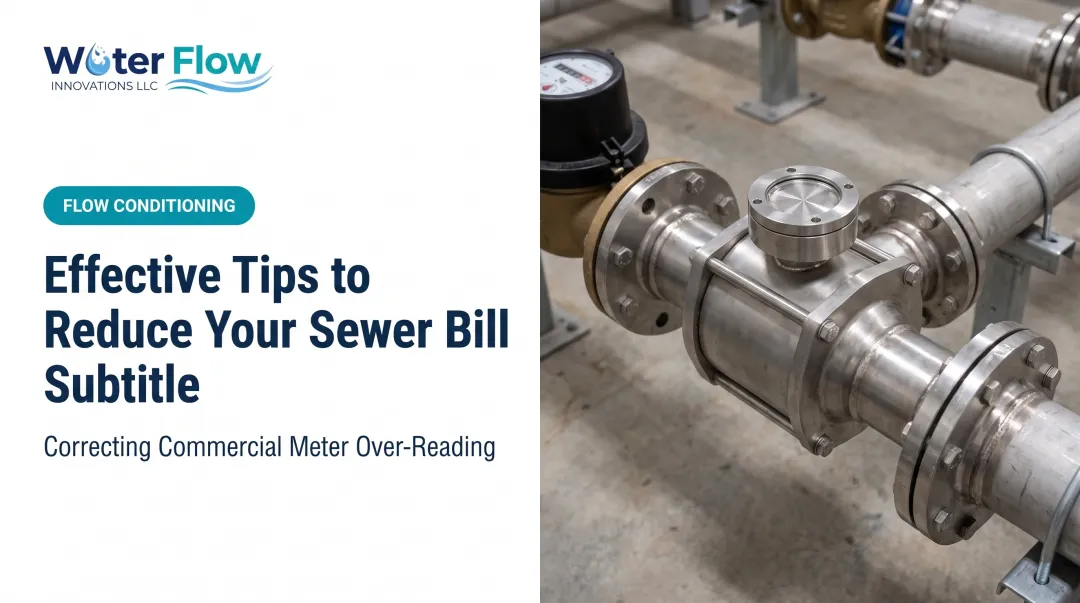
Water Flow Innovation's Flow Conditioning Device (FCD) installs immediately after the meter, corrects that flow with negligible pressure loss, and needs no operational changes. Documented results show a 5–30% average reduction in water and sewer charges (46% at the high end), often on the next billing cycle. Install time is about an hour, and a free water bill review can estimate savings before you commit.

Frequently Asked Questions
How much is the average sewer bill in my area?
Commercial and multifamily sewer bills vary widely by city, meter size, and usage—from a few hundred dollars to tens of thousands per month. Check your utility’s commercial rate schedule or recent bills for the figures that apply to your facility.
How is the sewer bill calculated?
Most utilities calculate sewer charges as a percentage of your metered water usage, or from a shared water/sewer meter reading. Some cities bill residential accounts differently than commercial ones.
Why did my sewer bill spike suddenly?
Common causes include process or occupancy changes, irrigation or cooling-load jumps, hidden leaks, and meters that over-read from turbulent flow. A sudden spike is worth investigating before the next billing cycle.
Can I get a lower sewer bill for outdoor water use?
Many utilities offer separate irrigation meters or seasonal averaging credits so outdoor water is excluded from sewer charges. Ask your provider what commercial or multifamily programs you qualify for.
Do commercial and industrial facilities have different options for reducing sewer costs?
Yes. Commercial and industrial sites can use certified flow conditioning devices that correct meter over-reading from turbulent flow, cutting water and sewer charges without changing usage or operations.
How quickly can I see savings after making changes?
Habit and fixture changes typically show savings within one to two billing cycles. Technology-based corrections, like flow conditioning devices, can appear on the very next bill.
What percentage of the water charge does sewer usually represent?
Typically between 80% and 120% of the water charge, depending on the utility, because sewer is calculated from metered intake rather than measured discharge. Every phantom gallon the meter registers is therefore billed twice, despite never entering a drain.
How much of the sewer charge can meter correction remove?
Documented installations average a 5–30% reduction across the combined water and sewer bill, with a highest documented single result of 46%. Because the sewer line is derived from the water reading, both fall together on the same cycle.