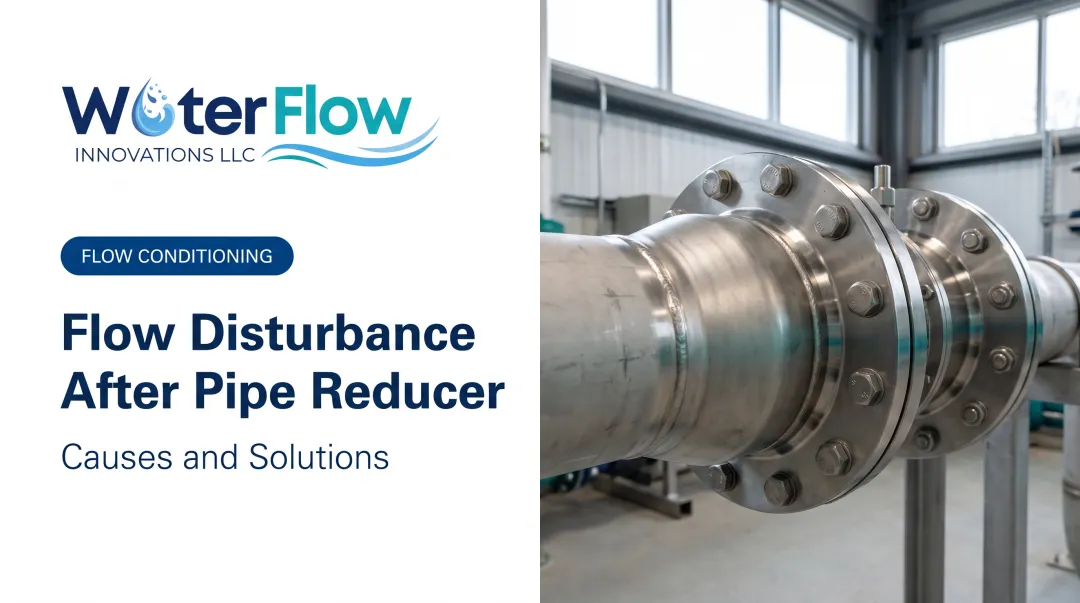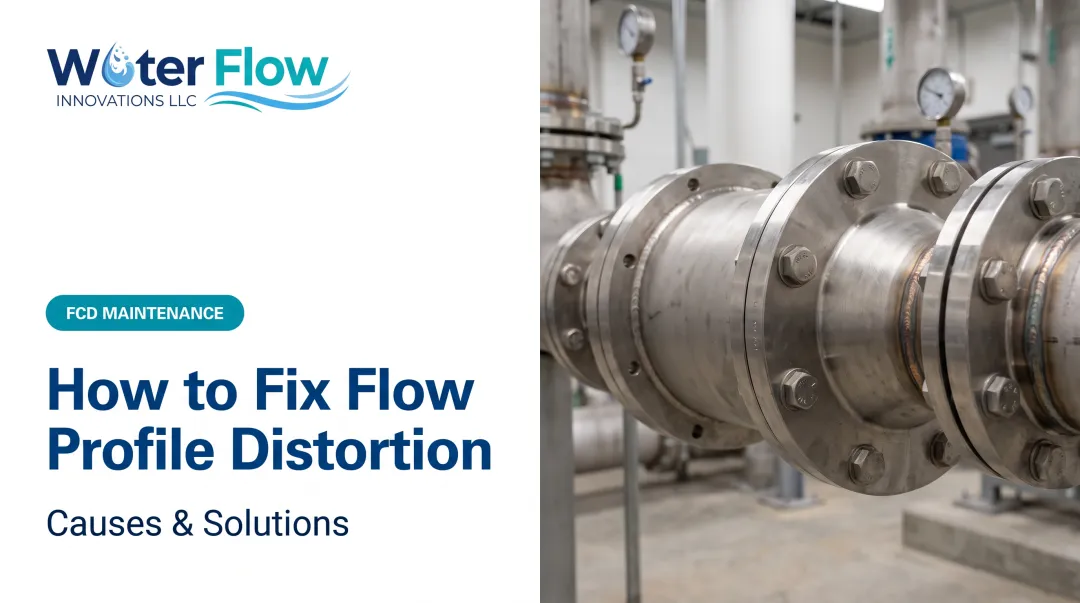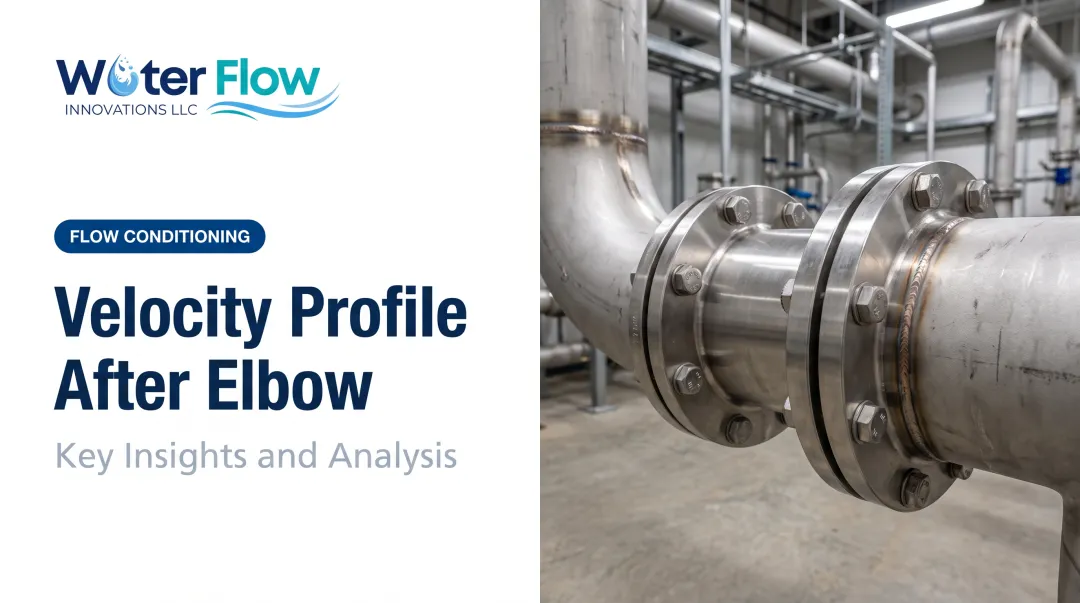

Left alone, this disturbance does real damage. It can accelerate wear on pipes and fittings, throw off water meter readings, and quietly inflate utility bills month after month. Understanding what's causing it, and what to do about it, is the difference between a one-time fix and a recurring budget problem.
Key Takeaways
- Common causes: throttling turbulence, cavitation, air entrainment, short pipe runs, and poor valve sizing.
- Left unchecked, disturbance damages equipment, skews water meters, and inflates utility bills.
- Prevent it with correct PRV sizing, adequate straight pipe, and routine maintenance.
- Flow conditioning devices retrofit turbulent lines and correct meter over-reading without changing usage.
Common Causes of Flow Disturbance After a Pressure Reducing Valve
Flow disturbance refers to turbulent, swirling, or unstable flow patterns that develop immediately downstream of a PRV, disrupting the smooth, laminar flow that meters and fixtures depend on. This usually does not mean the PRV has failed. It is more often a byproduct of valve design, installation choices, or system conditions that work against stable flow.
Cause 1: Turbulence from Throttling Action
Every PRV reduces pressure by forcing water through a restricted opening, whether a spool, diaphragm, or seat mechanism. That restriction creates localized turbulence as a natural side effect.
The larger the pressure drop across the valve, the more pronounced this turbulence becomes. A PRV knocking pressure down from 150 psi to 60 psi will generate far more downstream disruption than one making a modest 20 psi adjustment.
Cause 2: Air Entrainment and Cavitation
These are two distinct mechanisms, often lumped together but worth separating:
- Cavitation: Pressure inside the throttled valve drops below water's vapor pressure, so vapor bubbles form and collapse violently as pressure recovers downstream.
- Air entrainment: Actual gas enters the line during refill events, cover venting, or system commissioning.
Valve makers such as Val-Matic often screen cavitation risk with a sigma index; values below 2.5 are commonly treated as a warning, though thresholds vary by model.
Both mechanisms can distort water meter accuracy. A 2017 peer-reviewed study in Urban Water Journal found single-jet meter error during pipe refill was driven mainly by air passing through the meter before the water front arrived, with an almost linear tie to air volume.

Cause 3: Insufficient Straight Pipe Length Downstream
PRVs need a stretch of straight, unobstructed pipe downstream to let flow stabilize at the meter or fixture. In tight mechanical rooms or retrofit projects, elbows and tees often get crammed in too close to the valve outlet simply because there's no room to do otherwise.
This is a common issue in older commercial buildings where a PRV replacement happens inside an existing footprint that was never designed with flow stabilization in mind.
Cause 4: Improper Valve Sizing or Low-Flow Instability
An oversized PRV operating near the bottom of its flow range can "hunt", fluttering open and closed as it struggles to control flow accurately. This creates pressure and flow swings that ripple downstream.
Manufacturers build in partial workarounds:
- Integral low-flow bypass valves that hold reduced pressure as demand changes
- Optional flow controls that dampen pulsations at very low rates
These help, but they don't fully eliminate instability at extreme low-flow conditions. The real fix starts at sizing: compare your facility's actual minimum demand against the valve's minimum-controllable flow, not just its peak capacity.
Cause 5: Sediment, Debris, or Worn Internal Components
Scale, grit, and mineral buildup on seats and diaphragms interfere with a PRV's ability to regulate smoothly. Worn seals do the same thing, letting the valve drift instead of holding a steady setpoint. Either way, the result is erratic downstream flow that mimics sizing or installation problems even when the root cause is simple wear.

What Happens If Flow Disturbance Is Ignored
Ignoring downstream turbulence carries real, compounding costs:
- Cavitation bubble collapse pits valve and pipe surfaces, accelerating wear and shortening component life
- Unstable flow and sudden velocity changes can trigger water-hammer shockwaves that rupture pipe or damage equipment (American Water Works Association)
- Meters can register air before water arrives, inflating recorded usage and utility bills
- Downstream appliances and fixtures absorb ongoing pressure and flow instability, leading to premature failure
Water Flow Innovation's own data shows facilities correcting flow-related meter issues see 5-30% average bill reductions, with the highest documented case reaching 46%. That's not a guess. It reflects what happens when a meter finally reads what's actually flowing through it, instead of extra volume created by turbulence.
Warning Signs of Flow Disturbance Downstream of a PRV
Watch for these red flags:
- Hissing, banging, or vibration near the valve or downstream piping
- Inconsistent pressure readings or fluctuating flow at fixtures, even with a properly set PRV
- Unexplained spikes in water or sewer bills without a corresponding rise in actual consumption
How to Prevent and Correct Flow Disturbance
Prevention works best when you pair correct installation upfront with ongoing checks over the system’s life. The steps below cover both: stopping disturbance before it starts, and correcting it when it already has.
Proper Valve Sizing and Selection
Select a PRV sized for your facility’s actual flow range, not just its peak. Oversized valves are the ones most prone to low-flow instability. Make that call at the design or retrofit planning stage, before a valve goes in the ground.
Adequate Straight Pipe Runs and Correct Installation
Install sufficient straight pipe upstream and downstream of the valve, per the manufacturer’s specifications. This matters most during new construction or whenever a PRV gets replaced. Planning for clearance costs far less than retrofitting it later.
Routine Inspection and Component Maintenance
Schedule periodic checks of diaphragms, springs, and seats. Catching wear early keeps it from cascading into flow disturbance. Most manufacturers recommend inspection at least annually, though high-mineral water supplies may need more frequent checks.
Flow Conditioning When Turbulence Already Exists
When turbulence has already set in, a certified flow conditioning device in the supply line can correct the problem without replacing the PRV.
Water Flow Innovation offers a Flow Conditioning Device (FCD), certified to IAPMO, NSF, ANSI, CAN 61, KIWA, GMP, and SQF. Each custom-fabricated unit combines four functions:
- Air and gas separation for a homogeneous water column through the measurement zone
- Pressure regulation that reduces hammer and surge from cycling demand
- Check valve protection against reverse flow and re-entrained air
- Turbulence elimination that slows velocity enough to prevent vortex formation at the meter
The preferred layout installs the FCD after the water meter and before the PRV: street water → meter → FCD → PRV → building. That sequence conditions flow at the higher incoming pressure, before the PRV adds its own turbulence. Installing after the PRV still helps, but with reduced effectiveness on already-reduced pressure.

This approach fits facilities with high water bills despite stable usage—a classic sign of meter over-reading from post-PRV turbulence. Installation typically takes about an hour, with negligible pressure loss and no disruption to downstream operations.
Each unit includes a 6-month money-back guarantee and a lifetime transferable warranty.
Tips for Long-Term Flow Stability
Beyond the immediate fixes above, a few habits keep flow issues from creeping back:
- Monitor pressure and flow routinely using gauges or smart sensors
- Train maintenance staff to recognize early warning signs like unusual noise or pressure swings
- Keep documented service history for every PRV, including inspection dates and replacement records
- Run periodic water bill audits to catch metering anomalies before they become a budget line item
If bill audits are not yet part of your routine, Water Flow Innovation offers a free Water Bill Review & Savings Analysis. It examines billing cycles, meter configuration, and usage patterns—no site visit required—to flag whether flow disturbance may be inflating your bills.
Conclusion
Flow disturbance after a PRV has identifiable, correctable causes rooted in valve design, installation choices, and system wear. Facilities can diagnose and fix these issues rather than treating them as inevitable.
Proactive prevention, paired with flow conditioning technology where turbulence has already taken hold, protects equipment, restores accurate metering, and stops unnecessary utility costs before they compound further.
Frequently Asked Questions
How long does a water pressure reducing valve typically last?
Lifespan depends on water quality, usage patterns, and maintenance frequency. Most manufacturers recommend annual inspection, with repairs handled through service kits rather than full replacement.
What causes water hammer after a pressure reducing valve?
Water hammer occurs when a sudden change in flow velocity, often from rapid valve closure, launches a pressure shockwave through the piping. Unstable downstream flow can make this worse by creating the abrupt velocity changes that trigger it.
Can a PRV cause my water meter to read incorrectly?
Yes. Turbulence and air entrainment created downstream of a PRV can cause certain meter types to register air or unstable flow as additional volume, leading to over-reading on your bill.
How do I know if my PRV is causing flow problems?
Look for unusual noise, fluctuating pressure at fixtures, or unexplained bill increases without a matching rise in actual usage. A professional pressure and flow assessment can confirm what's happening.
Is flow disturbance after a PRV covered under plumbing codes?
Codes like the UPC and IPC require correct valve sizing, installation, and pressure thresholds, but they don't specifically regulate downstream turbulence. Prevention stays the facility's responsibility.
What is the difference between low-flow instability and normal pressure fluctuation?
Low-flow instability refers to a valve fluttering or "hunting" near its minimum controllable flow threshold. Normal fluctuation is usually tied to demand changes elsewhere in the building, like fixtures cycling on and off.
Is a flow conditioning device just another PRV?
No. A PRV exists to lower downstream pressure, deliberately changing what the building receives. Negligible pressure loss is a fundamental design characteristic of a conditioning device — it leaves pressure and flow rate alone and corrects only what the meter registers.
What does correcting PRV-driven over-reading typically return?
Documented installations average a 5–30% cut in combined water and sewer charges, with a highest documented single result of 46%, landing on the very next billing cycle.