Introduction
Your water bill jumped 20% this month. Nobody added a hot tub, nobody's showering longer, and the building still has the same number of tenants. So what happened?
This is one of the most common complaints property managers and renters share: water bills that climb steadily with no obvious reason. The frustrating part is that "overcharging" isn't one problem. It's usually one of several separate issues stacked on top of each other.
Sometimes it's how the bill gets divided among units. Sometimes it's a leak nobody's found yet. And sometimes, the entire building's water meter is mechanically over-registering usage before a single dollar gets allocated to anyone.
This guide breaks down the real causes behind inflated apartment water bills, the warning signs worth investigating, and practical steps property managers and owners can take to find the cause and fix it at the source.
Key Takeaways
- Four causes drive most overcharges: RUBS/allocation billing, leaks, aging fixtures, and meter over-reading
- Left unfixed, these issues cost multi-unit properties thousands of dollars a year
- Seasonal spikes, mismatched unit charges, and meter-bill mismatches are the main warning signs
- Lease transparency, leak checks, submetering audits, and meter accuracy fixes prevent overcharges
- Monitoring, tenant communication, and flow-conditioning technology lock in long-term control
Common Causes of Apartment Water Bill Overcharging
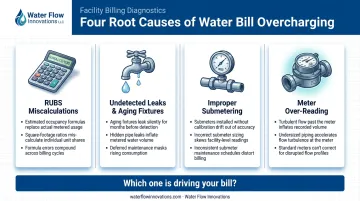
Overcharges generally start in one of two places: how the total bill gets calculated and split among tenants, or a physical issue that inflates usage before it's ever divided up. Both are worth ruling out, since the fix looks completely different depending on which one is happening.
Ratio Utility Billing System (RUBS) Miscalculations
RUBS divides one master water bill among units using square footage, occupancy count, or fixture count instead of individual metering. The Texas Public Utility Commission defines this "allocated billing" approach as distributing a master-meter bill by formula rather than measuring each unit's actual use—distinct from true submetering.
Problems creep in when:
- Occupancy data goes stale (a two-person unit still billed as a family of four)
- Square footage inputs were never updated after renovations
- A new management company changes the formula without notice
A common real-world scenario: management changes hands, the new formula goes live, and every tenant's bill jumps by roughly the same percentage overnight. That kind of uniform spike is a strong signal the allocation method changed, not that everyone suddenly started using more water.
Undetected Leaks and Aging Plumbing Fixtures
A single running toilet can waste around 200 gallons a day, and a faucet dripping once per second can waste more than 3,000 gallons a year, according to EPA WaterSense data. Multiply that across a 50-unit building with a few unnoticed leaks, and the master bill balloons fast.
Older fixtures make it worse. A pre-standard toilet can use up to 6 gallons per flush, compared to 1.28 gallons or less for a WaterSense-rated model. Across dozens of units, that gap shows up as a permanently inflated master bill.
Watch for:
- A summer spike tied to irrigation lines or a pipe leaking underground
- Consistently high usage that doesn't dip on vacant units
- Water pooling near baseboards or unexplained damp drywall
Improper or Missing Submetering
Many older buildings rely on a single master meter for the entire property. Without individual submeters, tenants can end up paying for common-area usage, or even a neighboring unit's consumption, buried inside a shared allocation formula.
This gets legally murky fast. Several states, including Massachusetts, require a licensed-plumber-installed submeter with certified accuracy before a landlord can bill for measured water at all. A landlord who simply forwards the town's master bill without that certification may be violating state law, not just billing unfairly.
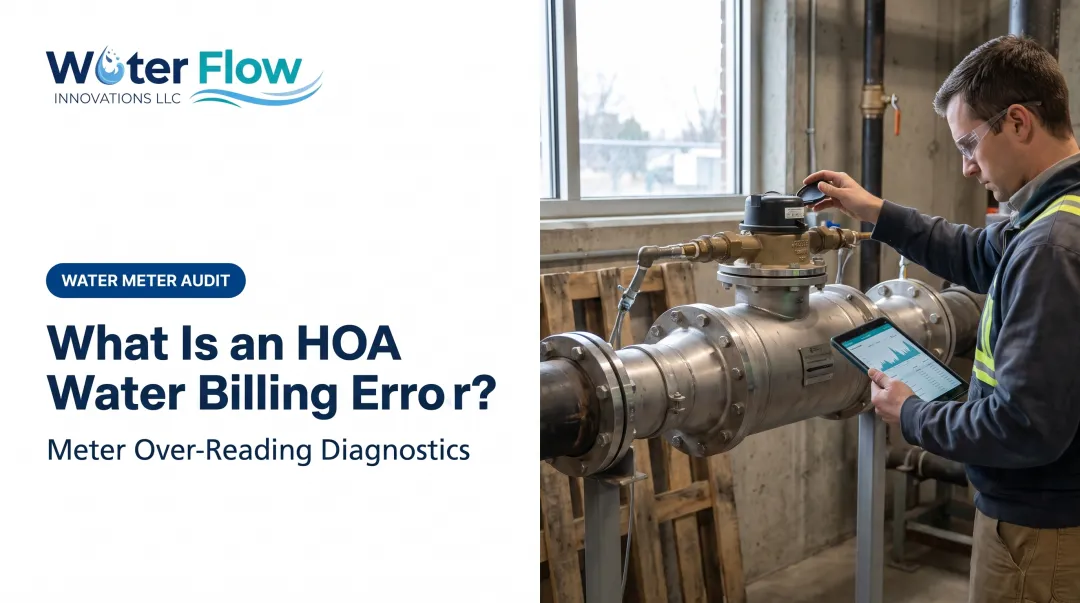
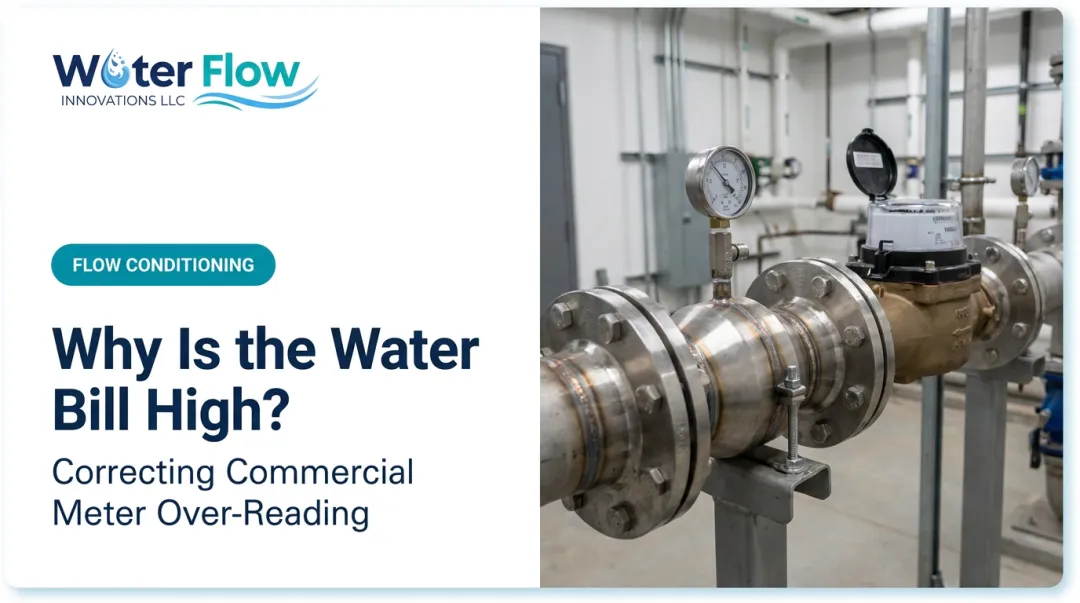
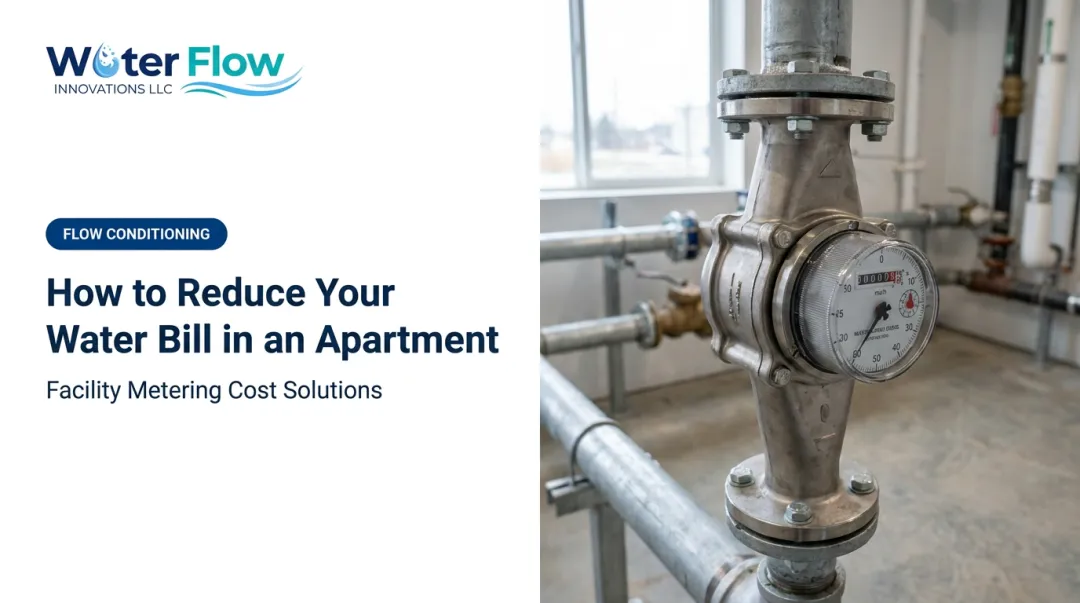
Water Meter Over-Reading Due to Air Entrainment and Turbulent Flow
The meter itself can be the culprit. Municipal and building water meters mechanically over-register when air bubbles or turbulent flow pass through the measurement chamber. Lab and field testing show this most clearly during intermittent supply and pipe refilling, when air pockets get counted as billable water.
That error inflates the entire building's recorded consumption before any RUBS formula or submeter allocation runs. Tenants and property managers rarely spot it, because the billing math looks like the problem when the meter reading is wrong upstream.
What Happens If Overcharging Is Ignored
Unresolved overcharging rarely stays quiet. Tenant disputes pile up. Some tenants withhold rent or file complaints with local housing boards. In states like Texas, owners must investigate written billing disputes within 30 days. Miss that window, and you face compliance exposure on top of the original problem.
For multifamily owners, there's also a straightforward financial hit: inflated water costs eat directly into net operating income. A water bill running 15–20% high across dozens of units drains NOI every month.
Warning Signs You're Being Overcharged
Catch these early, before disputes turn into formal complaints:
- Seasonal spikes with no change in occupancy or tenant habits
- Wildly different bills on identical units (e.g., two one-bedrooms)
- Master meter or submeter totals that don't match aggregate tenant charges
How to Prevent Apartment Water Bill Overcharging
Prevention works best as a two-track approach: fix the billing transparency side, and address the physical/mechanical sources of inflated usage separately. Skipping either one leaves money on the table.
Audit and Disclose Your Billing Method
Property managers should recalculate RUBS formulas against current occupancy and square footage on a regular schedule, then provide tenants a clear breakdown of exactly how their bill is derived. Do this:
- At every lease renewal, so tenants see the current formula before they re-sign
- Whenever the billing methodology changes, with a plain-language explanation of what shifted
- Whenever the management company changes, to avoid inherited formula errors
Fix Leaks and Upgrade Fixtures Promptly
Routine leak detection and low-flow fixture upgrades cut the overall consumption that eventually gets passed on to tenants through allocation. Build this into:
- Unit turnovers, when a vacant apartment makes plumbing inspection easy
- Pre-summer checks, before irrigation season drives up outdoor usage
- Common-area and irrigation walkthroughs after any landscaping or boiler work
Correct Water Meter Over-Reading at the Source
Once leaks and billing-formula issues are ruled out, the master meter itself deserves a look. Because air entrainment and turbulent flow can cause a meter to register more than actual delivered water, property owners should have the flow tested and consider a certified flow conditioning solution.
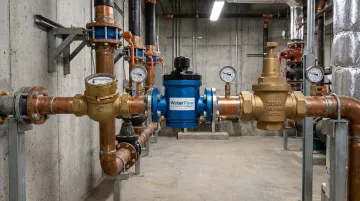
This is where Water Flow Innovation's Flow Conditioning Device (FCD) fits in. It's an IAPMO, NSF, ANSI, CAN 61, KIWA, GMP, and SQF-certified device that installs directly on the main line right after the master meter.
The device creates a laminar, bubble-free flow in the measurement zone. A few practical details:
- Installation takes about an hour, with only a brief water shutoff at the meter room and no tenant unit access needed
- Savings show up on the very next billing cycle, with no ramp-up period
- Documented reductions run 5–30% on average, with 46% as the highest single result recorded
- Negligible pressure loss downstream, so tenants do not notice a difference in water pressure
Because this addresses the meter itself rather than consumption or allocation math, it's best implemented as the last step, after leaks and billing formulas have already been checked. A free bill review and savings analysis can confirm whether a given property's meter is a likely candidate before any purchase decision.
Improve or Upgrade Submetering
Installing certified submeters for each unit, where legally required, removes the ambiguity that fuels most tenant disputes. This is especially worth prioritizing for:
- Older buildings converting from allocated billing to individual metering
- Properties facing repeated tenant complaints about water charges
- Major renovations or new construction, when running meter lines is already in scope
Tips for Long-Term Prevention and Control
One-time fixes don't stay fixed forever. Ongoing best practices include:
- Schedule routine meter and submeter readings to catch anomalies before they become months-long disputes
- Train on-site staff to recognize leak indicators and billing red flags during routine visits
- Keep documented records of water bills, allocation formulas, and meter tests for compliance and disputes
- Use periodic third-party flow audits to verify metering accuracy on larger multifamily and HOA properties
Small metering errors multiply fast across many units. A free water bill review can show whether turbulent flow or meter over-reading is driving recurring overcharges before the next cycle locks them in.
Conclusion
Apartment water overcharging almost always has an identifiable root cause. It may be a billing formula that hasn't been updated, or a leak hiding behind a wall. In other cases, the meter itself is mechanically over-registering water that was never actually used.
Proactive verification, transparent billing, and correcting mechanical over-reading at the source protect tenant trust and the property's bottom line together. When you confirm the cause and fix it upstream, residents stop subsidizing phantom usage—and NOI stops leaking with every billing cycle.
Frequently Asked Questions
How do I know if my apartment is overcharging me for water?
Compare your individual charge against submeter readings if your unit has one, or request the building's master water bill and check the allocation math yourself. A mismatch between the master bill total and the combined amount charged to tenants is a clear red flag.
Can a landlord charge more for water than actual usage?
Most jurisdictions require water charges to reflect either actual measured usage or a lawful allocation formula disclosed in the lease. Reasonable administrative or service fees may be added on top, but padding the base water cost itself typically isn't allowed.
What is RUBS (Ratio Utility Billing System) and is it legal?
RUBS divides one master water bill among units by formula (occupancy, square footage, or fixture count) rather than individual metering. Its legality varies by state; Texas and Oregon permit it with disclosure requirements, while states like Massachusetts favor certified submetering instead.
How can I dispute a water bill overcharge with my landlord?
Request the master bill and calculation method in writing, then compare it against your own usage history. If unresolved, escalate to your state's utility commission, local code enforcement, or a tenant legal aid organization.
Do all apartments have individual water meters?
No. Many older buildings still rely on a single master meter with allocated billing, while newer construction increasingly requires individual submeters under state or local law. Master metering is still common across multifamily housing overall.
Who pays the water bill if my lease doesn’t say?
If the lease is silent on water, the landlord usually remains responsible unless state or local law assigns it to the tenant. Confirm the rule for your city and get any verbal agreement added to the lease in writing.
Can the master meter itself be over-reading the whole building?
Yes, and it is often overlooked. Air entrainment and turbulent flow from booster pumps, tank fills, and irrigation cycling make meters register volume that never reached the building. Every resident's allocated share is then calculated from an inflated total.
Does an inflated water reading raise the building's sewer charge too?
Most utilities calculate sewer as a percentage of metered water intake, typically 80–120% of the water charge. Every phantom gallon is therefore billed twice, once as water and once as sewer, even though it never entered a drain. For multifamily and apartment communities, HOAs, and senior living properties, that doubles the impact of any master-meter error.