
This scenario plays out in HOAs across the country more often than most residents assume. Water billing errors stem from faulty meters, third-party billing mistakes, mismanaged utility accounts, or flawed cost-allocation formulas.
This guide breaks down what actually counts as a billing error, why these mistakes happen, who's on the hook to fix them, and how HOAs can stop the problem before it starts.
Key Takeaways
- Most HOA water billing errors stem from faulty meters, mismanagement, flawed estimates, or unpaid utility accounts
- Dispute inaccurate charges by requesting usage records and supporting documentation
- Responsibility depends on your HOA’s governing documents and whether the issue is in a unit or common area
- Submetering and flow conditioning devices help stop repeat billing disputes
What Is an HOA Water Billing Error?
An HOA water billing error is any inaccurate charge tied to a resident's usage, the association's allocation method, or the utility account itself. These errors generally fall into two buckets:
- Consumption-based errors — wrong meter readings, whether from equipment failure or misinterpretation
- Administrative errors — missed payments, incorrect allocation formulas, or lost invoices
Real-world example: At Peyton Place Condominiums in Atlanta, an inspection found multiple inaccurate meters and roughly 20 that weren't registering usage at all, according to a WSB-TV investigation.
Residents reported bills as high as $1,000, and the HOA faced an estimated $15,000 in meter-related repairs. The story did not report a final resolution.

A separate case in Las Vegas shows the administrative side of the problem. A management company failed to pay an HOA's water bills for six months (April through October 2020), according to the Las Vegas Review-Journal. The board didn't learn about it until November, by which point late fees had already piled up.
Depending on your property's setup, errors can hit a single unit, a shared meter serving multiple units, or the community's master account.
Signs Your HOA May Have a Water Billing Error
Watch for these red flags:
- A sudden bill spike with no change in household water use
- Charges that don't match your actual water use
- Missing bills for several months, followed by a lump-sum notice
- Late fees or unpaid-balance notices you never saw coming
Common Causes of HOA Water Billing Errors
HOA water billing errors usually trace back to a few recurring problems:
Malfunctioning or unread meters. Aging or damaged meters can under- or over-report usage. The Atlanta case above found roughly 20 non-functioning meters at a single property, a systemic failure across the site.
Third-party billing company mismanagement. Outsourced vendors sometimes misallocate charges, lose invoices, or produce numbers that don't match what the utility itself recorded.
Management company payment failures. When bills go unpaid due to internal errors, associations get hit with late fees, interest, and retroactive lump-sum charges, exactly what happened in the Las Vegas case.
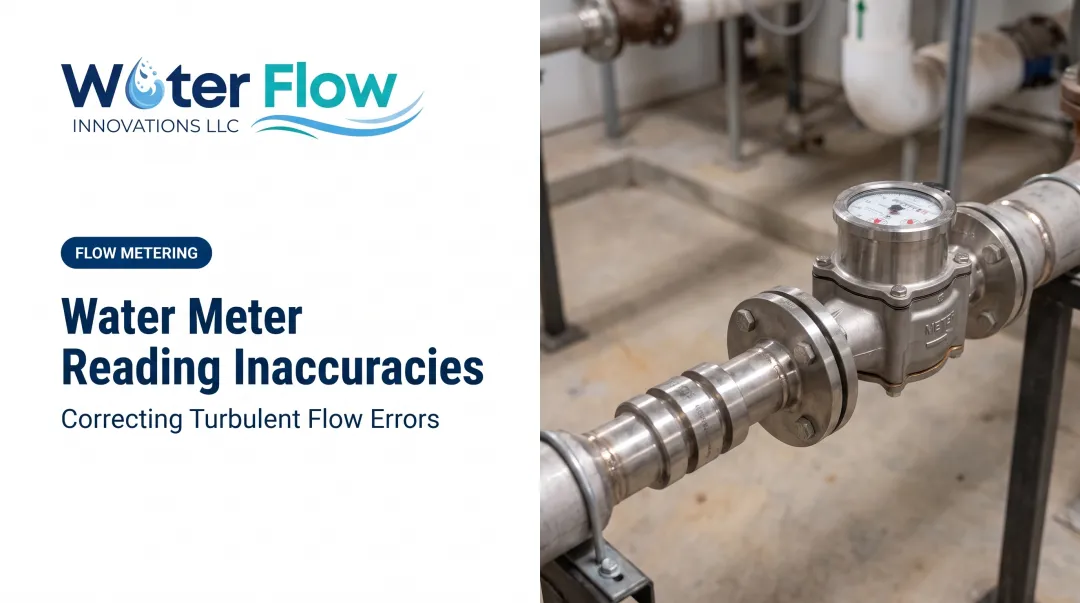
Meter over-reading from air entrainment and turbulence. Research from the International Water Association found that air expelled through mechanical meters during pipe refilling can cause measurable over-registration: the meter counts air as water.
The American Water Works Association also notes that turbulence, swirl, and distorted flow from elbows, valves, and short pipe runs can throw off inferential and turbine-style meters. Over-reading is a real physical effect, not a fixed percentage on every meter, and it has nothing to do with actual water use.
Flat-rate or improperly apportioned shared-meter billing. When costs get split evenly regardless of actual consumption, conservative households effectively subsidize their less careful neighbors.
Leaks in common-area or unit plumbing. An undetected leak in a shared line can dramatically inflate a whole building's water bill before anyone notices.

Who's Responsible: HOA, Management Company, or Homeowner?
Responsibility comes down to two things: your CC&Rs and where the problem physically originates.
- Common-area infrastructure (shared lines, community meters) generally falls to the association
- Private unit plumbing generally falls to the homeowner
- Management companies handling autopay can be accountable for negligence in billing administration
Homeowners usually lack standing to sue the manager directly; that duty falls to the board, per HOA attorney guidance referenced in the Las Vegas case.
Does My HOA Cover My Water Bill?
Check your governing documents. Some communities bundle water into monthly dues; others bill through individual meters, submeters, or an allocation formula.
Can I Dispute an HOA Water Bill If It's Incorrect?
Yes. Request your usage records in writing, compare them against your own habits, and escalate to the board or a hearing officer if the numbers still don't add up.
How to Dispute and Resolve an HOA Water Billing Error
A written, step-by-step challenge usually resolves HOA water billing errors faster than a verbal complaint.
- Request detailed usage data and billing history from the HOA or management company, in writing, so there's a paper trail.
- Compare the disputed bill against your own usage patterns, past bills, and any known leaks or maintenance work.
- Ask for a meter inspection or third-party audit if the numbers seem physically implausible, especially when household size and habits haven't changed.
- Escalate unresolved disputes to the board. Some states offer formal options: California requires internal dispute resolution before litigation, and Florida runs a condominium arbitration and mediation program through its licensing division.
- Document everything. Keep emails, bills, and inspection reports organized if the dispute continues.

Who Is Responsible for Paying for Plumbing Issues in an HOA?
If a billing spike ties back to a leak or pipe failure, who pays usually depends on where the problem sits. HOAs typically cover common-area and shared-line plumbing, while homeowners handle issues inside their unit's walls. Confirm the split in your governing documents, since state law and declaration language vary.
Preventing Future HOA Water Billing Errors
The best fix is catching problems before they become five-figure disputes. Boards should consider:
- Regular meter audits and calibration checks to catch malfunctioning or "phantom" meters early
- Clear, written billing policies so residents understand exactly how charges are calculated and where to raise concerns
- Addressing meter over-reading directly, since this is a mechanical cause often mistaken for an administrative one
Meter over-reading is worth a closer look. Meters can register more flow than actually passes through because of trapped air and turbulent flow near the measurement point. That is not always a management failure; sometimes it is physics.
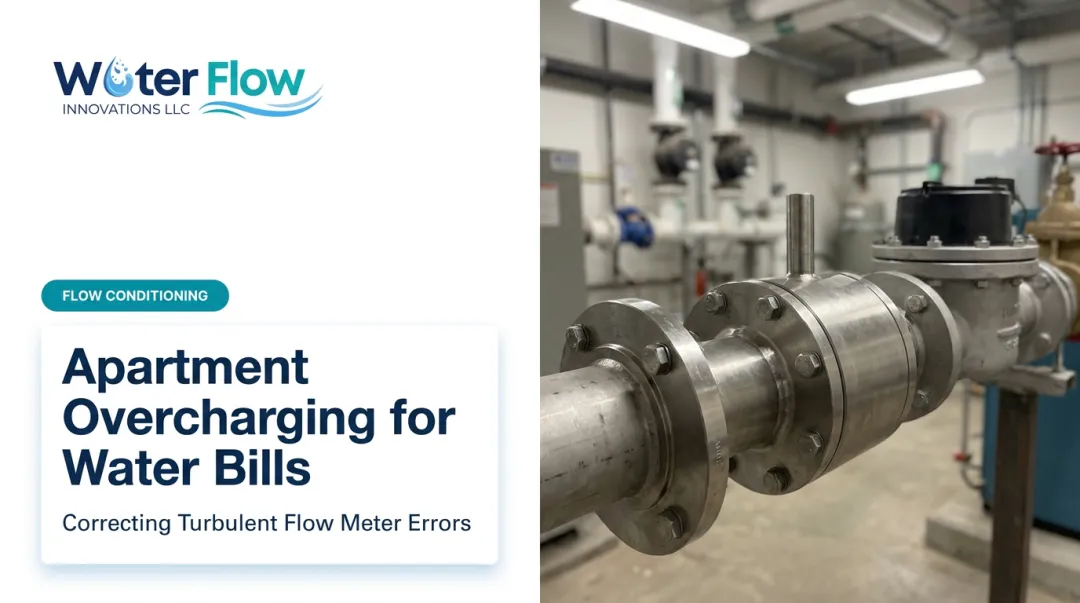
Water Flow Innovation's Flow Conditioning Device (FCD) corrects this mechanical cause. Installed immediately after a community's master meter, the FCD:
- Separates air and gas from the water column at the meter
- Regulates pressure to reduce water hammer and surges
- Reduces turbulence and vortex flow that cause over-counting
The device is IAPMO, NSF, ANSI, CAN 61, KIWA, GMP, and SQF-certified, the credentials most relevant to drinking-water and plumbing applications.
Installation at a shared-meter connection typically takes about an hour, with no unit entry required. Communities have seen average bill reductions of 5-30%, with a documented high of 46%. Savings usually show up on the next billing cycle, so boards can share clear before-and-after numbers with residents.

For associations weighing the investment, the FCD is available for purchase or lease, backed by a six-month money-back guarantee and a lifetime warranty that transfers with the property through board or management changes.
Frequently Asked Questions
Does my HOA cover my water bill?
It depends on your governing documents. Some communities bundle water into flat HOA dues, while others use submetering or direct billing based on individual usage.
Can I dispute an HOA water bill if it's incorrect?
Yes. Request usage records and billing history, then escalate through your board or your state's applicable dispute-resolution process if it isn't resolved.
Who is responsible for paying for plumbing issues in an HOA?
The HOA typically covers common-area and shared-line plumbing; homeowners handle in-unit issues. Always check your bylaws for specifics.
What should I do if my HOA's water meter seems to be malfunctioning?
Request a meter inspection and compare your usage history against your actual habits. If the numbers still don't line up, escalate to the board for a formal audit — bear in mind a meter can over-read while still passing a formal accuracy test.
Can a management company be held liable for unpaid or mismanaged HOA water bills?
Boards can pursue accountability against a negligent management company, but individual homeowners generally lack legal standing to sue the manager directly.
How can HOAs reduce the risk of future water billing errors?
Regular meter audits, clear written billing policies, and technology like submetering or flow conditioning devices all reduce the risk of recurring disputes.
Can the community's master meter itself be over-registering?
Yes, and it is easily missed. Booster pumps, tank fills, and irrigation cycling push air into the supply line, and most meters cannot separate that air from water. Every homeowner's allocated share is then calculated from an inflated total. Correcting it has produced documented reductions averaging 5–30% of combined water and sewer charges, with a highest documented result of 46%.
Which shared-metered communities does this most affect?
HOAs, multifamily and apartment communities, luxury high-rise buildings, senior living communities, university dormitories, and vacation rental properties — anywhere one master meter serves many units with constant demand cycling.