How the Flow Conditioning Device Works
5–30%
~1 Hour
Negligible
6-Month
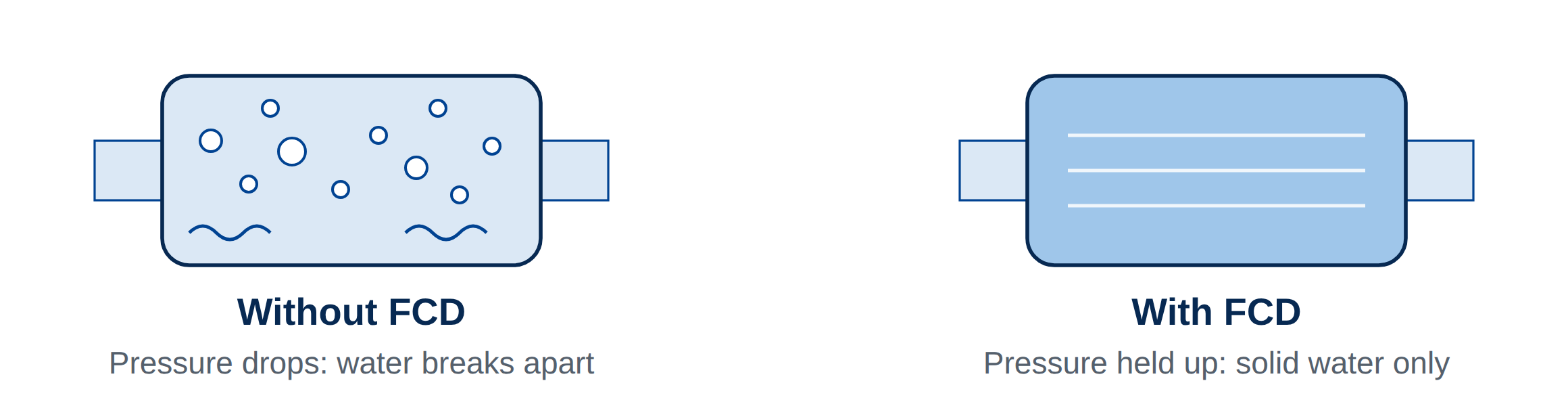
Direct answer: The Flow Conditioning Device (FCD) installs directly after your water meter and creates a small, controlled backpressure that extends back through the meter. During high-demand periods, high water velocity drops the pressure inside the meter so sharply that the water breaks apart into gas, vapor bubbles, and turbulence, and the meter registers that expanded volume as water. By holding pressure up through the meter, the FCD keeps the water intact so the meter registers water only. It corrects the meter reading; it does not reduce actual water use.
Why Buildings Overpay at Peak Demand
Every building has high-demand periods when water moves through the service line at high velocity:
Multifamily
Morning and evening shower peaks and laundry.
Industrial
Process water draws, CIP cycles, washdowns, and cooling tower makeup.
Commercial
Restroom peaks at opening, lunch, and breaks, plus HVAC makeup.
Restaurants
Dish machines, pre-rinse stations, and prep during service rushes.
At high velocity, pressure inside the meter drops so sharply that the water breaks apart, creating gas, vapor bubbles, and turbulence. These expand to fill space inside the pipe that should be occupied by water. Meters measure volume and can’t tell water from gas or bubbles, so that expanded volume is registered and billed as water. Because sewer charges are commonly based on your meter reading, you pay for it twice.
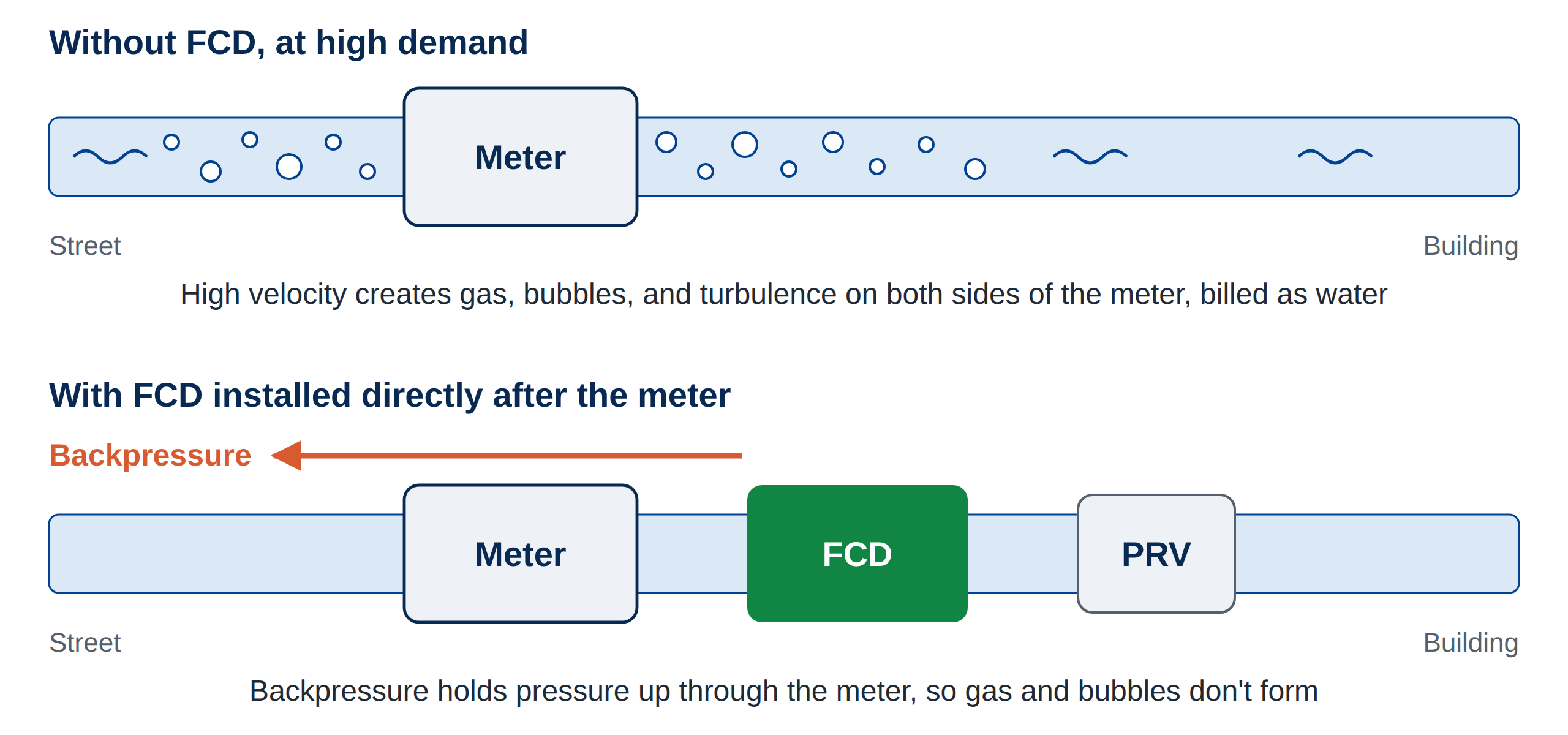
How the FCD Works: Backpressure Travels Upstream
Water is nearly incompressible, so a change in pressure at one point in a full pipe is felt almost instantly along the entire line. It’s the same reason you can feel pressure build all the way back along a garden hose when you put your thumb over the end.
The FCD is installed directly after the water meter. It introduces a small, controlled restriction that creates backpressure, which extends upstream through the meter. The result is higher, steadier static pressure inside the meter. The flow rate doesn’t change: the same gallons pass through, with negligible pressure loss to your building, just under more stable conditions.
That higher pressure is what keeps the water intact during high-demand periods. Gas and vapor bubbles only form when pressure in the meter falls too low, so with the FCD holding pressure up, the meter registers water rather than expanded volume.
The Science Behind the FCD
Four well-established principles of fluid mechanics explain how a device installed after the meter corrects what the meter registers.
1 Same flow, different pressure
2 Backpressure travels upstream
3 The effect grows with velocity squared
4 Keeping the water intact
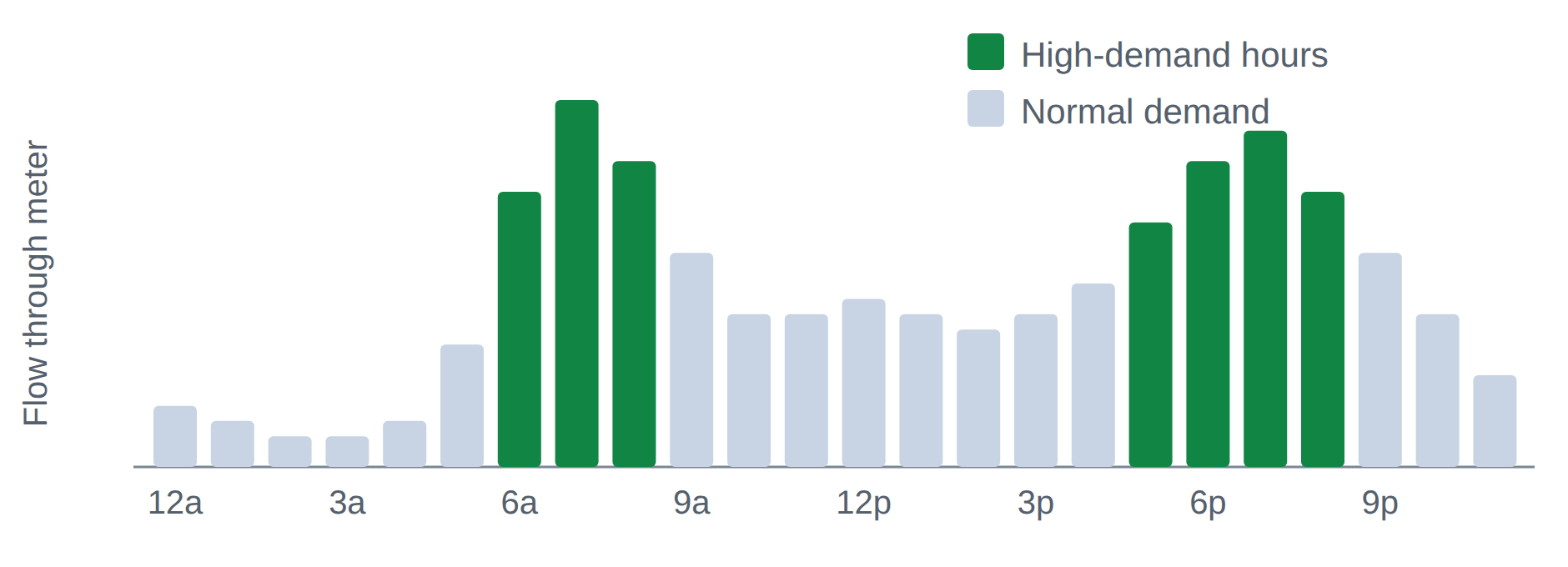
When Over-Registration Happens
Over-registration concentrates in a building’s high-demand hours, when velocity through the meter is highest. A building that looks fine on average can lose the most during a few hours a day.
Our 24-Hour Flow Profile Bill Reduction Calculator shows when your building is most affected and estimates your savings. Find it, along with our Water & Sewer Bill Savings, Sewer Double-Impact, Cost of Waiting, and NOI & Property Value calculators, on our Water Bill Cost Savings Calculators & Tools page.
Recommended Installation
The FCD installs directly after the meter and ahead of the pressure-reducing valve (PRV), where higher line pressure gives the greatest correction. Installing after the PRV is possible when site conditions require it, with reduced savings. Why the FCD goes before the PRV ›
Installation takes about an hour, is performed by a licensed plumber or mechanical contractor, and can be scheduled around your operations.
What the FCD does
What it doesn’t do
Frequently Asked Questions
Questions about the science of over-registration. For pressure, installation, specifications, and guarantee details, see What Is a Flow Conditioning Device (FCD)?
How can a device installed after the water meter affect the meter reading?
Why does my meter over-register during high-demand periods?
Is my water meter defective, or is my utility billing me incorrectly?
Why does over-registration affect my sewer bill too?
Where should the FCD be installed?
How do I know if my building is affected?
Related Reading
Water Meter Over-Registration Explained
What causes meters to over-read and how to recognize it.
FCD Technical Information
White papers, specifications, and engineering references.
What Is a Flow Conditioning Device (FCD)?
Components, specifications, certifications, and buying options.
Guarantee & Warranty Terms
Money-back guarantee and lifetime warranty details.
See What Your Building Could Save